
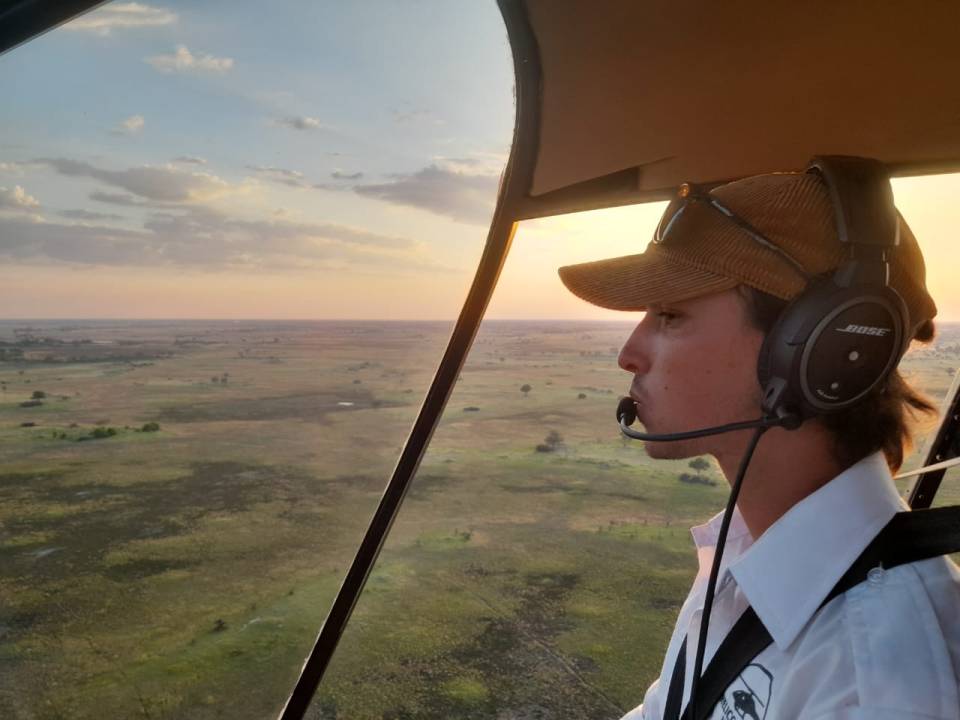
Many influences affect the course of our careers and lives over the years. When you are committed to an industry like aviation, in particular, there are plenty of hurdles to overcome and difficult decisions to be made. Flying as a vocation requires flexibility and adaptability, persistence and patience, and the ability to sit with uncertainty, often for unspecified periods of time.
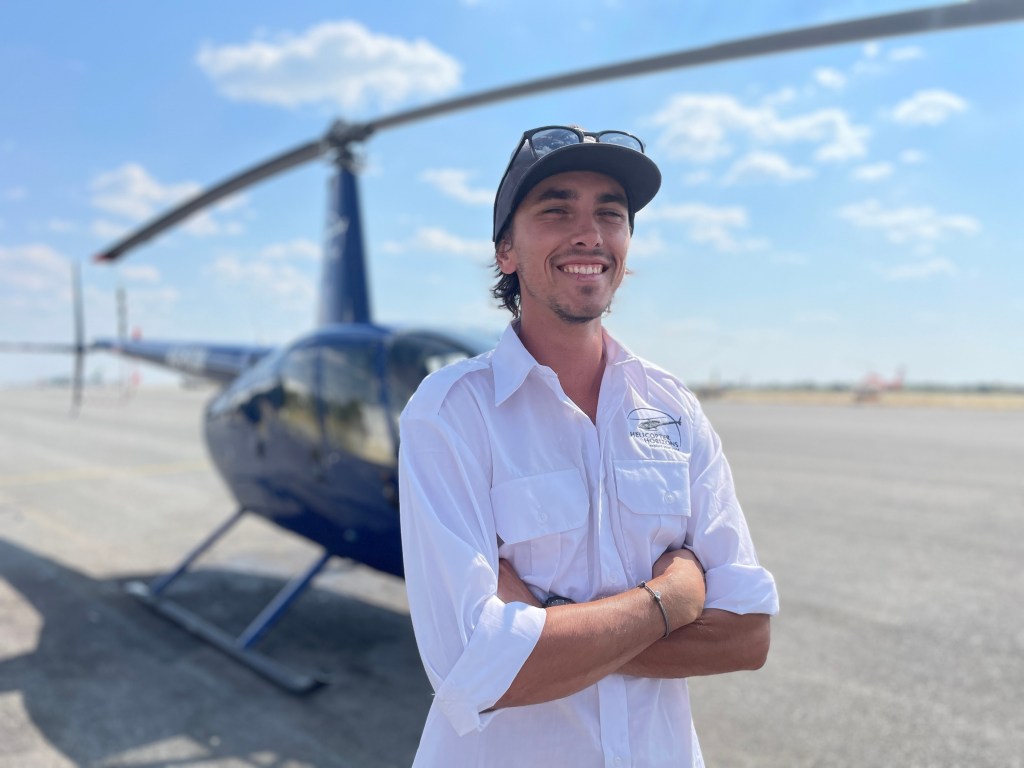
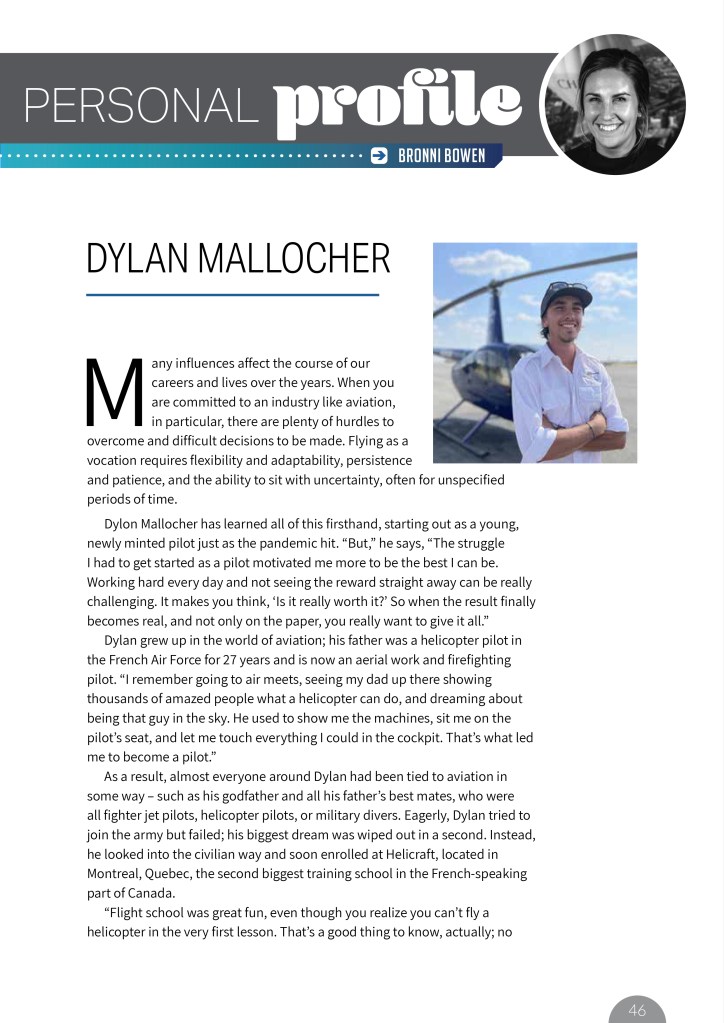
Dylan Mallocher has learned all of this firsthand, starting out as a young, newly minted pilot just as the pandemic hit. “But,” he says, “The struggle I had to get started as a pilot motivated me more to be the best I can be. Working hard every day and not seeing the reward straight away can be really challenging. It makes you think, ‘Is it really worth it ?’ So when the result finally becomes real, and not only on the paper, you really want to give it all.”
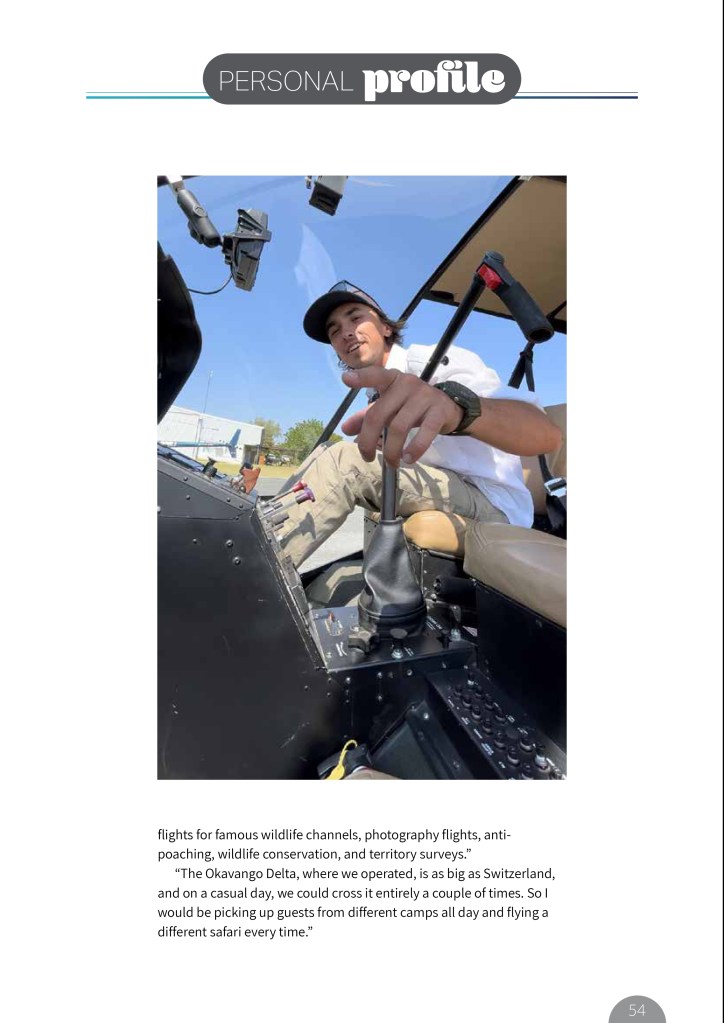
Dylan grew up in the world of aviation; his father was a helicopter pilot in the French Air Force for 27 years and is now an aerial work and firefighting pilot. “I remember going to air meets, seeing my dad up there showing thousands of amazed people what a helicopter can do, and dreaming about being that guy in the sky. He used to show me the machines, sit me on the pilot’s seat, and let me touch everything I could in the cockpit. That’s what led me to become a pilot.”
As a result, almost everyone around Dylan had been tied to aviation in some way – such as his godfather and all his father’s best mates, who were all fighter jet pilots, helicopter pilots, or military divers. Eagerly, Dylan tried to join the army but failed; his biggest dream wiped out in a second. Instead, he looked into the civilian way and soon enrolled at Helicraft, located in Montreal, Quebec, the second biggest training school in the French-speaking part of Canada.
“Flight school was great fun, even though you realize you can’t fly a helicopter in the very first lesson. That’s a good thing to know, actually; no matter how much time you’ve spent on simulators or observing pilots on the job, you would crash if you tried by yourself the first time. It really is an impossible mission – don’t trust Tom Cruise!”
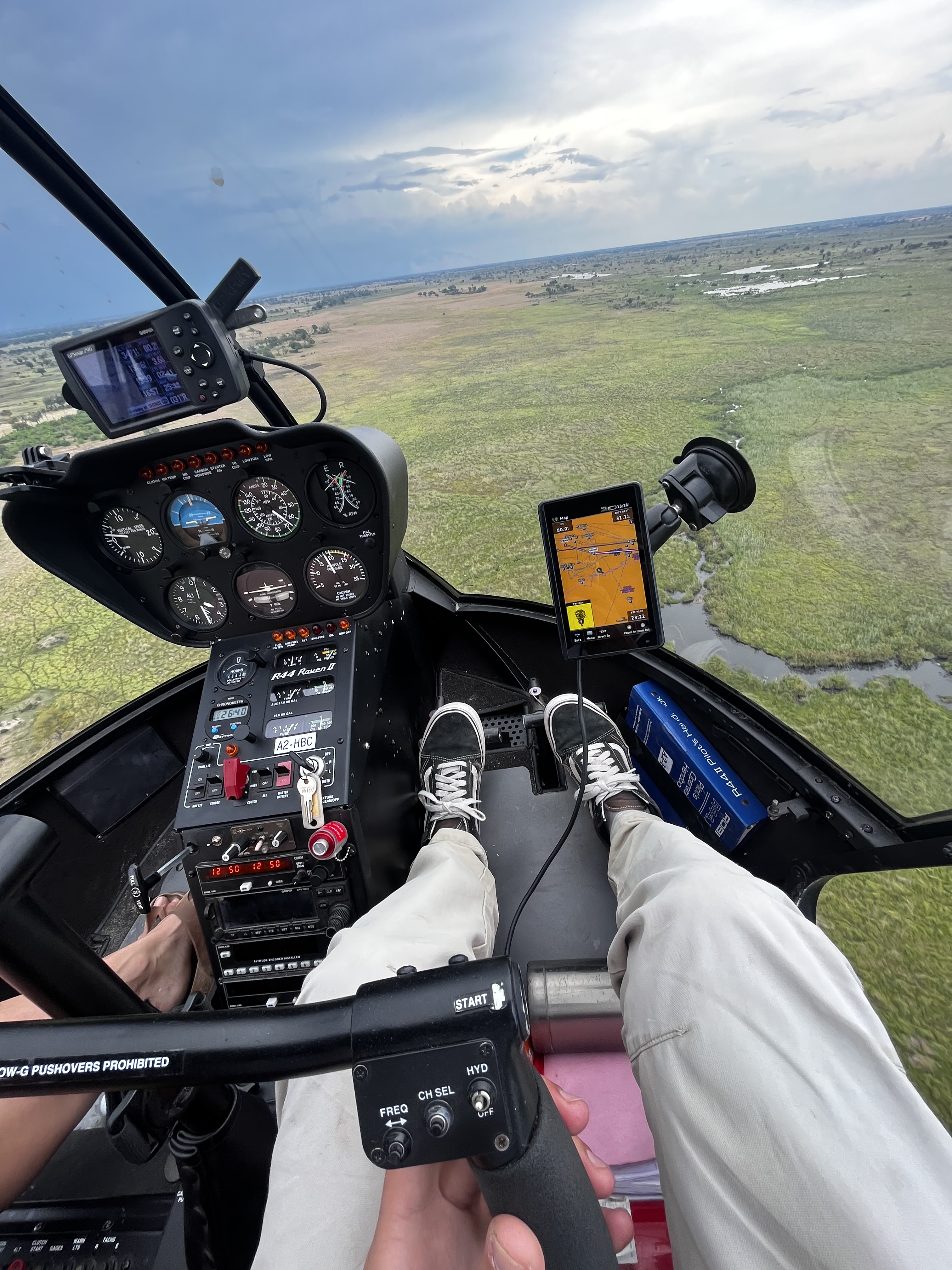
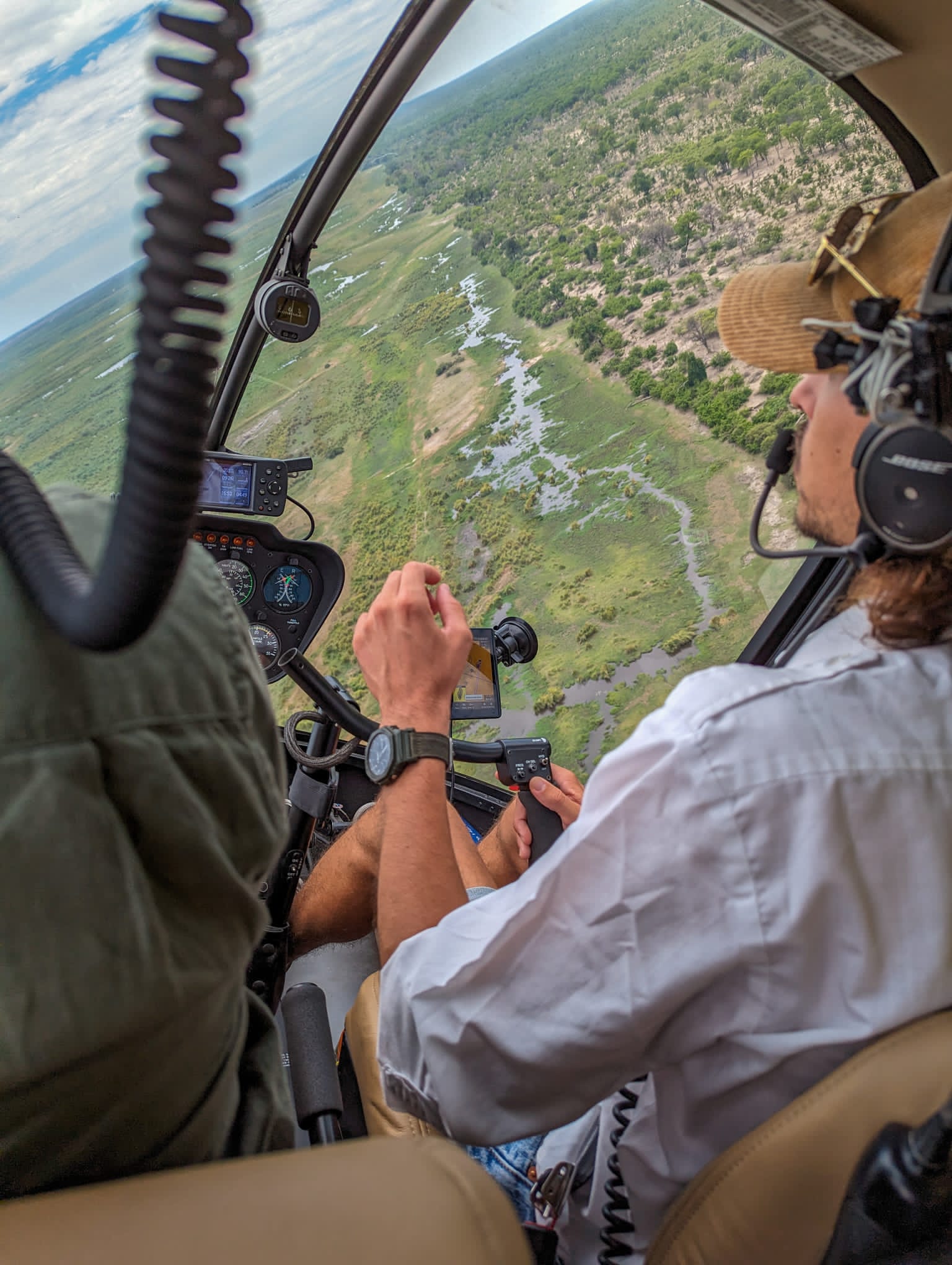
Dylan’s struggles came after flight school. “As soon as I finished my training, I applied for a promising position in Quebec for a company operating in the bush flying sector, which was what I now dreamed of. The season in Canada runs over the summer, especially for rookies like me, and I got my license in October 2019, so the chief pilot told me to be patient and wait out the winter to start my training next May.”
Unfortunately, the Covid saga elbowed its way in first. Dylan was forced to fly back to France for curfew and lost his Canadian visa, the holder of a foreign license he couldn’t use anywhere else.
On his father’s recommendation, Dylan began the grueling process of converting his license to a European one. “That was a hard year and a half. To anyone holding a license in Canada – you can’t even compare the amount of work it is to pass those EASA theoretical exams.”
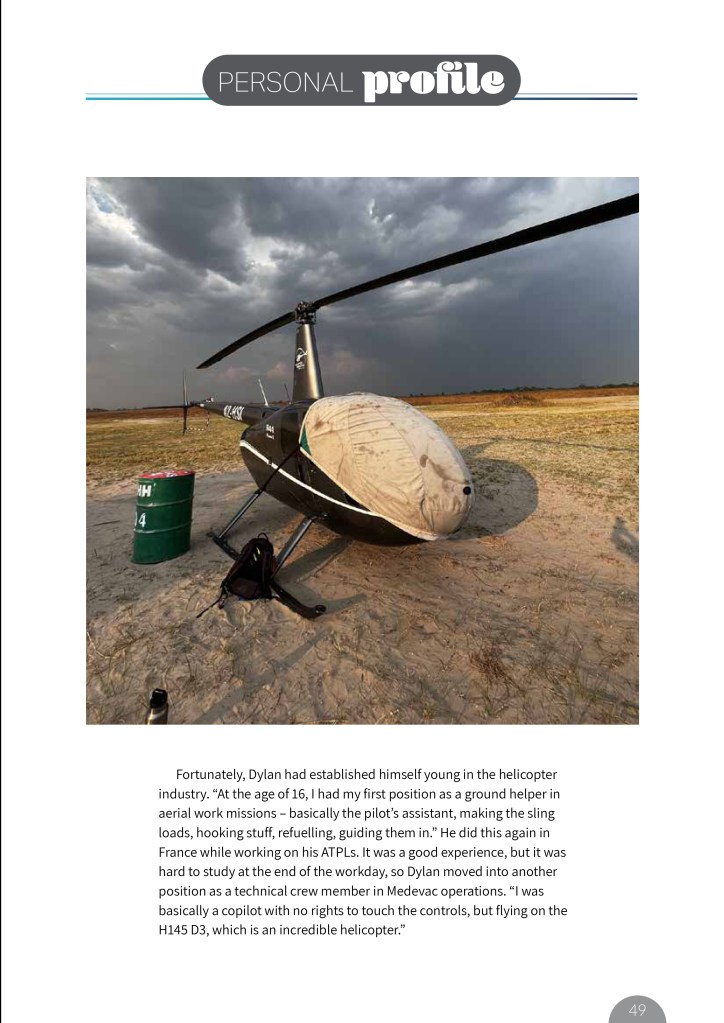
Fortunately, Dylan had established himself young in the helicopter industry. “At the age of 16, I had my first position as a ground helper in aerial work missions – basically the pilot’s assistant, making the sling loads, hooking stuff, refueling, guiding them in.” He did this again in France while working on his ATPLs. It was a good experience, but it was hard to study at the end of the workday, so Dylan moved into another position as a technical crew member in Medevac operations. “I was basically a copilot with no rights to touch the controls, but flying on the H145 D3, which is an incredible helicopter.”
“I loved the fact that we flew to save lives, but it also made me realize I am not made for it. It takes a lot to face people in pain; witnessing road crashes, dead people, and hurt people every single day is a lot, and I think I am not the right person to do it for now. I could take it, but I wouldn’t want to do it again soon because it hurts too much.”
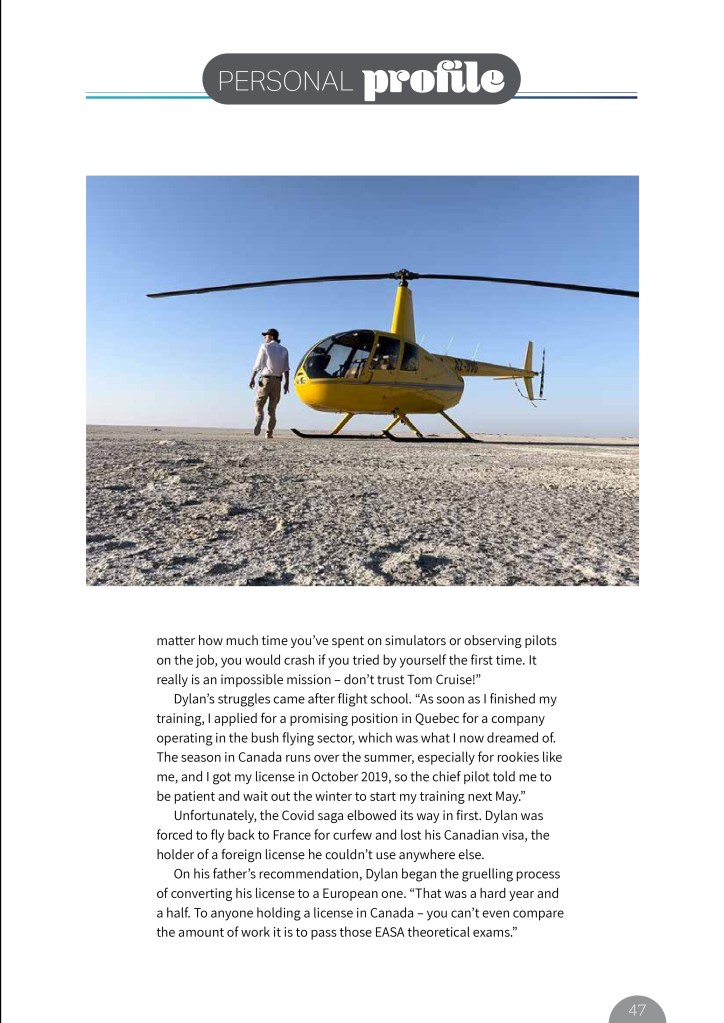
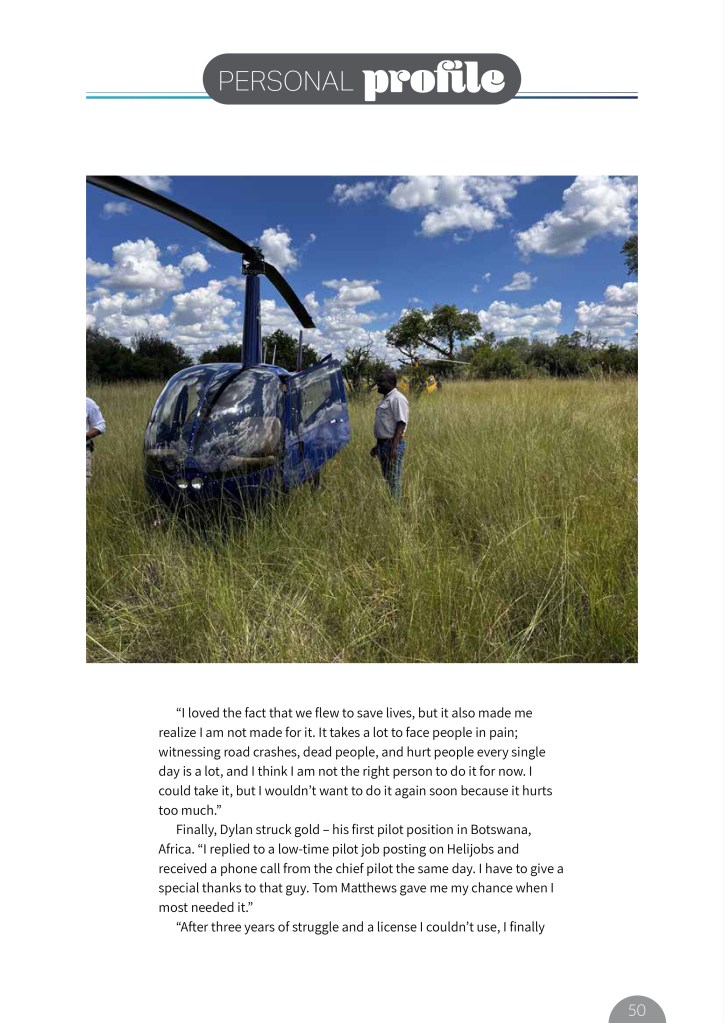
Finally, Dylan struck gold – his first pilot position in Botswana, Africa. “I replied to a low-time pilot job posting on Helijobs and received a phone call from the chief pilot the same day. I have to give a special thanks to that guy. Tom Matthews gave me my chance when I most needed it.”
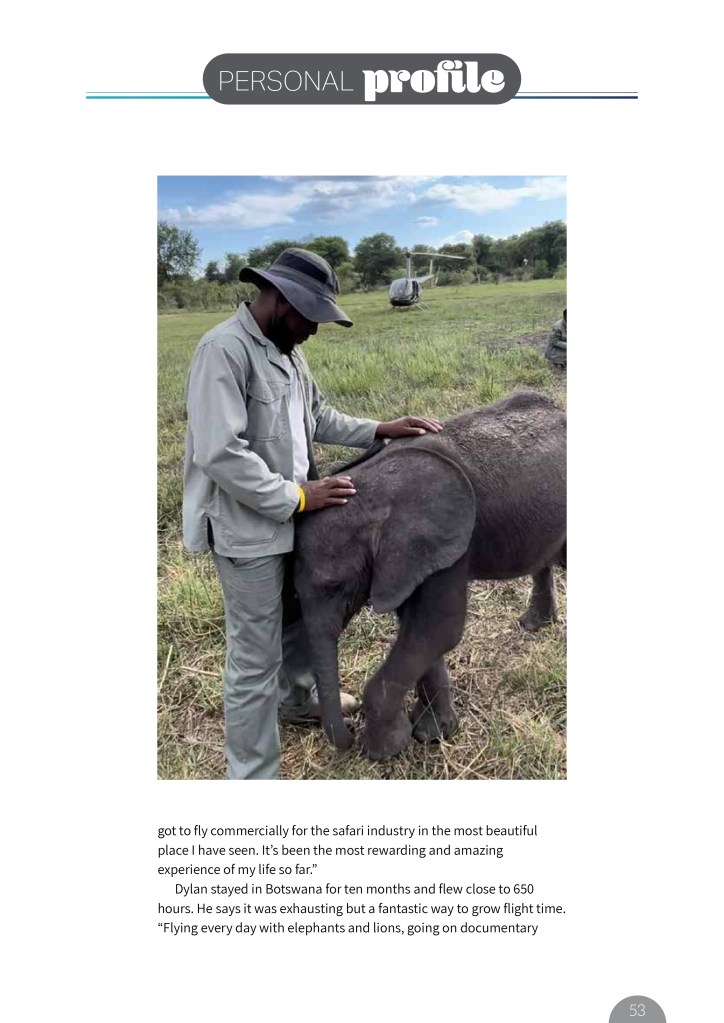
“After three years of struggle and a license I couldn’t use, I finally got to fly commercially for the safari industry in the most beautiful place I have seen. It’s been the most rewarding and amazing experience of my life so far.”
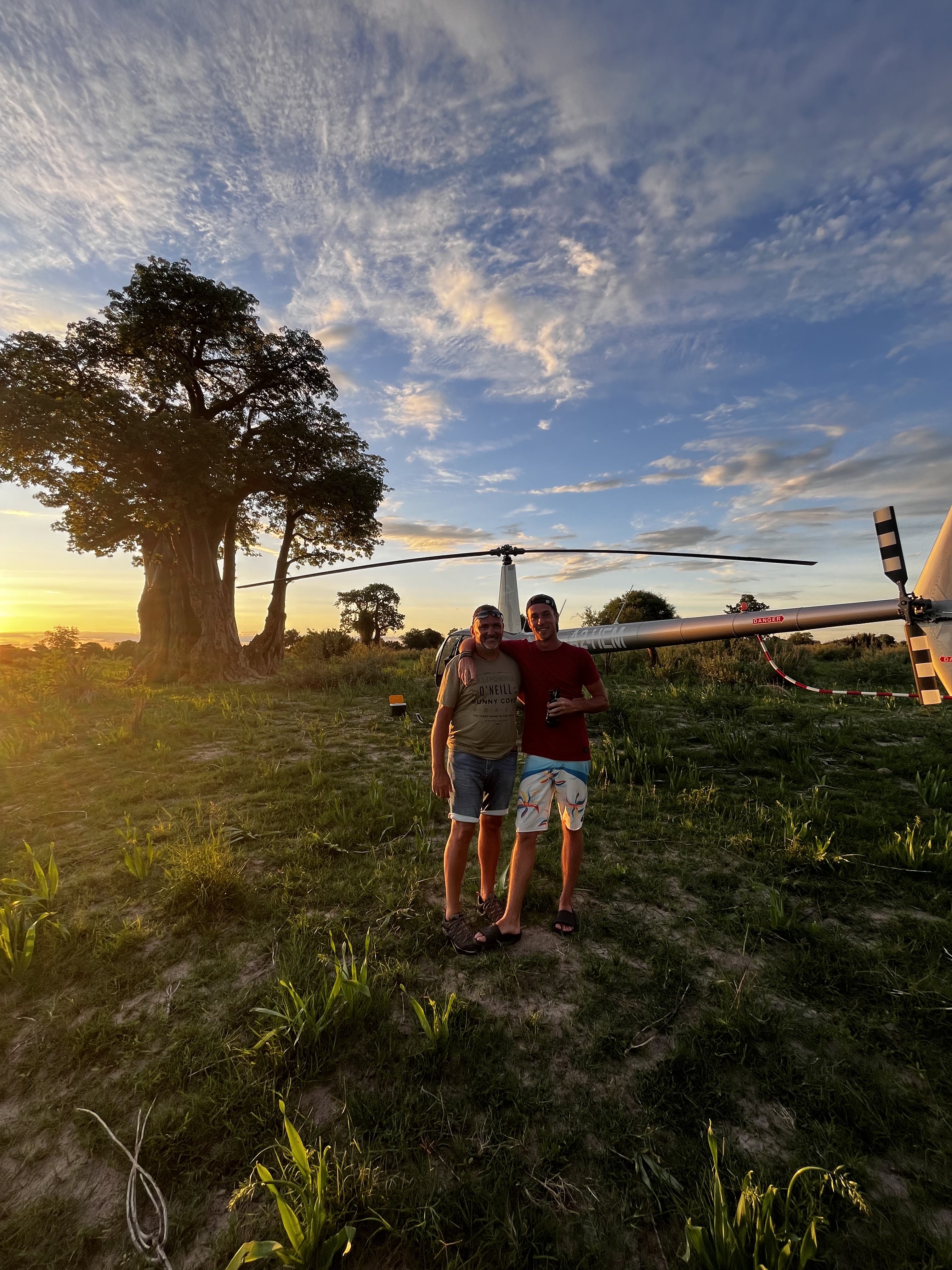
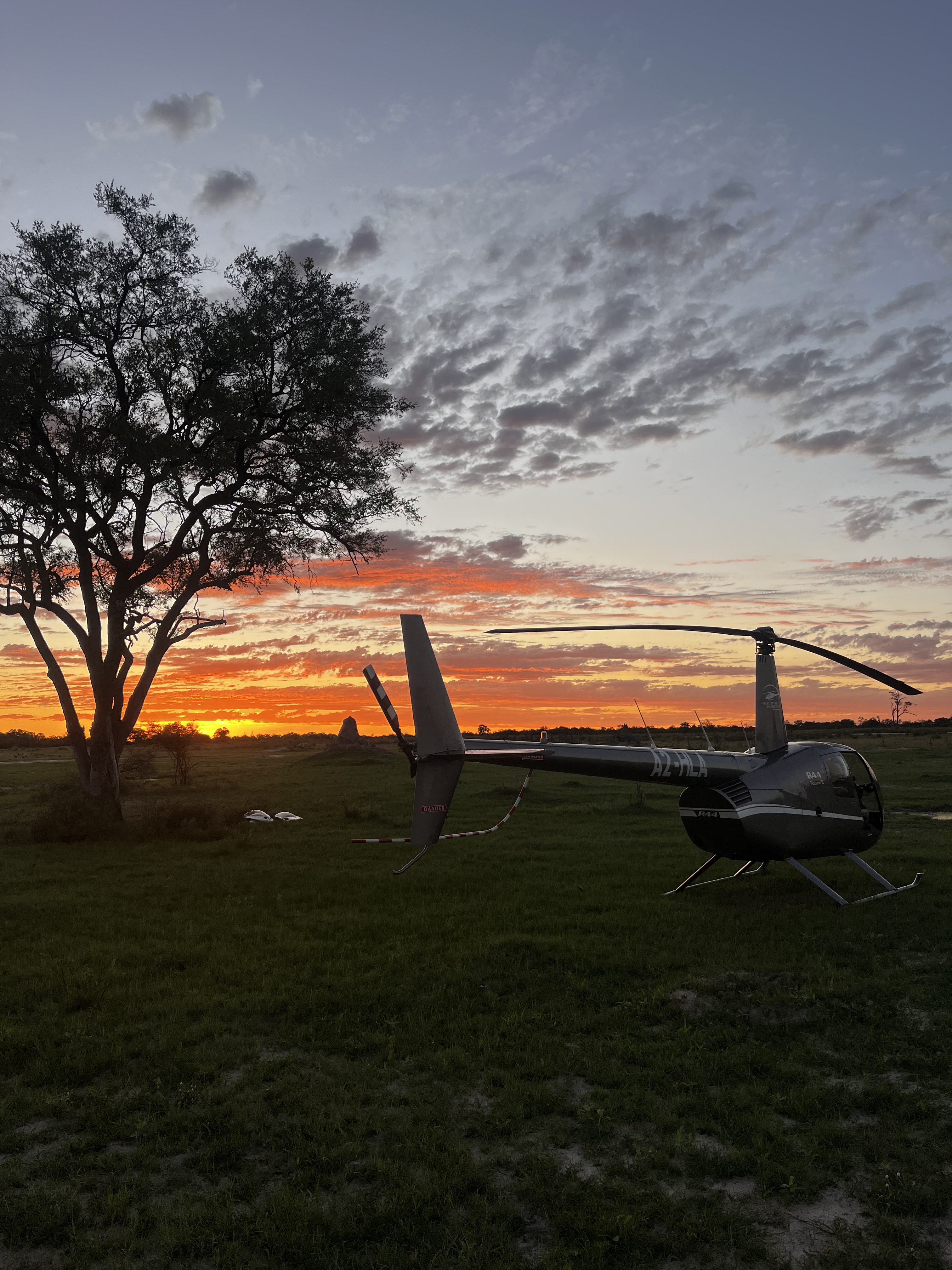
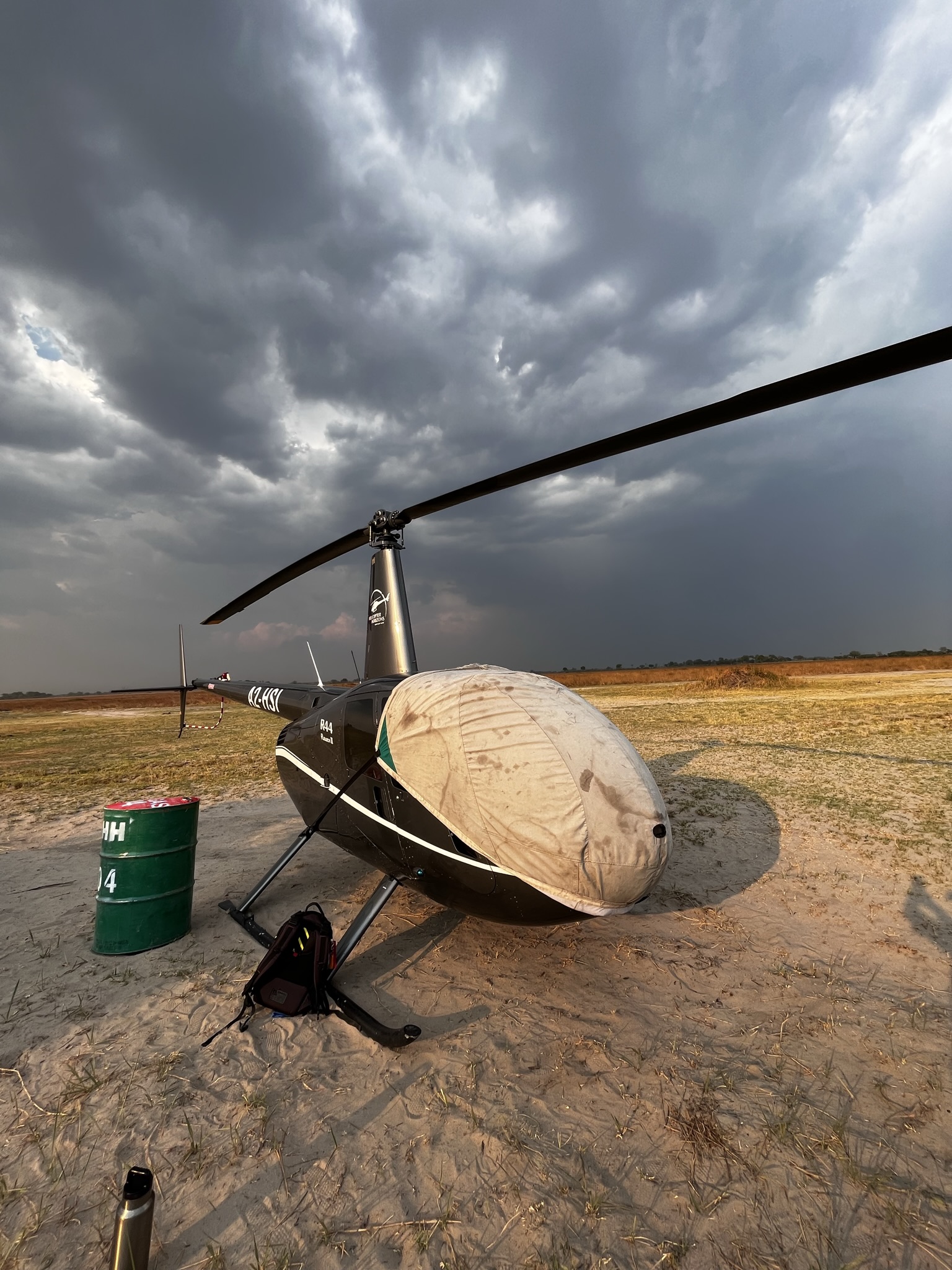
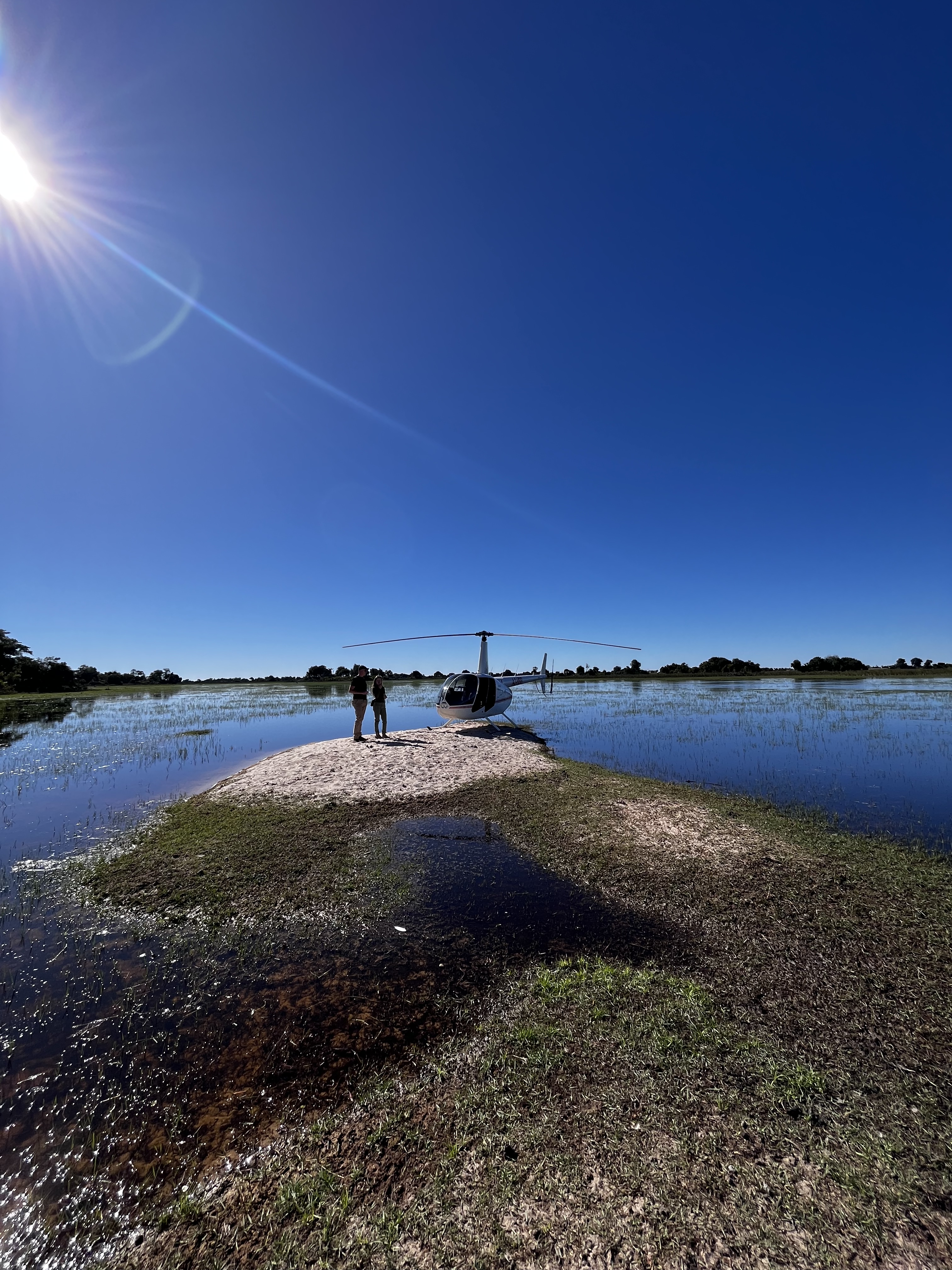
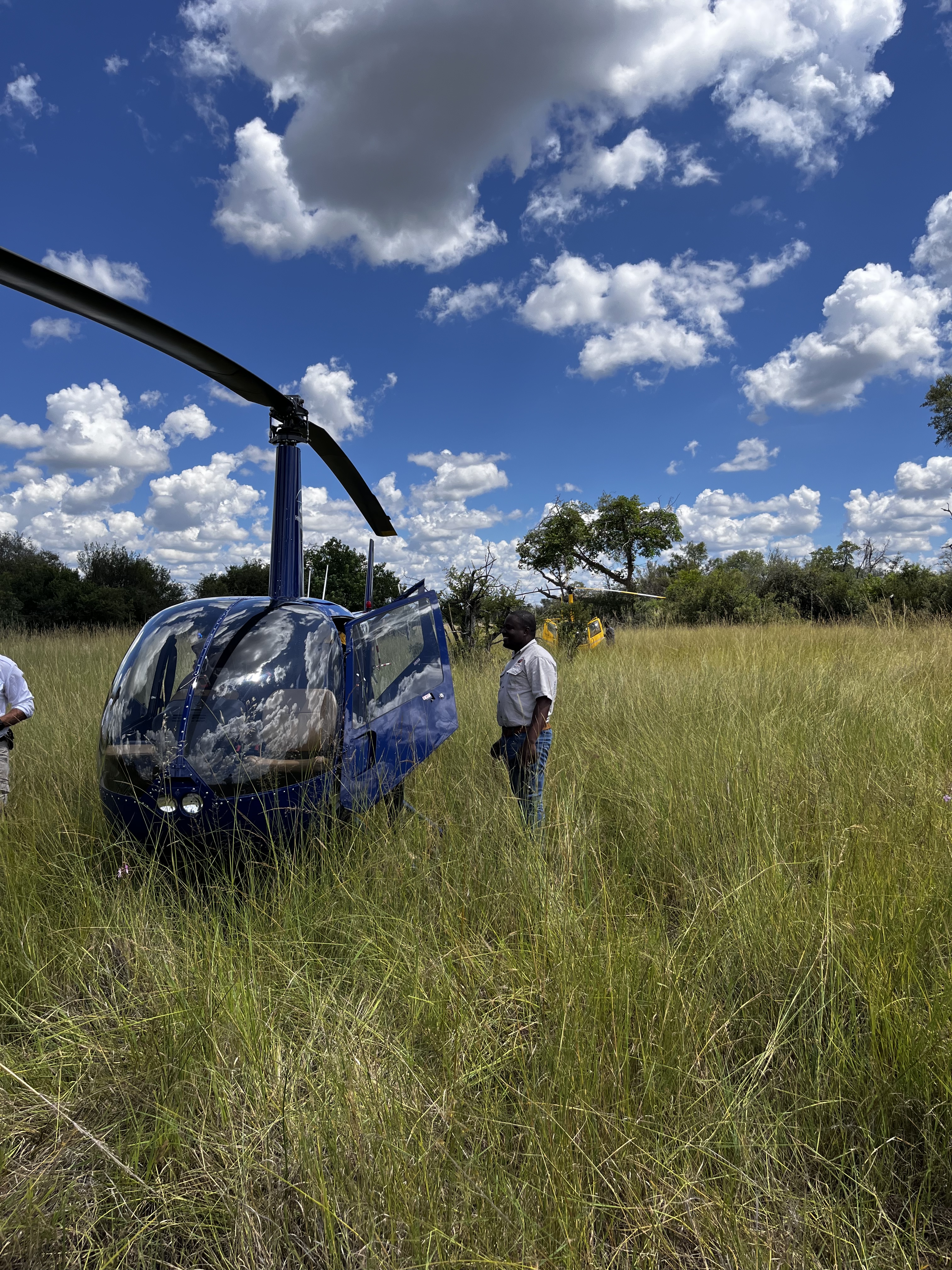
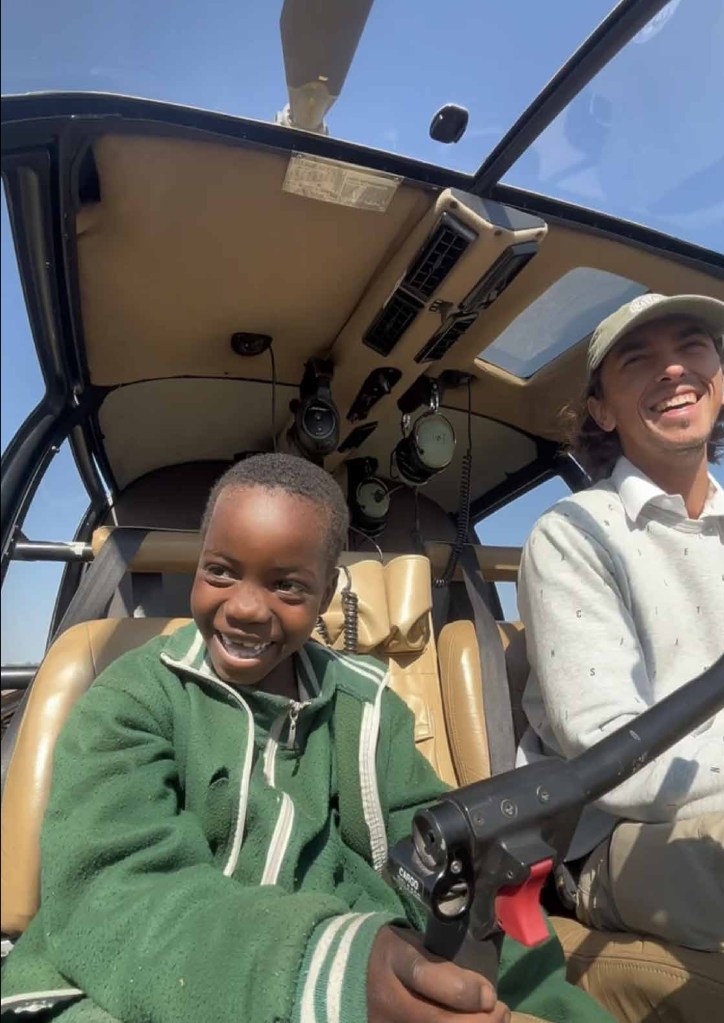
Dylan stayed in Botswana for ten months and flew close to 650 hours. He says it was exhausting but a fantastic way to grow flight time. “Flying every day with elephants and lions, going on documentary flights for famous wildlife channels, photography flights, anti-poaching, wildlife conservation, and territory surveys.”
“The Okavango Delta, where we operated, is as big as Switzerland, and on a casual day, we could cross it entirely a couple of times. So I would be picking up guests from different camps all day and flying a different safari every time.”
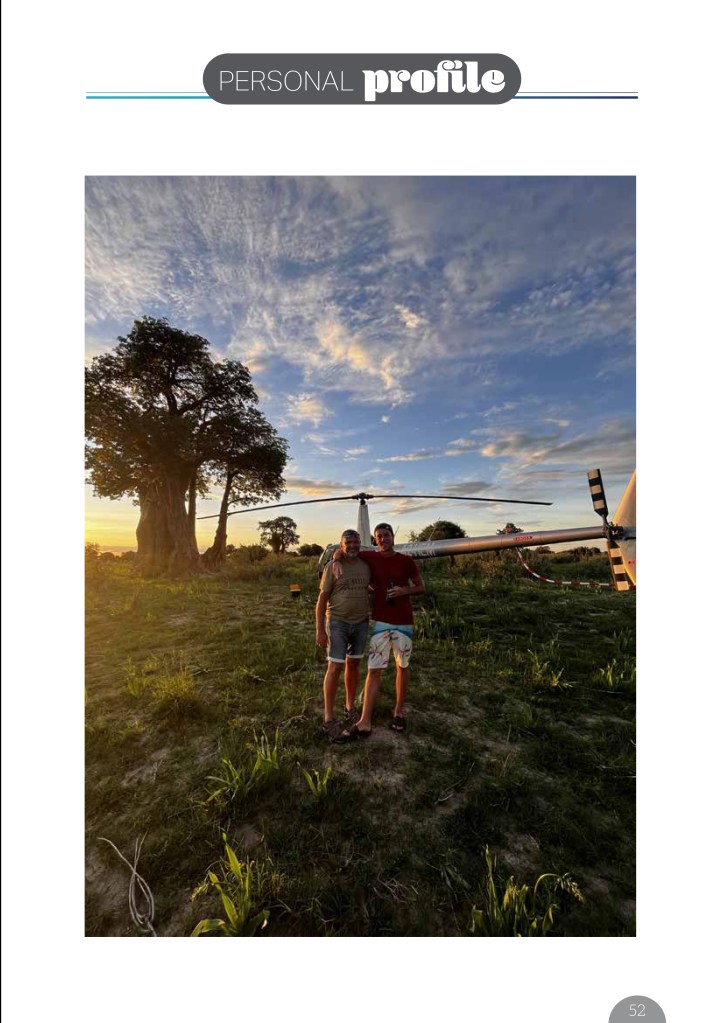
“There wasn’t any day like another, and even throughout the day, the planning could change. It was a really remote area, so updates would come by satellite phone or a satellite-connected device. Most of the time, I would land right before sunset in a new safari camp and do that every day for weeks, all by myself with my heli in the African bush.
“It taught me a lot about how to fly a helicopter. There is a world between flight school and what really happens when you are on your own out there. All the decision-making is on you, and there is no one to help when it starts to go wrong.”
“Every day, I would feel so grateful thinking about my experience growing, the opportunities I had there, and the things I had seen during the day. The fact I was getting paid for it was almost unreal in my mind!”
Dylan is now back in France and completed his EASA conversion in July this year. He hopes to move into turbines next.
“My ambition is to be an aerial work pilot. I love the idea of slinging stuff with a chopper because it takes more than just knowing how to fly, and I’d like to do firefighting because I think it’s a noble cause. But that’s still a long way off, and we never know what life’s made of! One thing I have learned is not to make plans because they always change, but I am really hoping for a job in the south of France, from the French Riviera to the Alps.”
“For now, I’m just going to keep learning all I can and listening to the most experienced pilots so that, in the future, I’ll be the best professional I can be.”
–– HO
Originally published in HeliOps Magazine Issue 152

