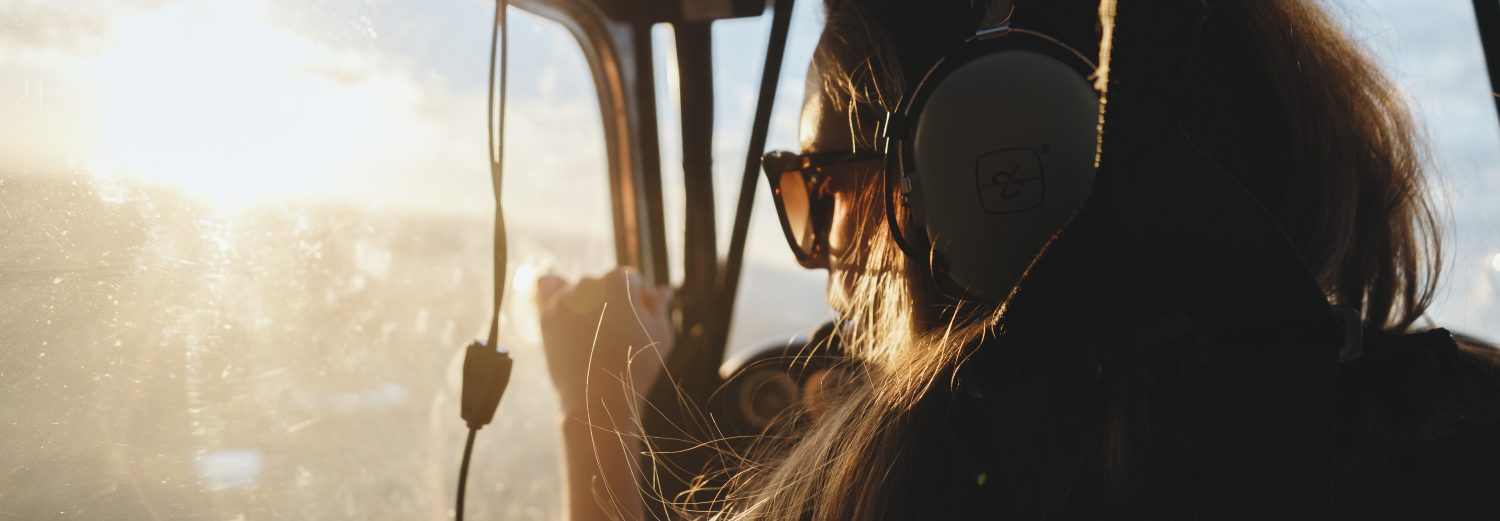
Leigh Coate’s first flight was in southern California at age 15, when her stepdad, a private pilot, took her up for a spin in a Cessna 172. “That feeling, when we were 1000 feet up looking down at all the cars on the freeway stuck in slow-moving traffic, was mind-blowing. It was absolute freedom – up above it all.”
“I was instantly hooked, but not sure how I was going to pay for flight lessons, so I requested a meeting with my grandfather, who was the only person in my family with any money. I was super nervous to ask him – and super disappointed when he said no and that I needed to learn how to make things happen on my own.”
But she did, and of course, he was right. For the next three years, even though she was in high school at the time, Leigh managed to work and save enough to get her first pilot certificate – a private ASEL – when she was 19.
Then Leigh got sidetracked. She began chasing winter, alternating hemispheres, racing snowboardcross, and having a blast in the decade that followed. However, in 2003, Leigh moved to Hawaii after a car accident and leg injury forced her to retire from pro-riding.
“One night, I was talking to a guy at a housewarming party in Kona, and he told me about the helicopter school there. He said, ‘You get a loan for 50k, you go through school at your own pace – it usually takes about a year to get all five ratings – then you teach for another year til you get 1000 hours, and then you go get any job you want because all the Vietnam guys are retiring – so lots of openings.'”
“I instantly knew I had to do that. I had another beer and told my best friend the same story. She thought it sounded great, too, so we both walked into Mauna Loa Helicopters the next day.”
“My first 135 job was with TEMSCO, flying tours in Juneau. We all worked 14-hour duty days across a six-day week and learned a ton. It was great training and great training wheels to learn the weather flying in a helicopter train – six helis at a time. It also gave me the turbine time I needed for my next job flying tours for Paradise Helicopters on the Big Island. I flew 1000 hours that year in an MD500, made 100K, bought a condo, and paid off my student loan.”
Leigh seemed set with life and a career but soon realized she wasn’t building her skillset as a pilot flying the same route, landing at the same airport, and answering the same tourist questions every day. So she went back to Alaska and got into utility flying.
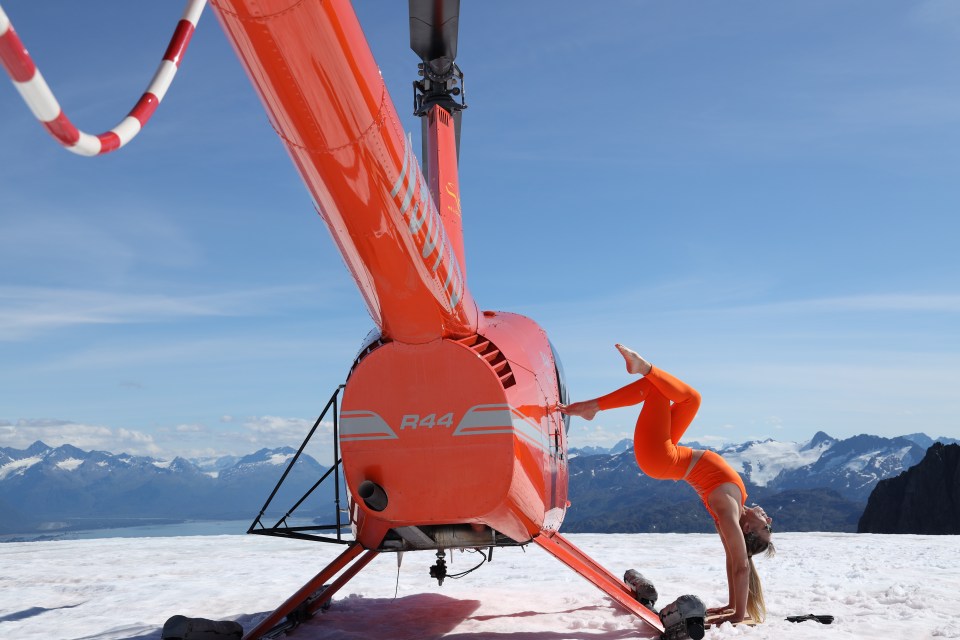
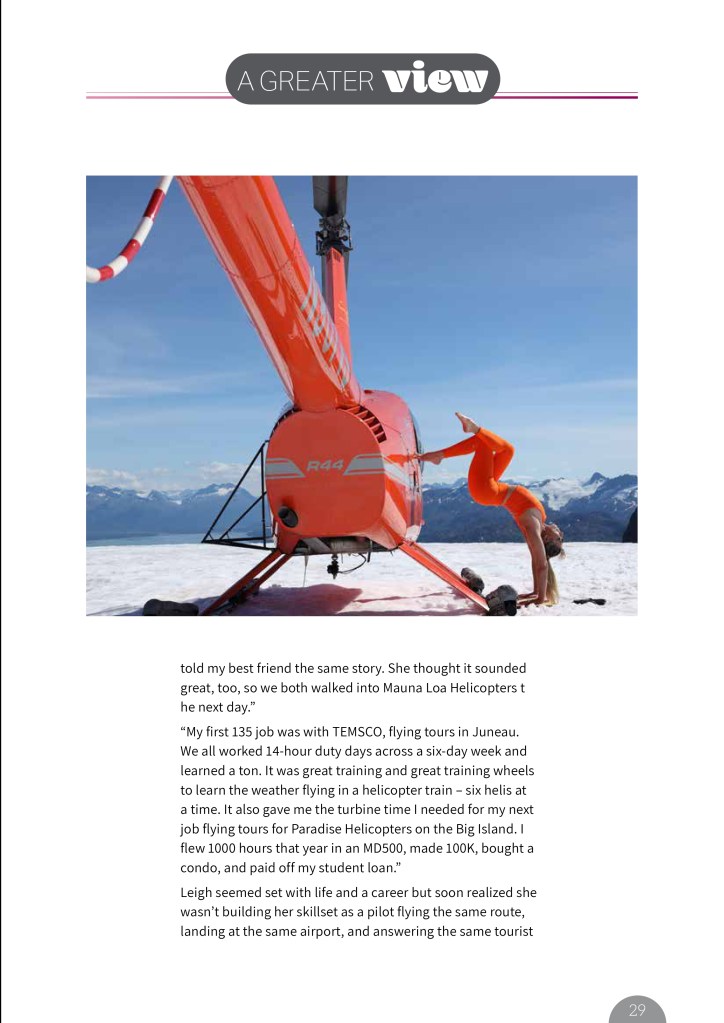
“I learned how to long line and got into precision long-lining. Moving drills with an MD500 was a blast. I also did a ton of flying and long-lining in the R44.” All of this was living and flying out of ‘man camps’ and random staging spots – all very remote. Tent living, outhouses, structured shower limits. “And no life outside of work. So I worked all summer, literally, and took my winters off back in Hawaii, just cruising, surfing, freediving, yoga-ing, mountain biking, beaching, and relaxing. Single life!”
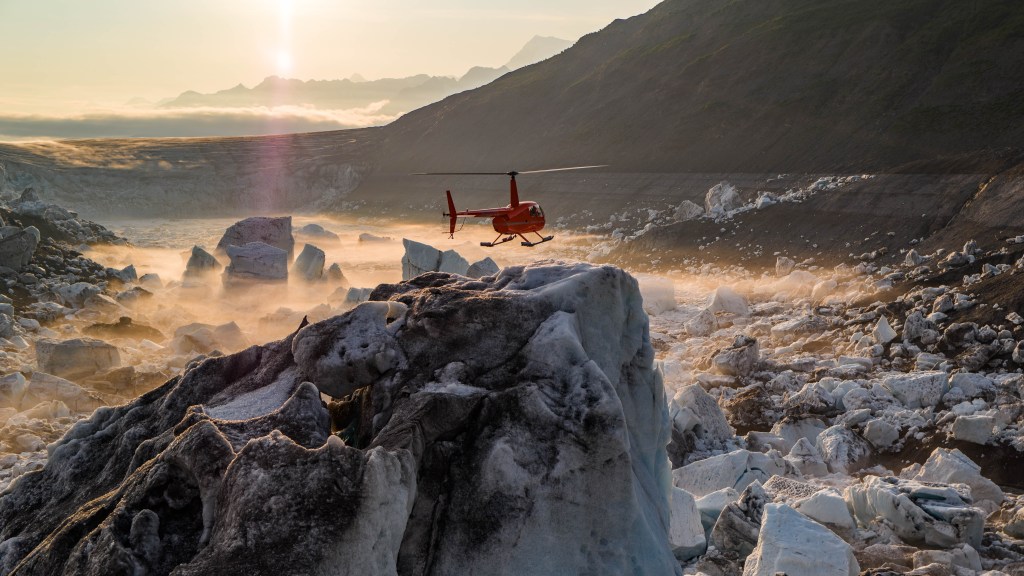
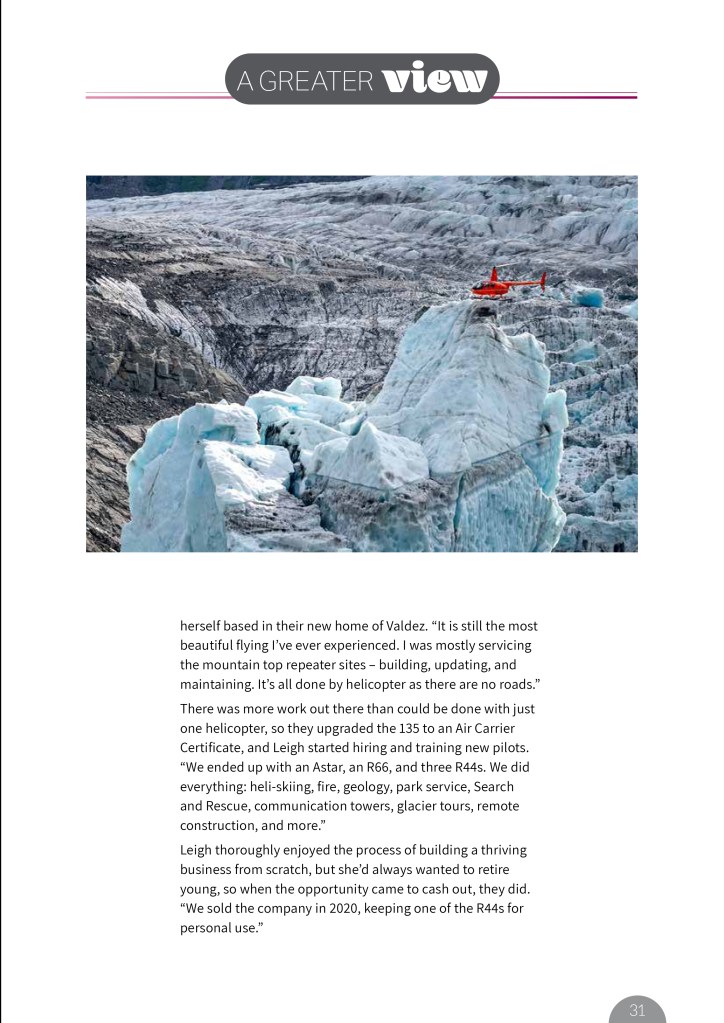
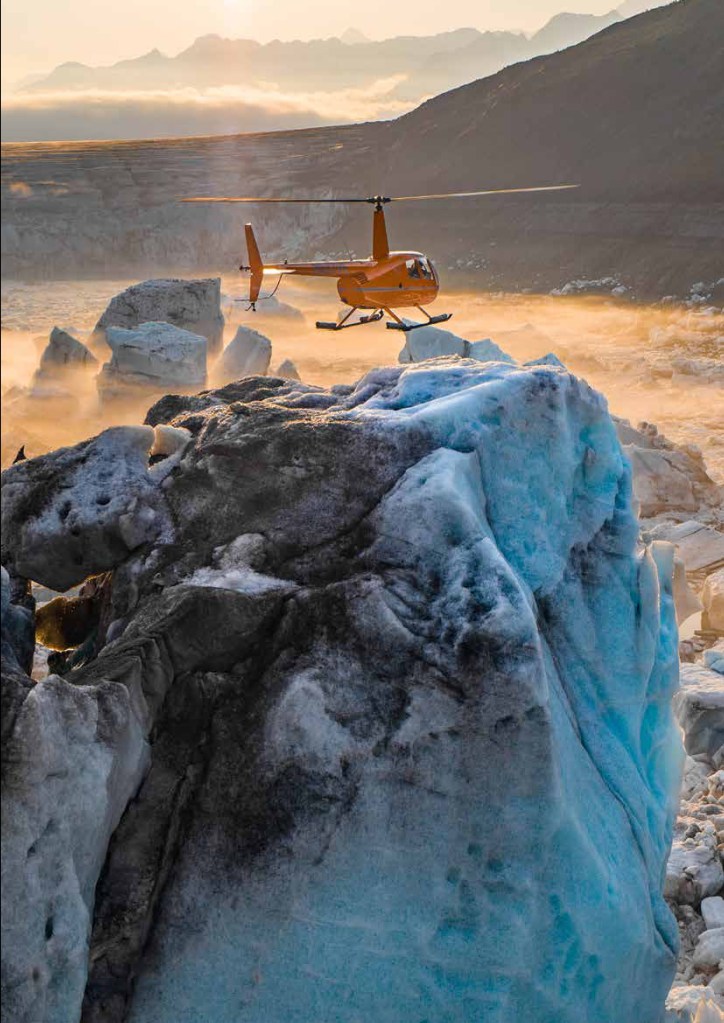
Leigh met her boyfriend while flying a job in a small town in Alaska and decided to finally plant some roots. Remote fieldwork proved to be a challenge, so in 2010, the two of them went in with a partner and bought a used R44, got a single pilot 135 certificate, and Leigh started working for herself based in their new home of Valdez. “It is still the most beautiful flying I’ve ever experienced. I was mostly servicing the mountain top repeater sites – building, updating, and maintaining. It’s all done by helicopter as there are no roads.”
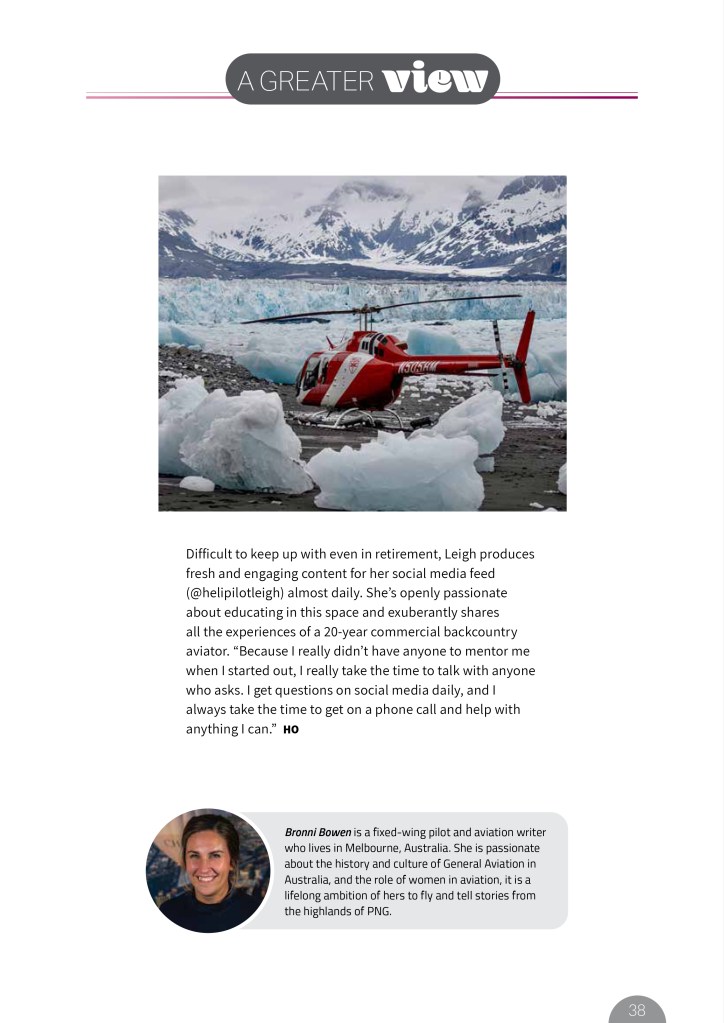
There was more work out there than could be done with just one helicopter, so they upgraded the 135 to an Air Carrier Certificate, and Leigh started hiring and training new pilots. “We ended up with an Astar, an R66, and three R44s. We did everything: heli-skiing, fire, geology, park service, Search and Rescue, communication towers, glacier tours, remote construction, and more.”
Leigh thoroughly enjoyed the process of building a thriving business from scratch, but she’d always wanted to retire young, so when the opportunity came to cash out, they did. “We sold the company in 2020, keeping one of the R44s for personal use.”
Retired life looks great on Leigh. “Wake up, check the weather, and go fly somewhere fun!”
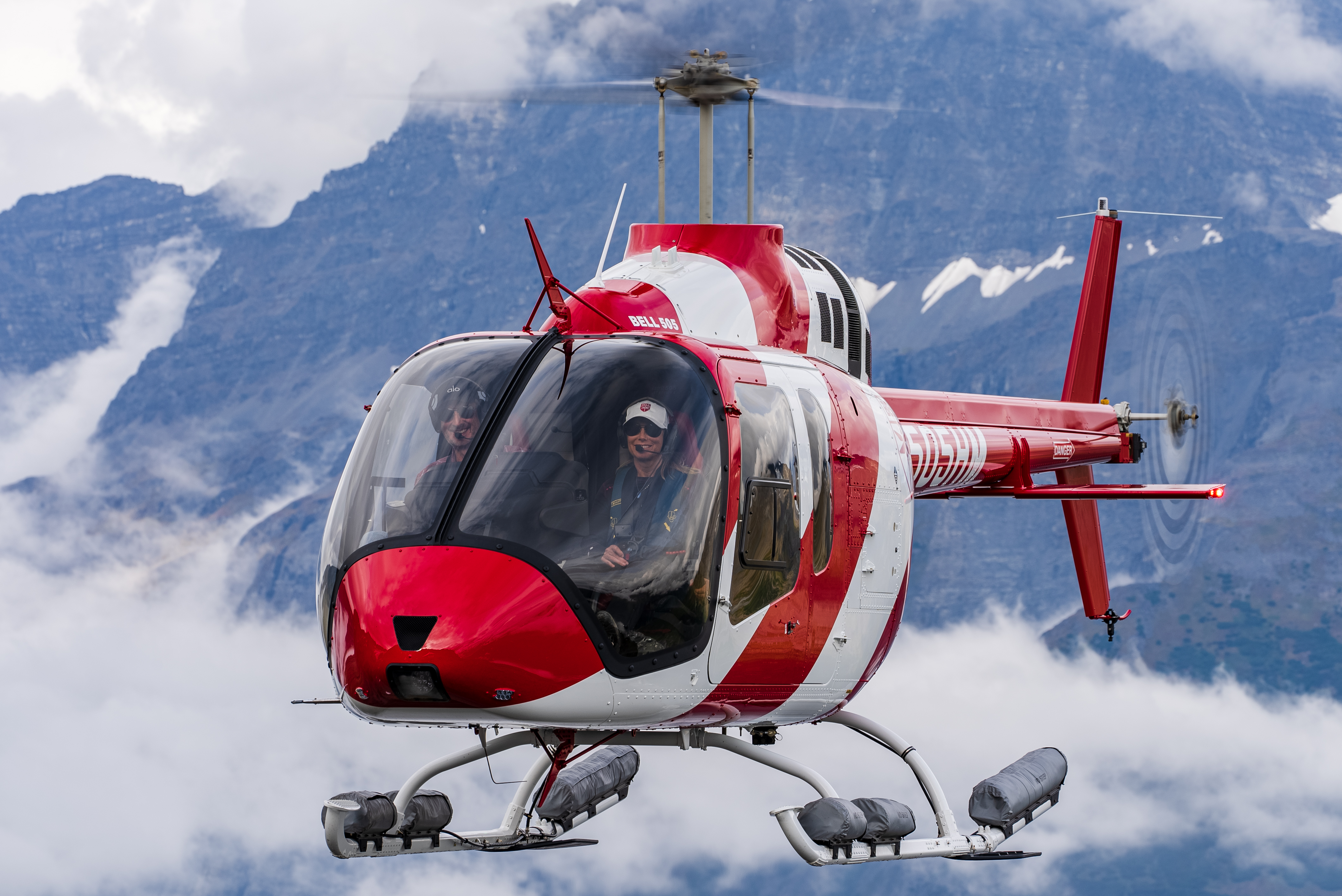
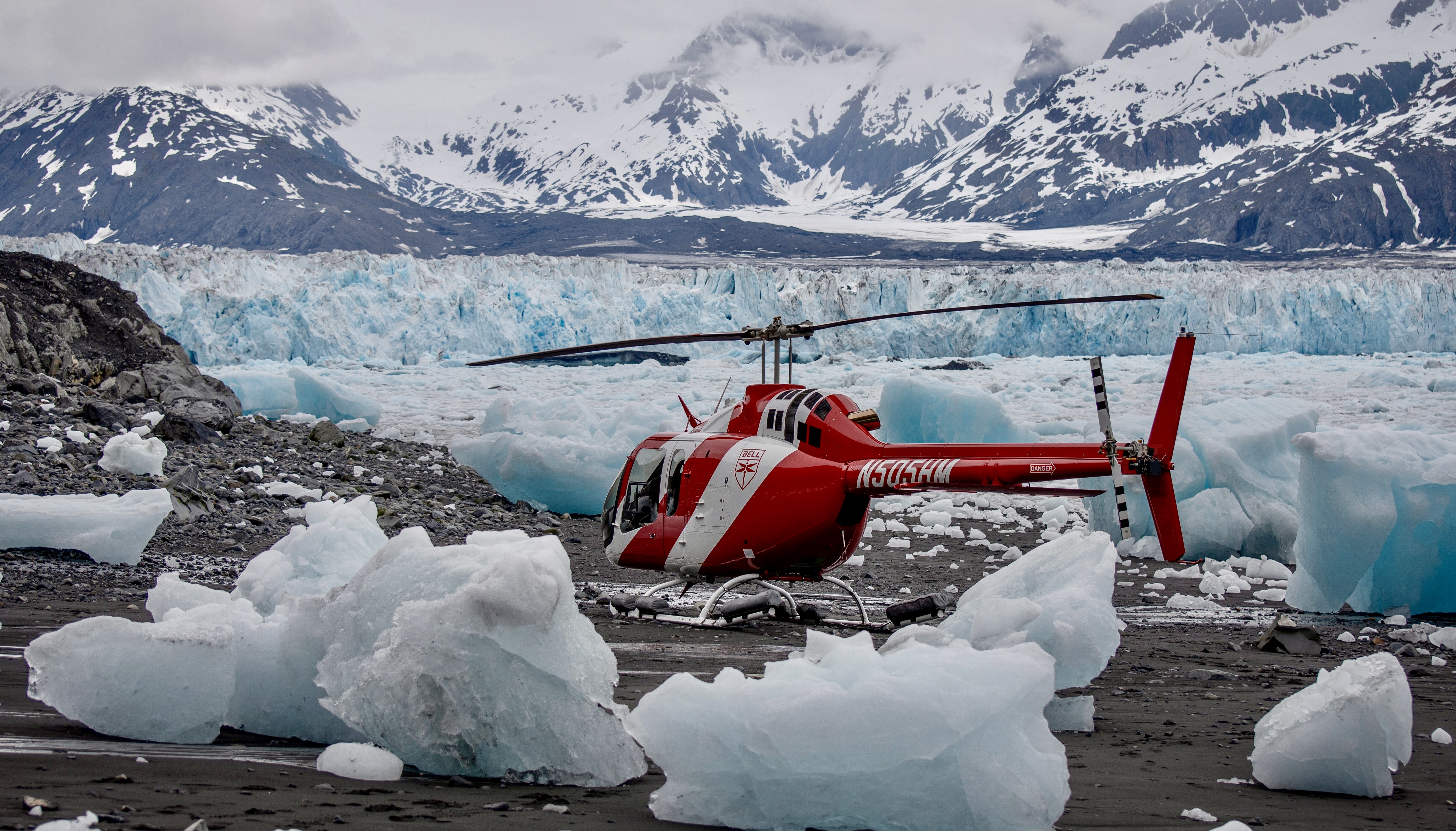
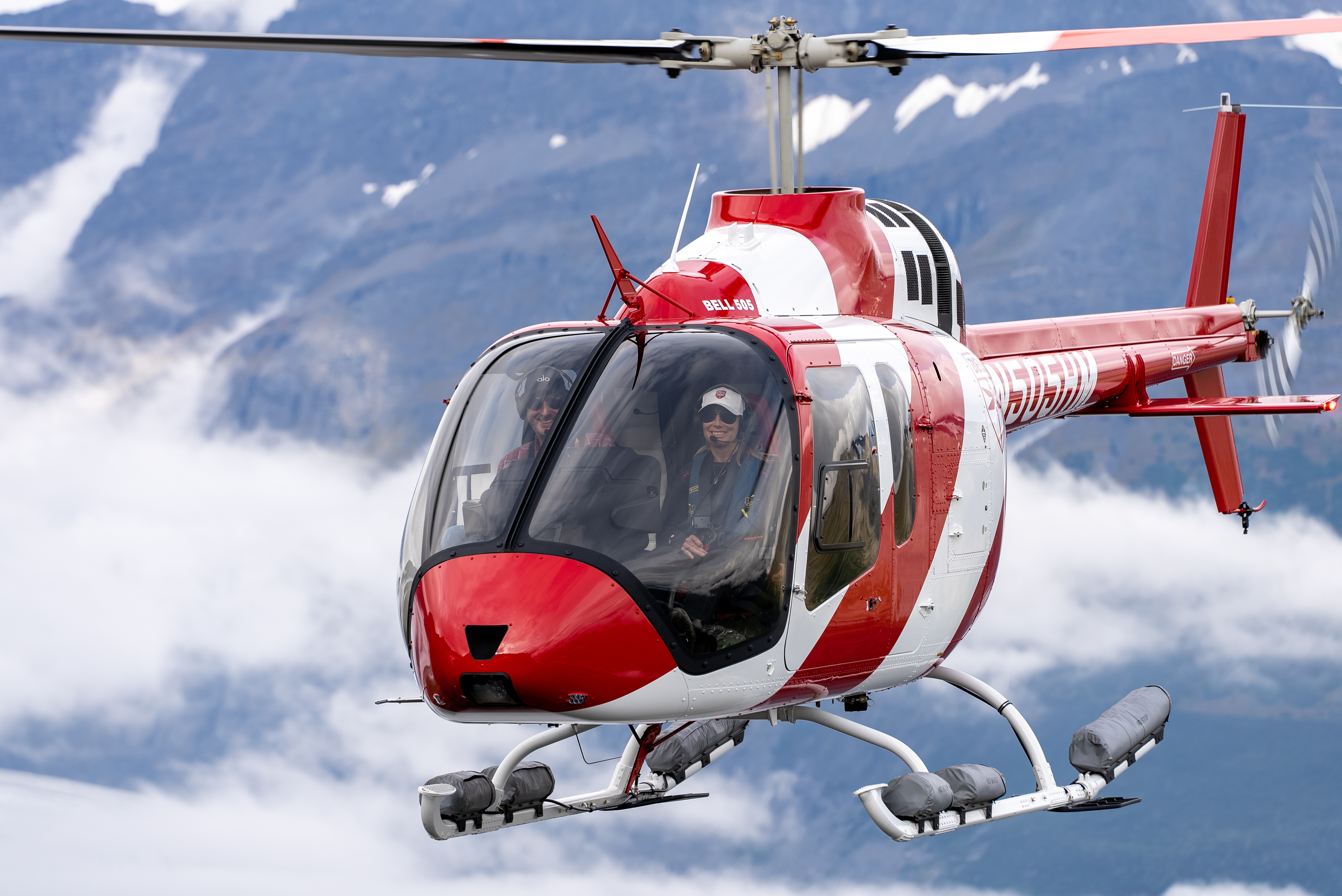
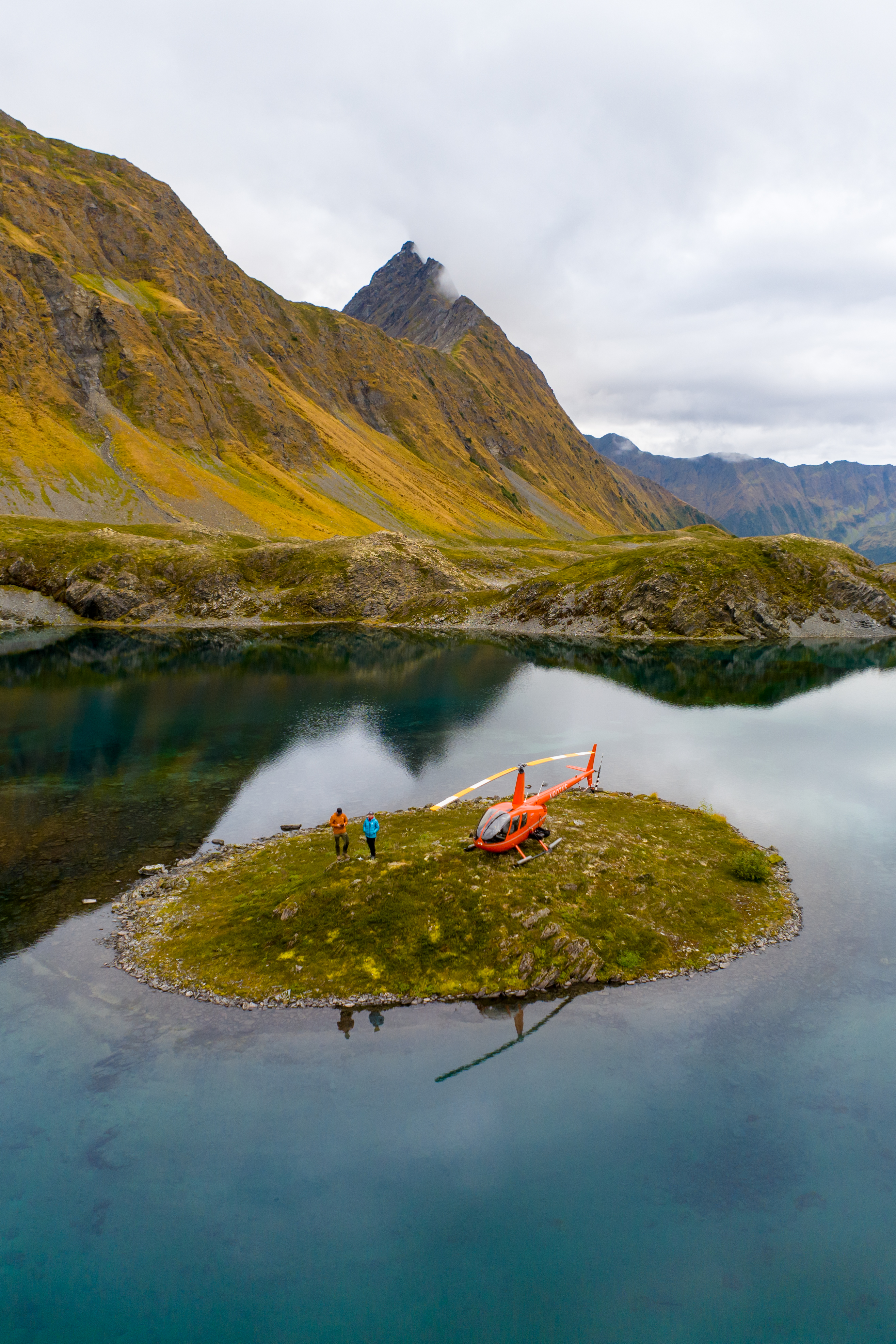
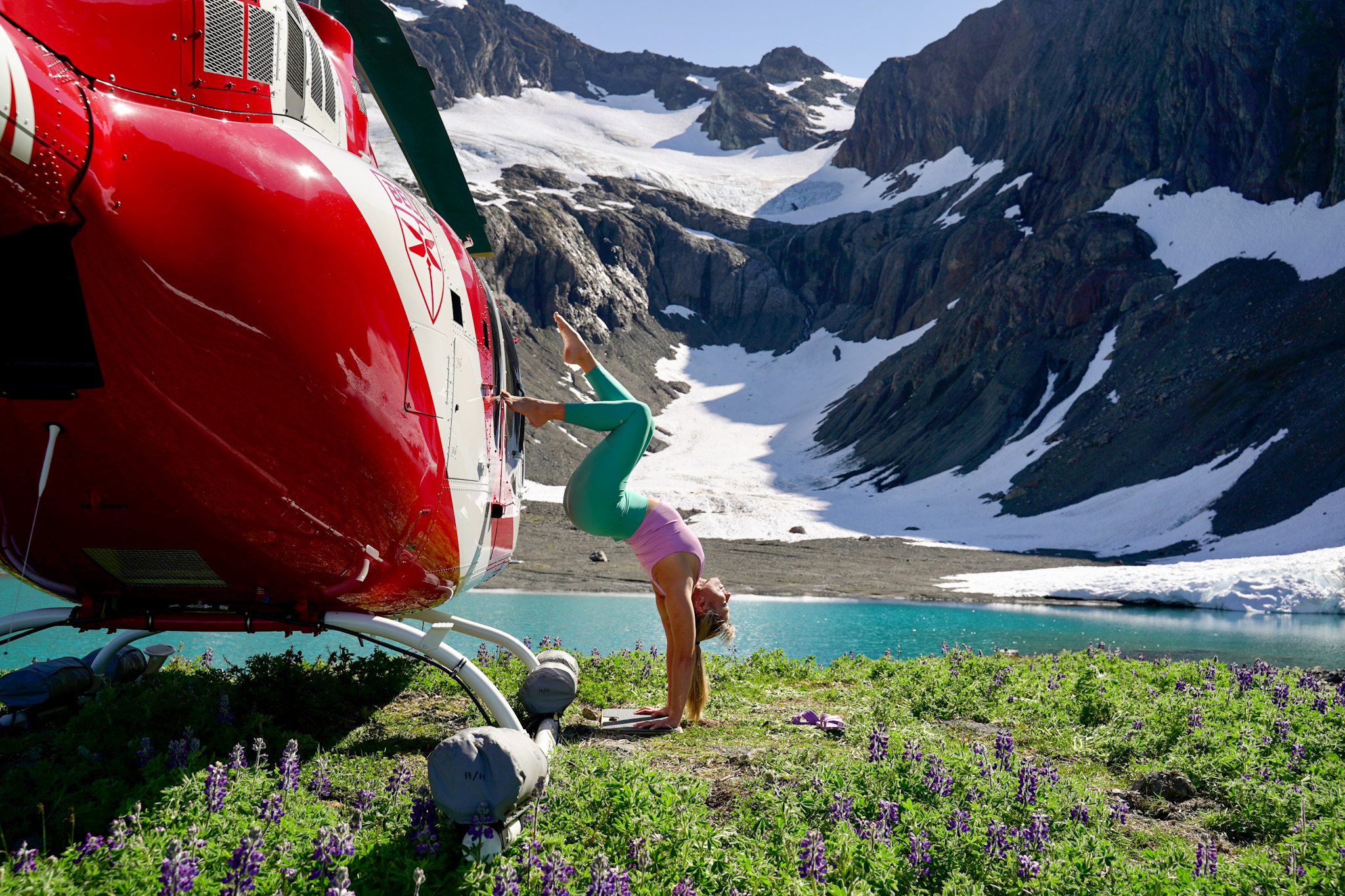
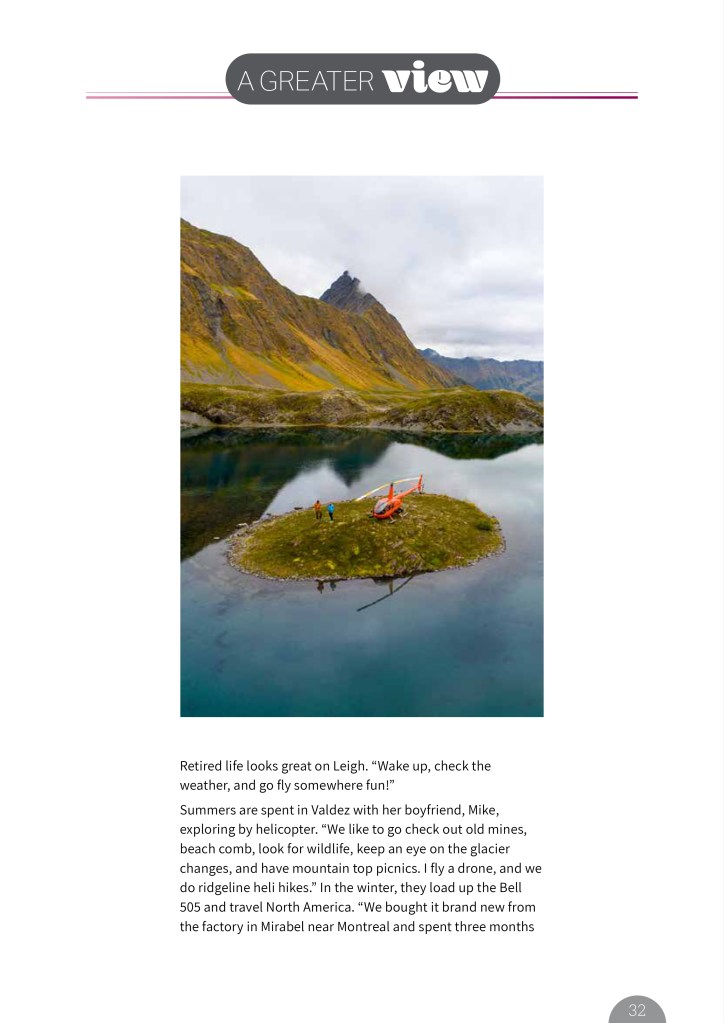
Summers are spent in Valdez with her boyfriend, Mike, exploring by helicopter. “We like to go check out old mines, beach comb, look for wildlife, keep an eye on the glacier changes, and have mountain top picnics. I fly a drone, and we do ridgeline heli hikes.” In the winter, they load up the Bell 505 and travel North America. “We bought it brand new from the factory in Mirabel near Montreal and spent three months flying it home the long way – all the way to the Dominican Republic and everywhere in between.”
“We also recently bought a carbon Cub FX3 and flew it from Key West, Florida, up to Alaska. I’ve been having fun working on my airplane skills. Mike is a bush pilot and has had a Super Cub most of his life. It’s typically Alaskan flying: hunting, fishing, and landing in crazy spots on floats, skies, or tundra tires, depending on the season. I got him into helicopters, and now he’s teaching me backcountry airplane flying skills.”
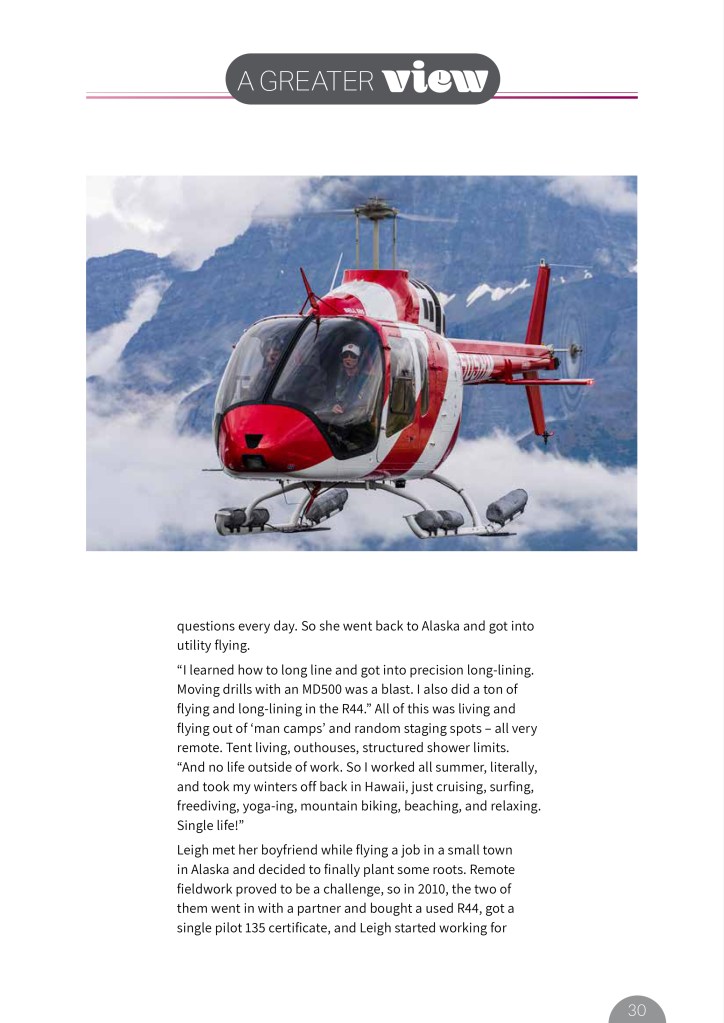
“We love barnstorming, dropping in for visits and taking people for flights. The 505 has a wild, high-visibility paint scheme – we nicknamed it the CandyCaneCopter. I share our adventures on social media, so when people spot it and send me a picture or tag us, I try to take them flying or leave them a hat or some other sort of treasure.”
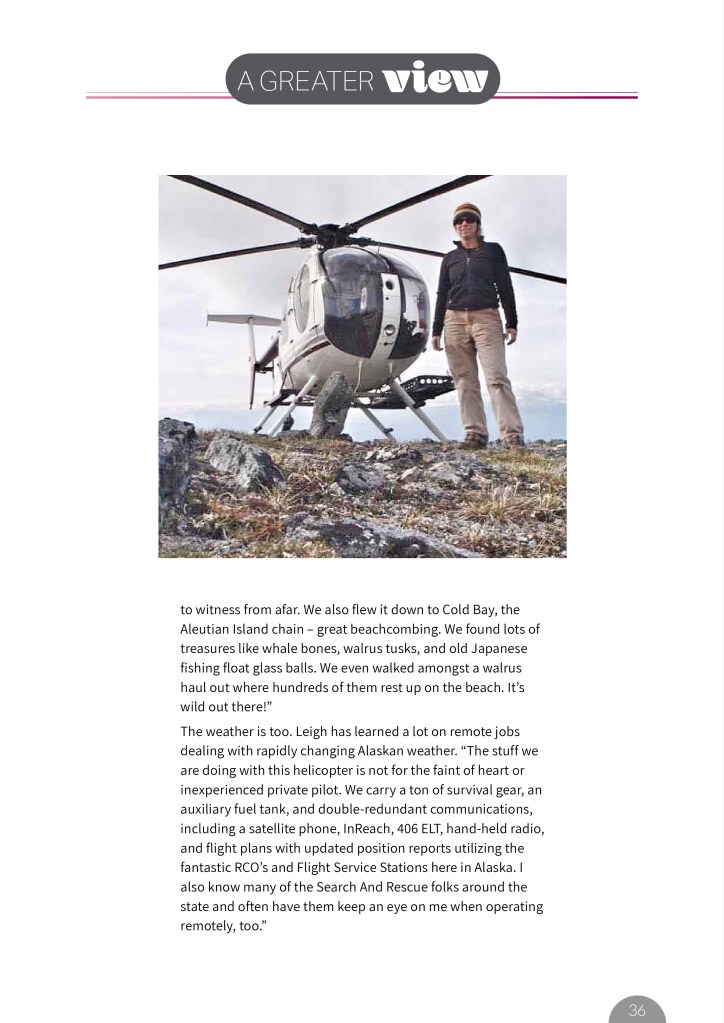
“This summer, we flew it from Arizona to New Mexico, then up to the farthest north point of Alaska. We went way out over the Arctic Ocean sea ice to see polar bears, amazing animals to witness from afar. We also flew it down to Cold Bay, the Aleutian Island chain – great beachcombing. We found lots of treasures like whale bones, walrus tusks, and old Japanese fishing float glass balls. We even walked amongst a walrus haul out where hundreds of them rest up on the beach. It’s wild out there!”
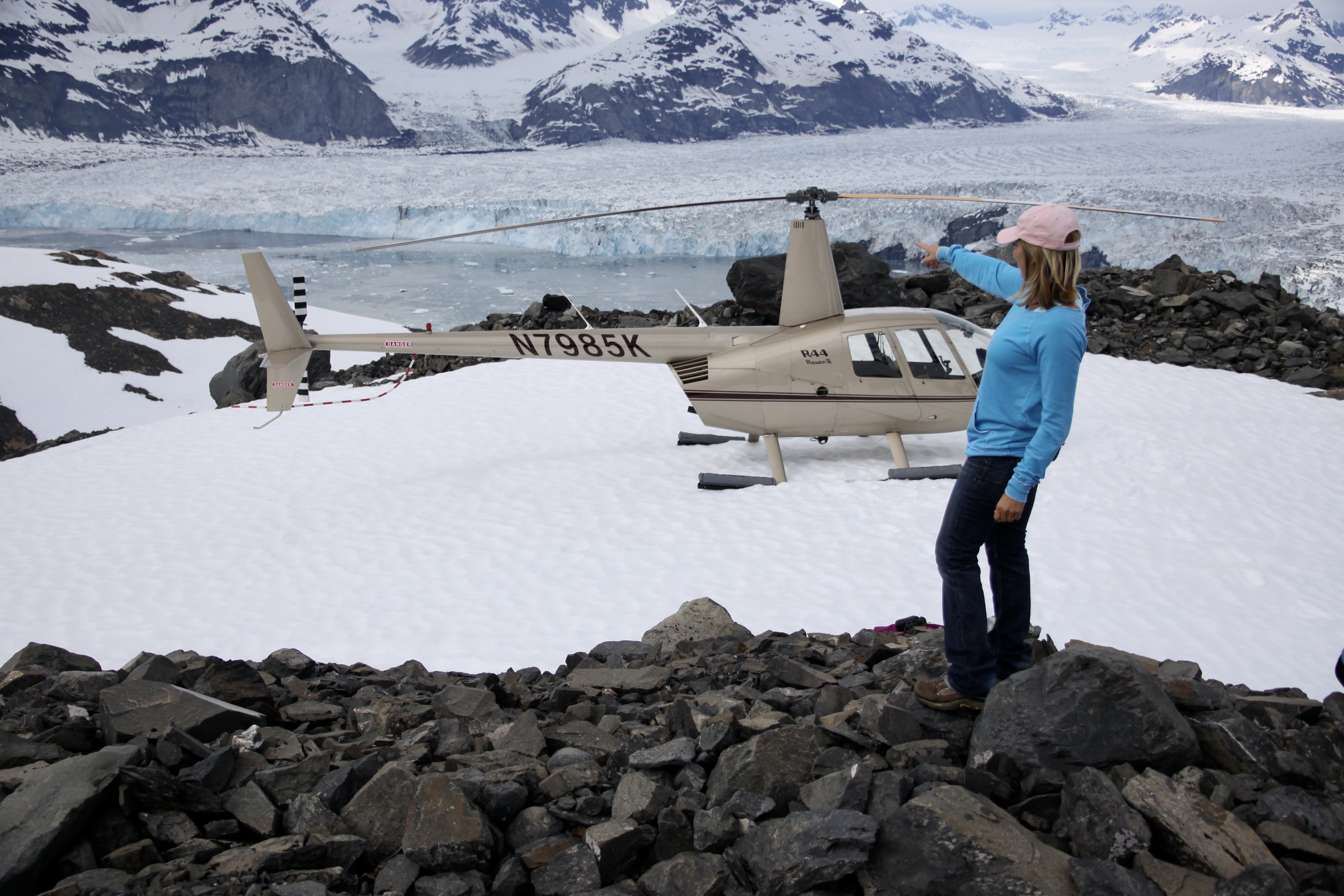
The weather is too. Leigh has learned a lot on remote jobs dealing with rapidly changing Alaskan weather. “The stuff we are doing with this helicopter is not for the faint of heart or inexperienced private pilot. We carry a ton of survival gear, an auxiliary fuel tank, and double-redundant communications, including a satellite phone, InReach, 406 ELT, hand-held radio, and flight plans with updated position reports utilizing the fantastic RCO’s and Flight Service Stations here in Alaska. I also know many of the Search And Rescue folks around the state and often have them keep an eye on me when operating remotely, too.”
Difficult to keep up with even in retirement, Leigh produces fresh and engaging content for her social media feed (@helipilotleigh) almost daily. She’s openly passionate about educating in this space and exuberantly shares all the experiences of a 20-year commercial backcountry aviator. “Because I really didn’t have anyone to mentor me when I started out, I really take the time to talk with anyone who asks. I get questions on social media daily, and I always take the time to get on a phone call and help with anything I can.”
–– HO

Originally published in HeliOps Magazine Issue 152
 Bronni Bowen