
Leah Colbert grew up in a small Australian town in the Wimmera region of Victoria. Aside from the odd visit to the area by air Ambulance, there were very few helicopters in her childhood. “It was only when I went away for my last few years of school that the doors opened up for me. A TIF for my 18th birthday was the starting point, and I have never looked back.”
Leah’s high school graduation goal was that in ten years, she’d be flying scenics around Ayers Rock. Just a couple of years later, at the age of 21, she was doing just that.
Leah commenced her flight training with the Helicopter Group in Melbourne. “I loved it, but I’d had very little exposure to aviation, so initially, it was like learning a new language. I found the theory difficult.”
“My teacher said not to take offense but that I would most likely find AGK (Aircraft General Knowledge) the hardest subject because girls generally did. I dug in pretty hard to make sure that wasn’t me!”
“I had a great network of people supporting me,” Leah asserts. “In saying that, though, I constantly came across people – generally pilots with the same or less experience as me – suggesting flying wasn’t for me or questioning my opinions or abilities.” For a new pilot, this negativity can be rife, often unnecessary, and very often confusing and daunting.
“In retrospect, I think that’s why I’ve enjoyed my years in fire work so much; it’s a very supportive environment – a real community. I’ve never felt like I didn’t belong. I’ve been super lucky to have several mentors over the years, and the entire firefighting industry is corroborative, which is why I’ve been happy to remain in that sector for over a decade.”
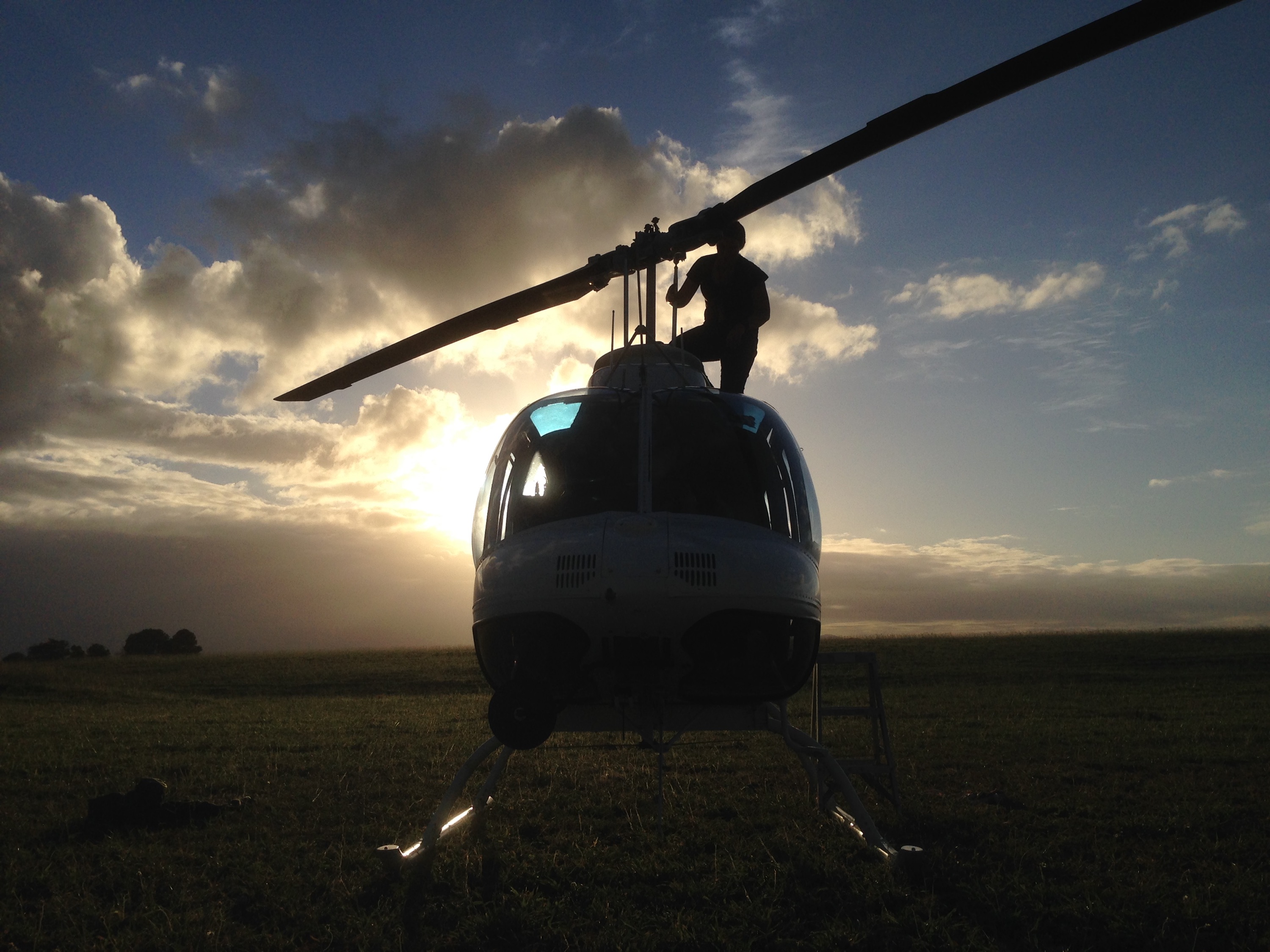
Work was very hard to get when Leah started. Roughly, only seven out of the ten pilots she trained alongside managed to find and acquire a first flying job. She spent months in the hangar cleaning and working with the engineers before she finally got her first start – scenic flights at Ayers Rock and Kings Creek Station in the Northern Territory, then charter, photography, survey, and a few scenics on Horn Island just off the coast in tropical North Queensland. “Both Ayers Rock and Horn Island were great experiences. Even though there were only 1000 hours between senior and junior pilots, there was hierarchy and great respect amongst the crew.” Leah then crossed the continent from east to west, taking up geo survey and sling work in the Pilbara.
Around this time, Leah took a break and self-studied for her ATPLS from the family farm. Short of the 1500 hours she needed for fires, she then went back to the Kimberley for a bit more scenic work. “That was challenging, actually; we were living in tents over there, and conditions could go from 1–40ºC (34-104ºF) during the day! But it was a fantastic opportunity to learn under our chief pilot, Howard James. He pushed me as a pilot, and I’m grateful.” Leah briefly went to Canada and completed her TC CPL before being offered a job with Paton Air.
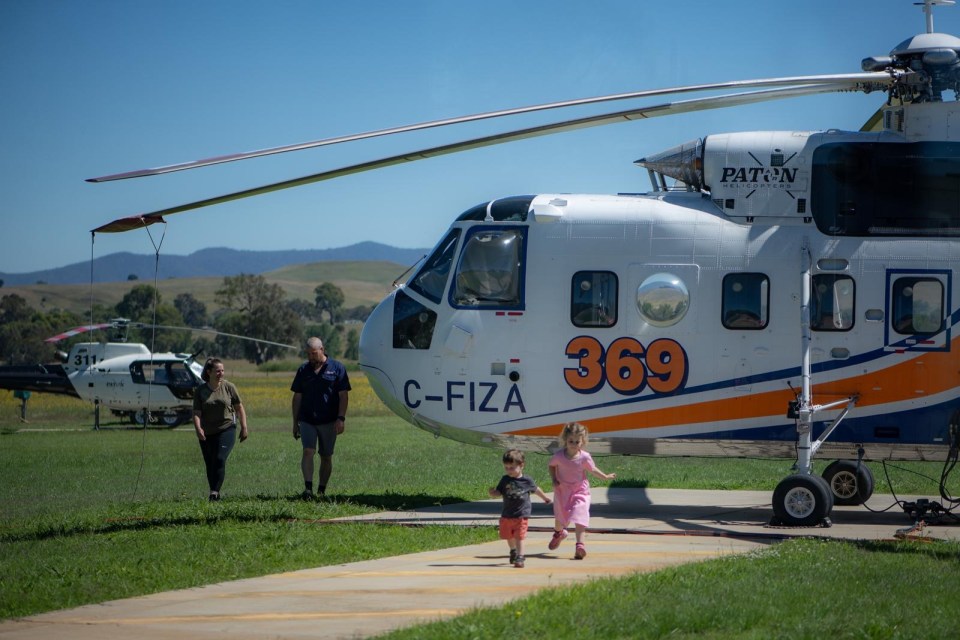
Back in Victoria, Leah is the Operations Manager and HAMC for Paton Air, covering day-to-day operations, CASA compliance, audits, and tenders. “We operate four light aircraft, and with our partners Helicarrier Inc., we also operate an S61 and an AS332.”
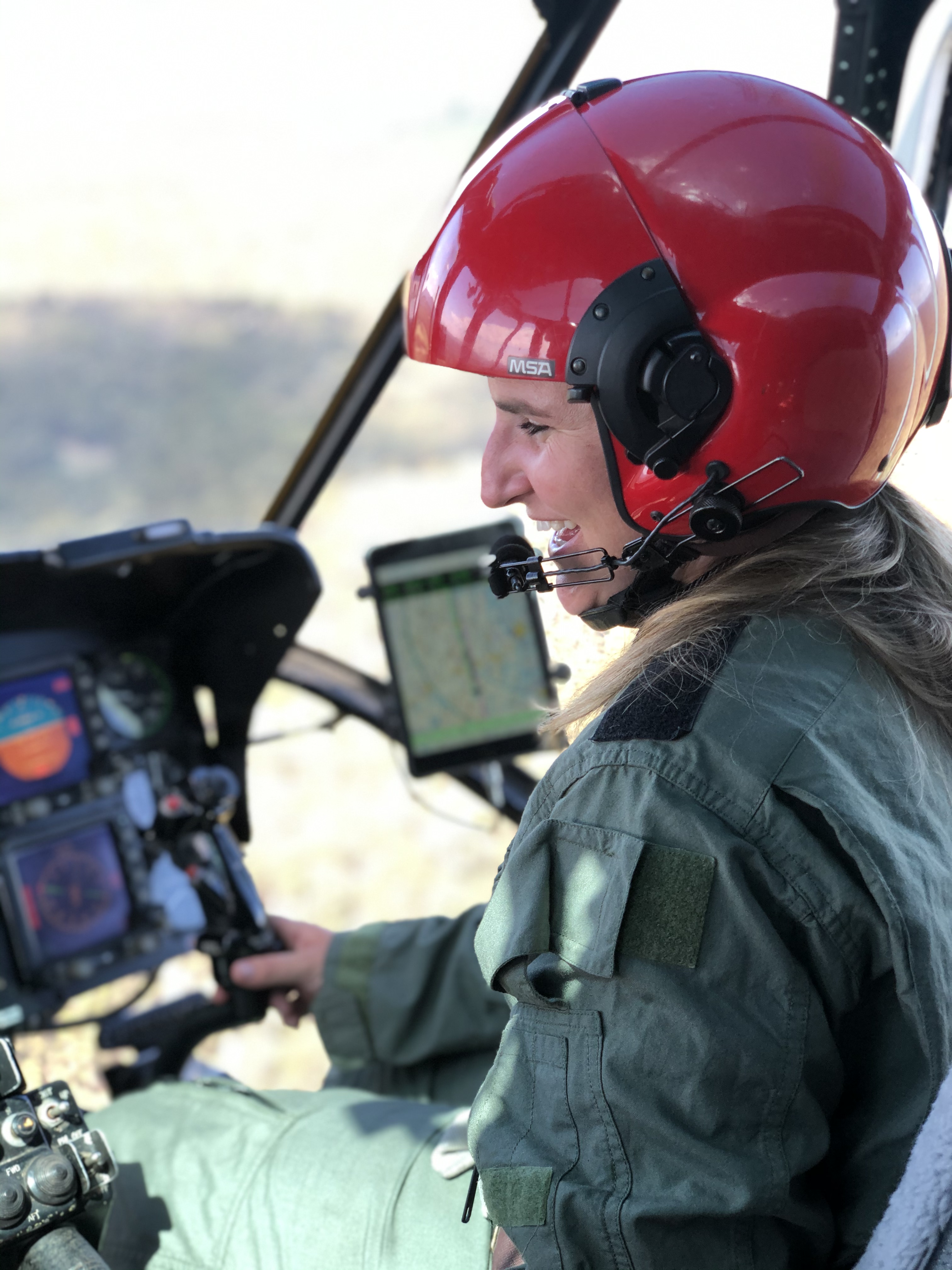
“The S61 is possibly my proudest achievement. I flew around in a firebird for a decade watching a competitor operate it, so winning that contract for us – a local company – to run the Mansfield machine was a happy moment for me. Helicarrier rated me on the S61 late in 2024, and I’m hoping I’ll get a proper go in it soon. In the meantime, I fly the Squirrel with a belly tank out of Benalla over the summer.”
Leah glowingly agrees that her best days smell of smoke. “I love flying on fires, whether it’s Air Attack or bombing. Every fire is different; it’s strategic and always challenging. There are a lot of variables like weather and terrain, but working with the ground crews and chipping away at something that is out of control to something that is in control is rewarding.”
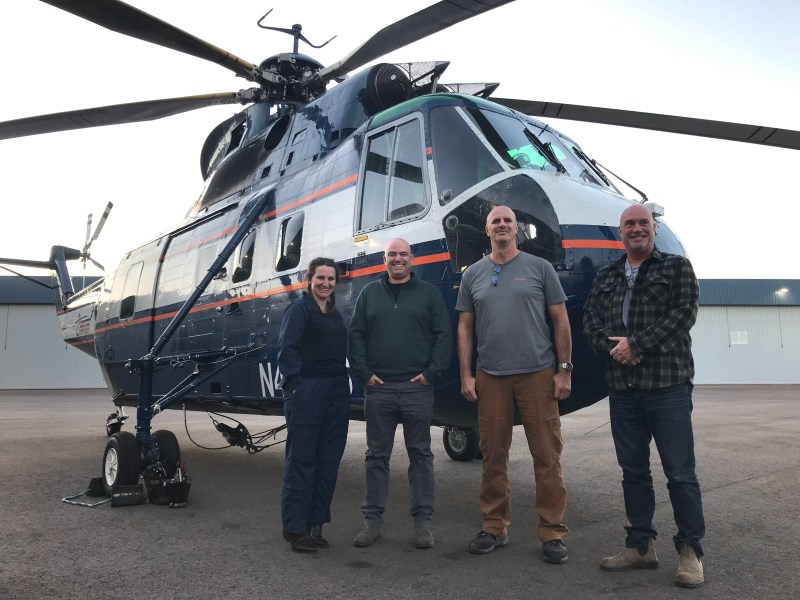
Days on standby are filled with the inevitable paperwork that comes with Leah’s current position. A decade ago, when she started on fires, she completed a certificate in HR, so the move into Operations was a welcome opportunity to progress that side of her career further.
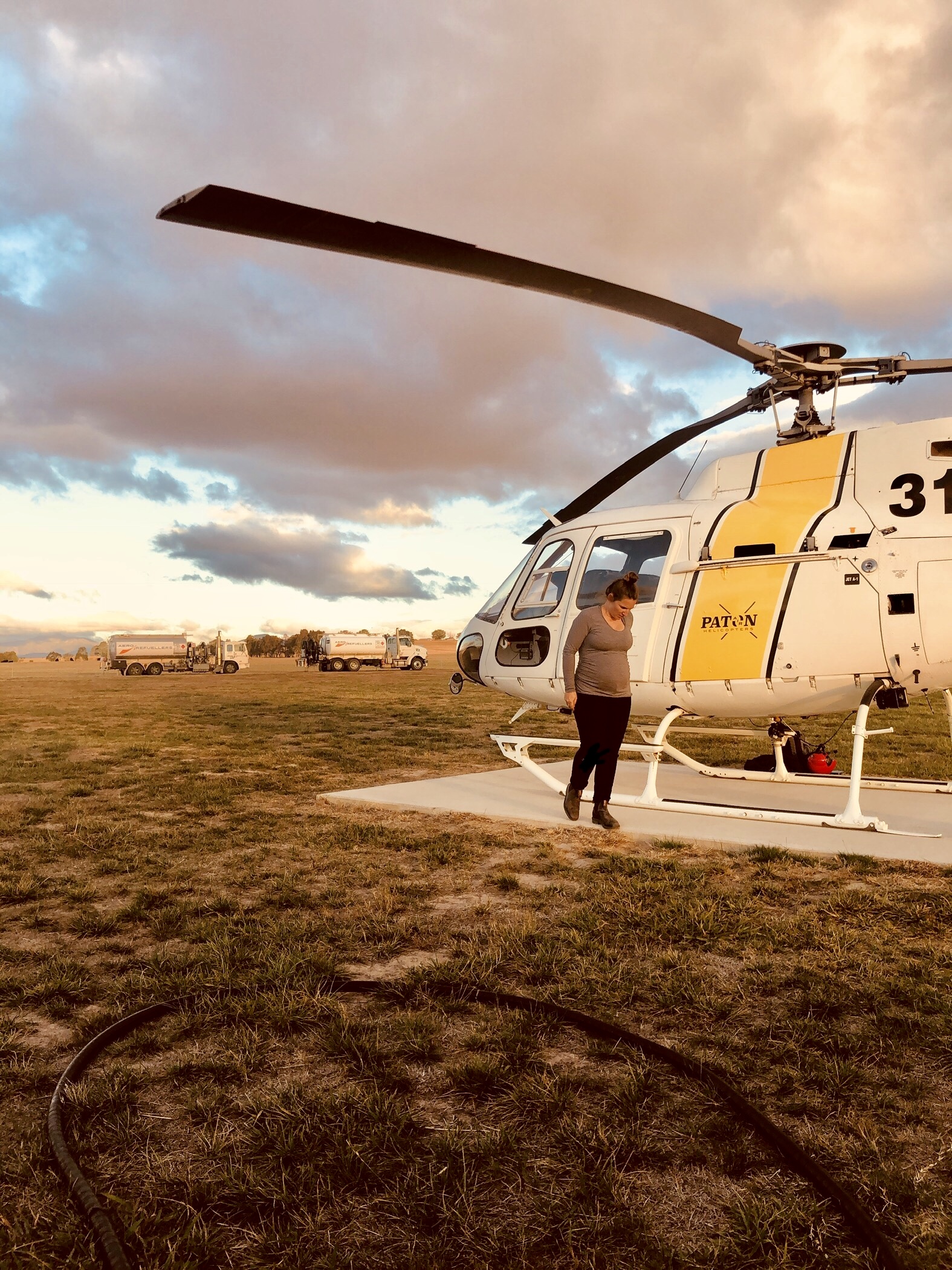
Leah is very vocal about the company culture she’s experienced at Paton Air; she really feels they’ve offered her the flexibility to be a mother as well as a pilot. “Flying over 400 hours pregnant was one of the more challenging times in my career; then, my youngest child got very sick when he was 10 months old, and I was off work for well over a month. But I had all the support I could ask for from my bosses and coworkers, and when we finally made it home from the hospital, I was given the option to work from home for as long as I needed to. I did so until I felt comfortable enough to put him back into daycare.”
It seems Paton Air is setting an industry benchmark that will continue to contribute to the changes Leah has seen over the years regarding women coming into the industry. “I worked with over 20 male pilots before I ever worked with a female pilot – which was at Paton. That’s no longer the case; I now work with two other female pilots on our crew alone.”

While the helicopter industry in Australia struggles with overregulation, increasing operational costs, and pilot and engineer shortages, Leah clearly loves what she does. “Every day, things will change; I’ll go somewhere new, see something new, do something I’ve never done before, or be met with a new test. It pushes me.”
“I can’t wait to fly the S61 on fires. The multi-crew environment is new to me, but I like working in a team. Balancing being a mother of two and working is a continuous opportunity to grow, and in the future, I simply aim to continue all my loves.”


First published in Air Attack Magazine Issue 40
 Bronni Bowen