

All Mylène Marionvalle ever wanted was to be able to help people from the sky. As a child growing up in northern France, she dreamt of joining the Service d’aide médicale urgente (Urgent Medical Aid Service) as a helicopter pilot. “But I thought it was unreachable to me. So, I did as an army recruiter told me. I went to study.”
Mylène spent one year on exchange in Argentina, living with a family and perfecting her Spanish. Then, she went on to study agronomic engineering, completing some of it in Brazil, where she added Portuguese to her repertoire. “But, after graduating… well, I still wanted to be a helicopter pilot!”
Mylène went to Saint-Cyr to commence a short-term contract flying helicopters in the French army. Here, she discovered military life just wasn’t for her. She would have to find another way. For Mylène, this meant switching to fixed-wing and heading east.
“I commenced my CPL in the Czech Republic. In Europe, it is easier to move from one country to another and it was a good way for me to do my training in English at a reasonable price. My training was self-funded, and I chose to do it in modules, step by step, because I didn’t want to take the risk of paying for my entire ATPL and then maybe not having any job.”
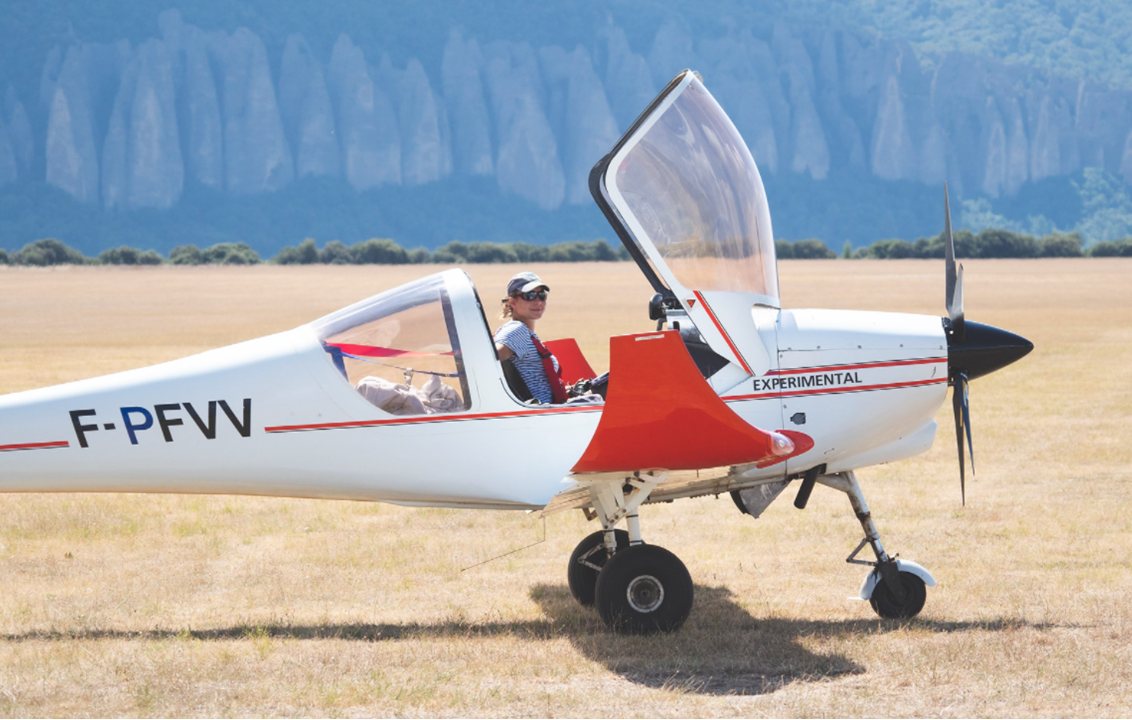
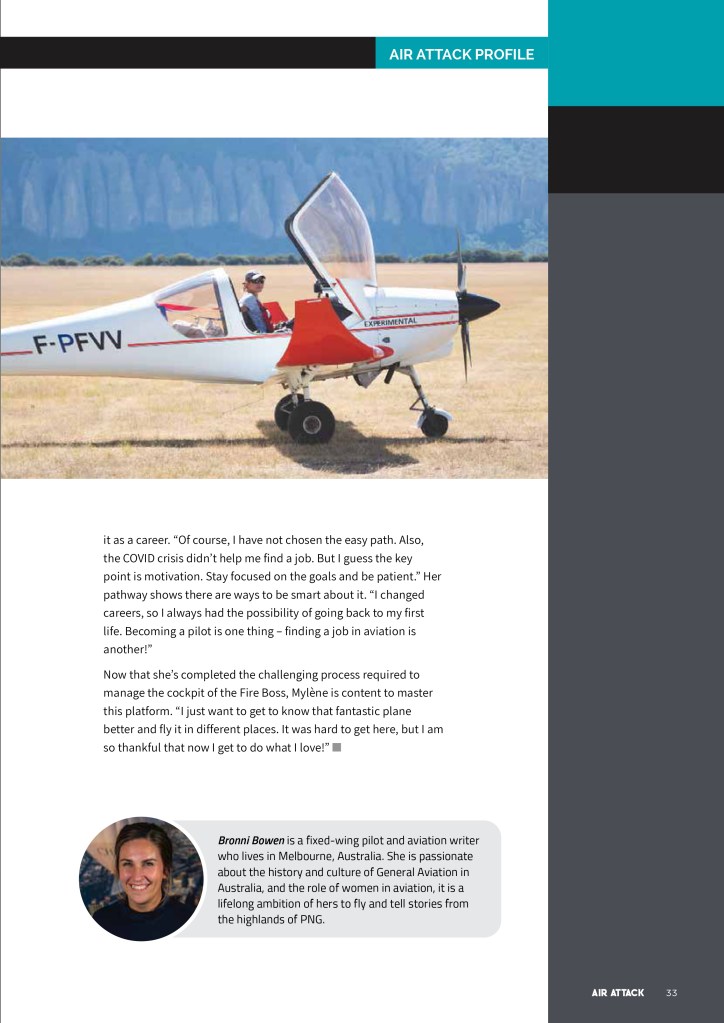
Once she had her ratings, building experience was a bit of a process. Mylène spent a bit more than two years towing gliders in the little-known experimental Dyn’Aéro MCR R180, became a glider pilot herself, did a bit of mountain flying in a Super Cub, and brought family and friends on joy flights.
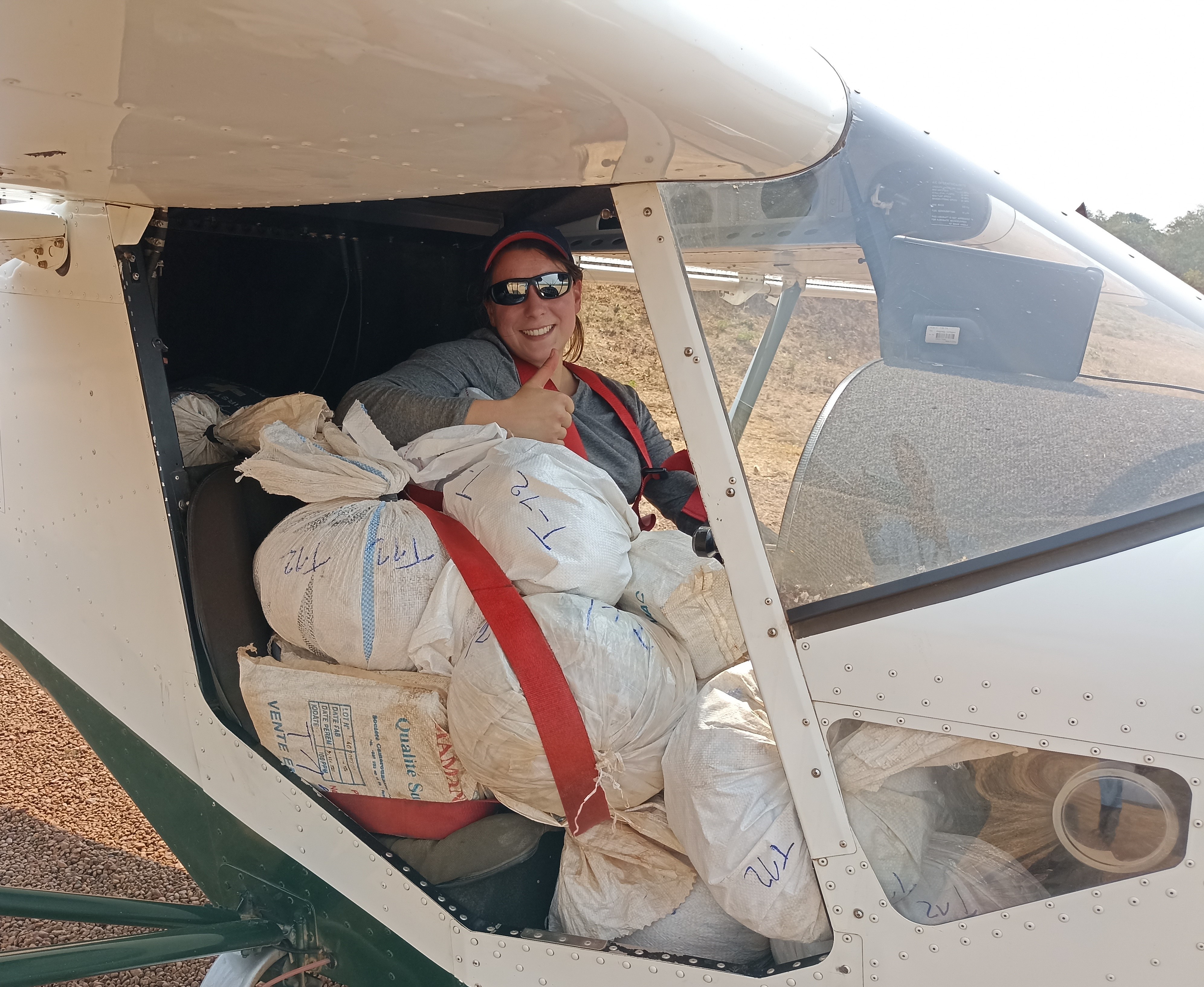
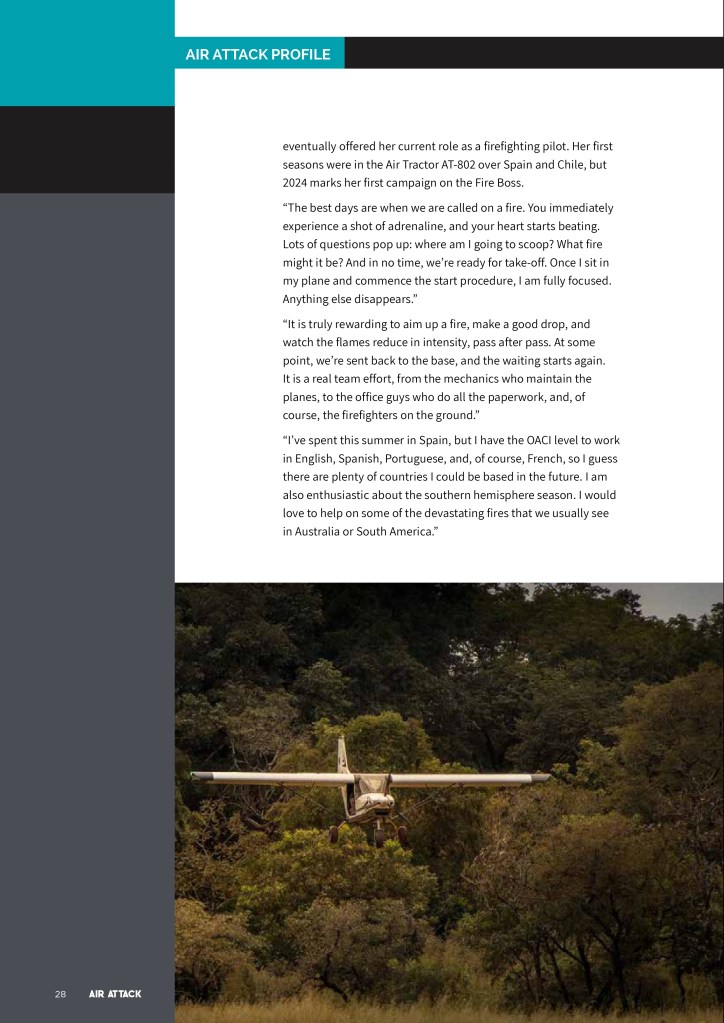
She then went west with the night, spending four months in Central Africa as a conservation pilot. “What an adventure! Four hours of flight a day just above the canopy of beautiful trees. I had a variety of missions, from surveillance flights looking for poachers to searching for herds of cows. We were also counting wild animals, dropping food to the rangers on the ground, and performing medical evacuations.”
Mylène wrote a book about her experiences called Aventures d’une jeune pilote en brousse. It is now translated into English, and she is in the process of looking for a publisher.

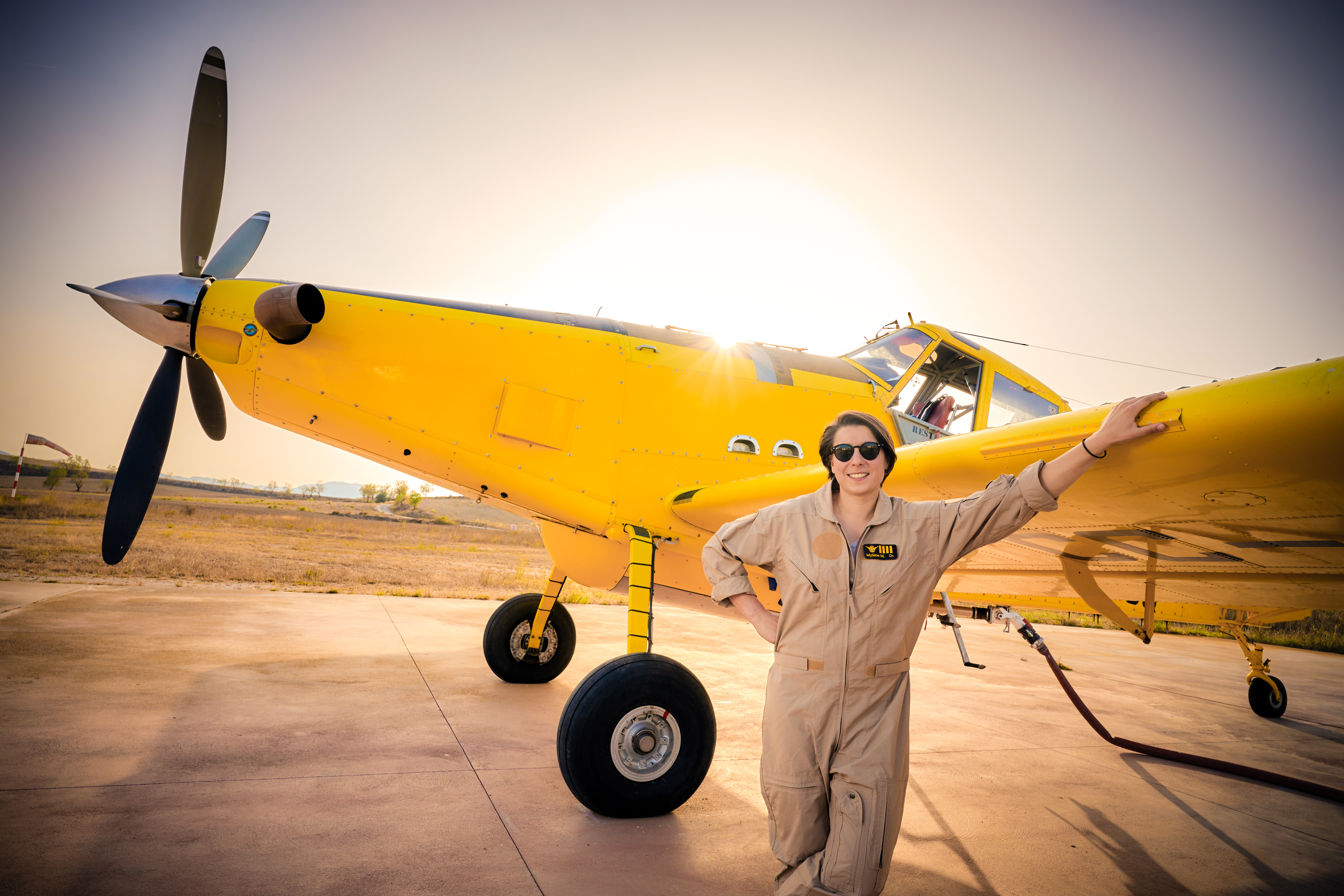
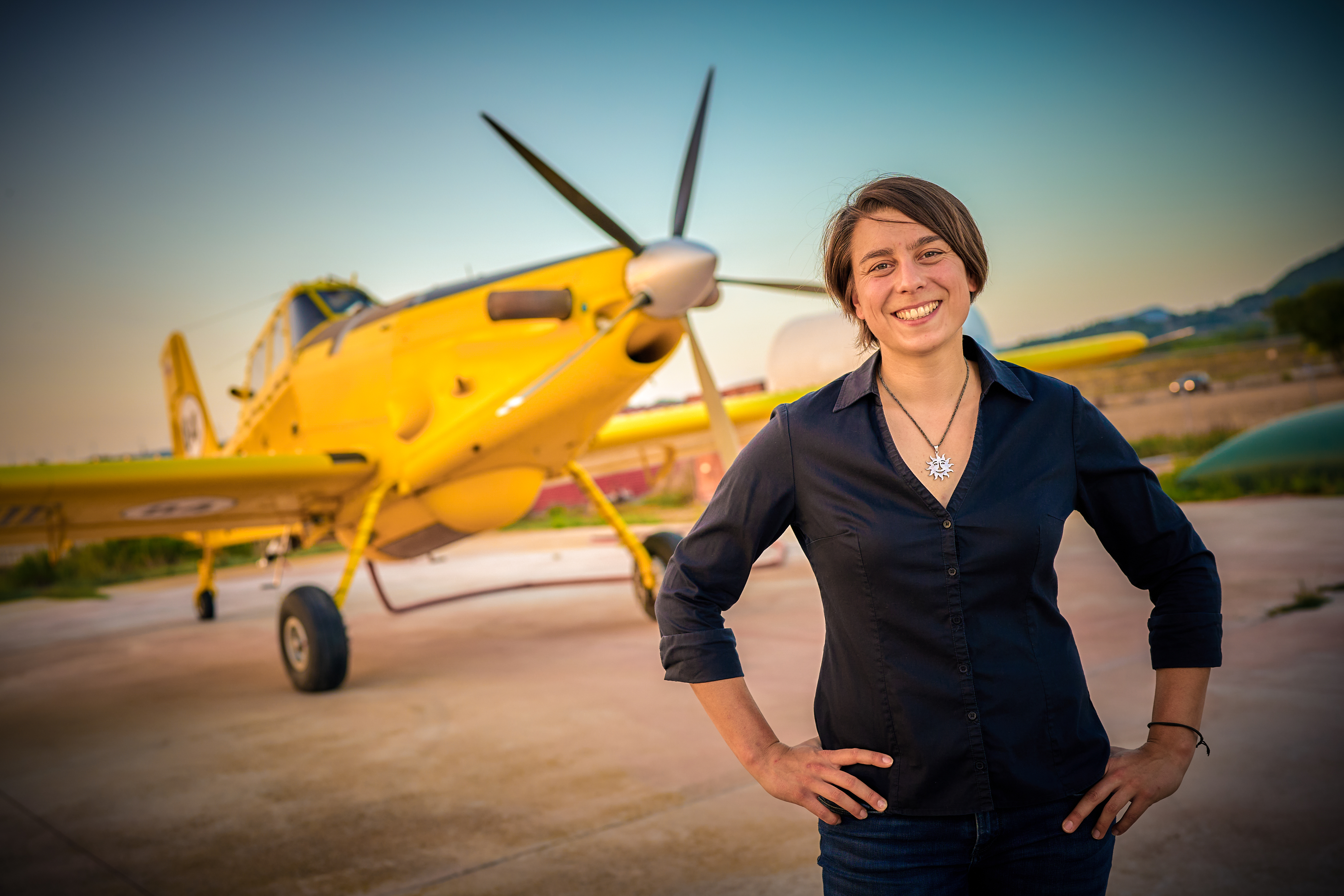
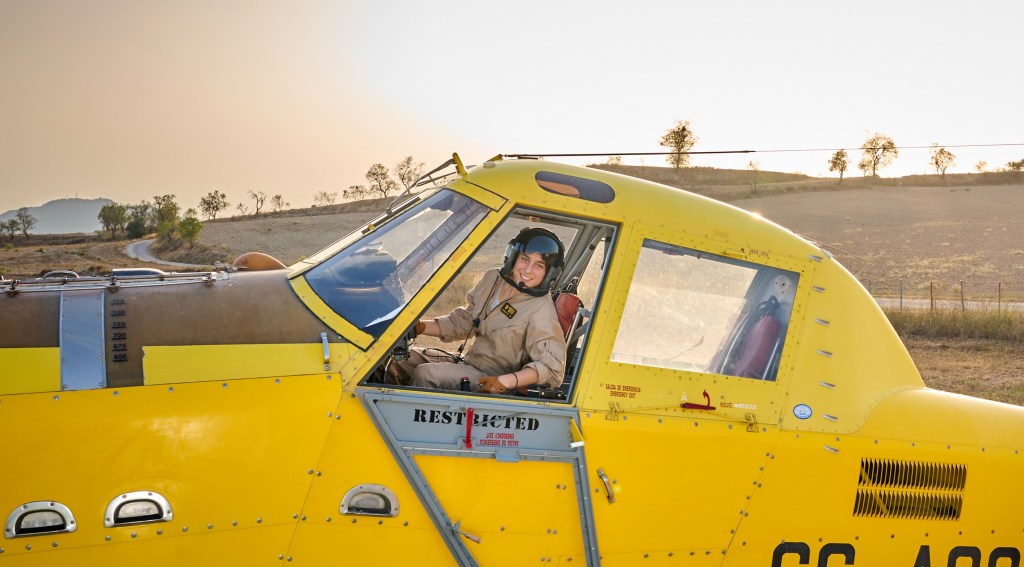
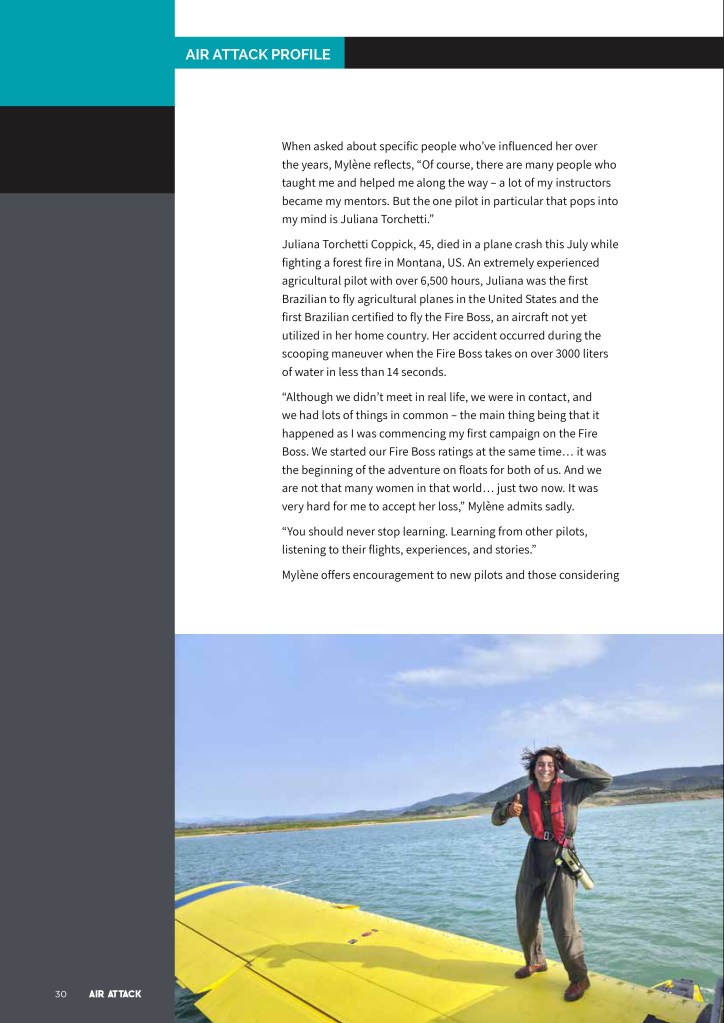
With an unusual flying background and some experience operating a turbine engine in the EC120 helicopter, Mylène was eventually offered her current role as a firefighting pilot. Her first seasons were in the Air Tractor AT-802 over Spain and Chile, but 2024 marks her first campaign on the Fire Boss.
“The best days are when we are called on a fire. You immediately experience a shot of adrenaline, and your heart starts beating. Lots of questions pop up: where am I going to scoop? What fire might it be? And in no time, we’re ready for take-off. Once I sit in my plane and commence the start procedure, I am fully focused. Anything else disappears.”
“It is truly rewarding to aim up a fire, make a good drop, and watch the flames reduce in intensity, pass after pass. At some point, we’re sent back to the base, and the waiting starts again. It is a real team effort, from the mechanics who maintain the planes, to the office guys who do all the paperwork, and, of course, the firefighters on the ground.”
“I’ve spent this summer in Spain, but I have the OACI level to work in English, Spanish, Portuguese, and, of course, French, so I guess there are plenty of countries I could be based in the future. I am also enthusiastic about the southern hemisphere season. I would love to help on some of the devastating fires that we usually see in Australia or South America.”
When asked about specific people who’ve influenced her over the years, Mylène reflects, “Of course, there are many people who taught me and helped me along the way – a lot of my instructors became my mentors. But the one pilot in particular that pops into my mind is Juliana Torchetti.”
Juliana Torchetti Coppick, 45, died in a plane crash this July while fighting a forest fire in Montana, US. An extremely experienced agricultural pilot with over 6,500 hours, Juliana was the first Brazilian to fly agricultural planes in the United States and the first Brazilian certified to fly the Fire Boss, an aircraft not yet utilized in her home country. Her accident occurred during the scooping maneuver when the Fire Boss takes on over 3000 liters of water in less than 14 seconds.
“Although we didn’t meet in real life, we were in contact, and we had lots of things in common – the main thing being that it happened as I was commencing my first campaign on the Fire Boss. We started our Fire Boss ratings at the same time… it was the beginning of the adventure on floats for both of us. And we are not that many women in that world… just two now. It was very hard for me to accept her loss,” Mylène admits sadly.
“You should never stop learning. Learning from other pilots, listening to their flights, experiences, and stories.”
Mylène offers encouragement to new pilots and those considering it as a career. “Of course, I have not chosen the easy path. Also, the COVID crisis didn’t help me find a job. But I guess the key point is motivation. Stay focused on the goals and be patient.” Her pathway shows there are ways to be smart about it. “I changed careers, so I always had the possibility of going back to my first life. Becoming a pilot is one thing – finding a job in aviation is another!”
Now that she’s completed the challenging process required to manage the cockpit of the Fire Boss, Mylène is content to master this platform. “I just want to get to know that fantastic plane better and fly it in different places. It was hard to get here, but I am so thankful that now I get to do what I love!”
–– AA
Originally published in Air Attack Magazine Issue 36
 Bronni Bowen