📸 by Jack Arthur
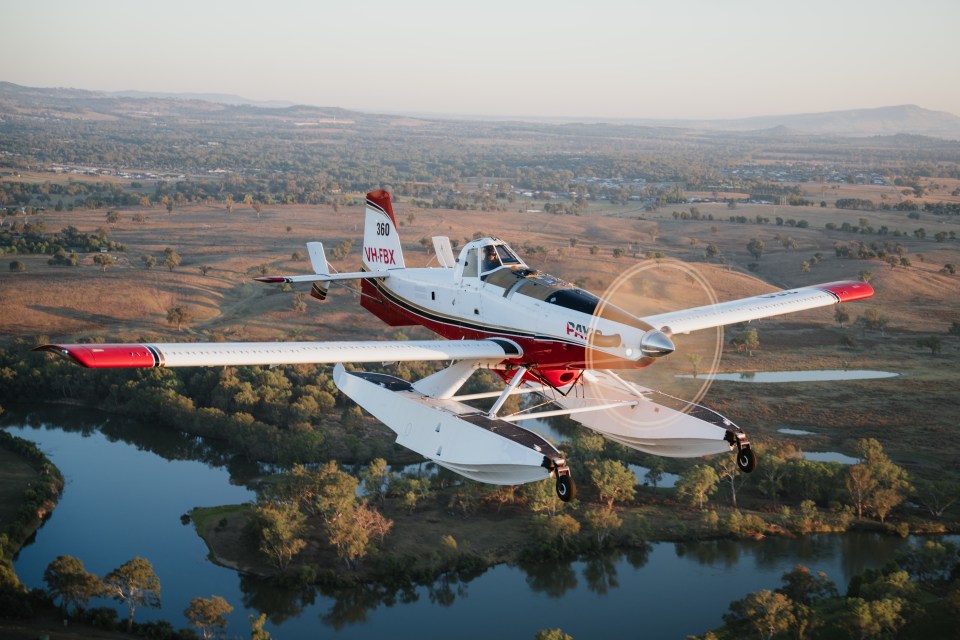
The sun’s heat reflects off the mottled grey tarmac, glancing back up onto the Fire boss AT802F faithfully waiting there for me alongside Riley Payne’s red-shirted form.
We’re in Albury, straddling the border of New South Wales and Victoria. Sixteen kilometres to the east, Hume Dam is at 66% capacity, and the surrounding landscape is hot, dry, and brown. It’s a sweaty Australian summer day, but the alert systems have been quiet this year thanks to a relatively mild fire season.
Seeking refuge in the air-conditioned office, we have a steak sandwich lunch followed by cake and discuss the nuances of a generational aviation upbringing.
“My grandfather, Keith Death, was a huge inspiration and a major contributor to my love of aviation. As kids, we spent a lot of time with our grandparents, and our daily trip to school wouldn’t be complete without ‘The King’ regaling us with stories of his worldly adventures – everything from ferrying aircraft across the globe to flying Australia’s earliest warbirds.”
Keith earned the nickname after he delivered a number of aircraft to Asia and got to know the King of Thailand quite well. They were working on a cloud seeding project there utilising the infamously ‘ugly’ Transavia Airtruk, which was, at the time, built in Sydney.
There was one story that particularly delighted the boys; Keith had delivered his Airtruk to Thailand and then went to Laos on a visa organised by a friend. “Unfortunately, when Keith tried to re-enter Thailand from Laos, he was faced with a less-than-warm welcome.” Legend has it he swam across the Mekong under the cover of darkness and emerged triumphant. Keith also got his first glimpse of the T28 Trojan in action in Laos while on this trip – an aircraft he and his son Steve would later bring back to Australia and restore to flying condition.
“We’d hear plenty of stories about his good mate, Jack MacDonald, too. Jack insisted that Keith go up with him in his P51 Mustang before he would allow him to take it solo. For that flight, ‘The King’s’ allocated seat was wedged between the bubble canopy and the rear fuel tank – which Jack took full advantage of when demonstrating the P51’s inverted and roll capabilities.”
At this point, I have to stop Riley and remind him that this story is meant to be about him. He laughs, “Well, we got to meet some of the best pilots in Australia through our family businesses, and we were lucky to have the access and opportunities we did – from industry contacts to highly experienced pilots who would answer all our questions.”
They clearly played a big part in shaping him into the man he is today.

In 2010, Steve Curtis, an instructor from Sydney, trained Riley and his brothers in the family DHC1 Chipmunk. Grandfather Keith assisted with some of their early flying and passed on many lessons. Steve Death, their father, was also on hand to influence their understanding and approach to aviation.
“The main drawback of coming from an aviation family is that people tend to think you were born with all of your father’s and grandfather’s experience pre-programmed, and therefore, there’s a lot of assumed knowledge,” Riley laments, jokingly, “The great leveller is that no matter your background, you still have to study, train, ask questions, and, most importantly, fly to obtain the skills, knowledge, and experience required to become a proficient pilot.”
After school, Riley completed an apprenticeship as a fitter machinist with Kris Barr Engineering. Kris was a qualified aviation welder and another private pilot with a great love of aviation.
Once the apprenticeship was finished, Riley decided he wanted to pursue flying as a full-time job. “I committed to earning my Commercial and headed to Melbourne to complete the theory subjects intensively. I then did my CPL practical flying through Riverina Aviation College and Oberon Aviation in Albury. One of my primary instructors worked for Oberon, and after my flight test with Stirling Preston, the owner and chief pilot, I was offered a position in the upcoming season as a low-level powerline survey pilot. That was my first job in aviation.”
Since then, Riley has flown low-level powerline surveys throughout NSW, geophysical surveys in Western Australia and Queensland, and aerial application for the family business in Albury and surrounding regions, as well as St George and Mungindi in Queensland. At the same time, he advanced into the aerial firefighting sector in both Air Attack and Firebombing roles and took on a full-time position as Chief Pilot of the Australian charter and flight training organisation, Pays Aviation. Over the past two years, he’s flown in Greece in aerial firefighting roles during the European summer.
“Although General Aviation is typically seasonal and contract-specific, I have worked for the same operators multiple times and always endeavour to maintain a good relationship with employers. I also really enjoy the varying nature of working and learning from different people within the industry.”
“I’ve found that the more quality and consistency you can deliver, the less you have to search for jobs.” Like anywhere, word travels fast in intimate Australian aviation circles. “I’ve experienced both ends of the hiring situation now; it is rare that more than two phone calls will be required to give you all the background information you need.”
A standard fire day involves a lot of ‘hurry up and wait.’ The flying, when it comes, is busy and dynamic, but Riley says the challenges and rewards of the job are hard to beat. “And if I can sneak in some warbird, float plane or aerobatic flying with friends before or after our 15-minute standby period, that’s the icing on the cake,” he grins.
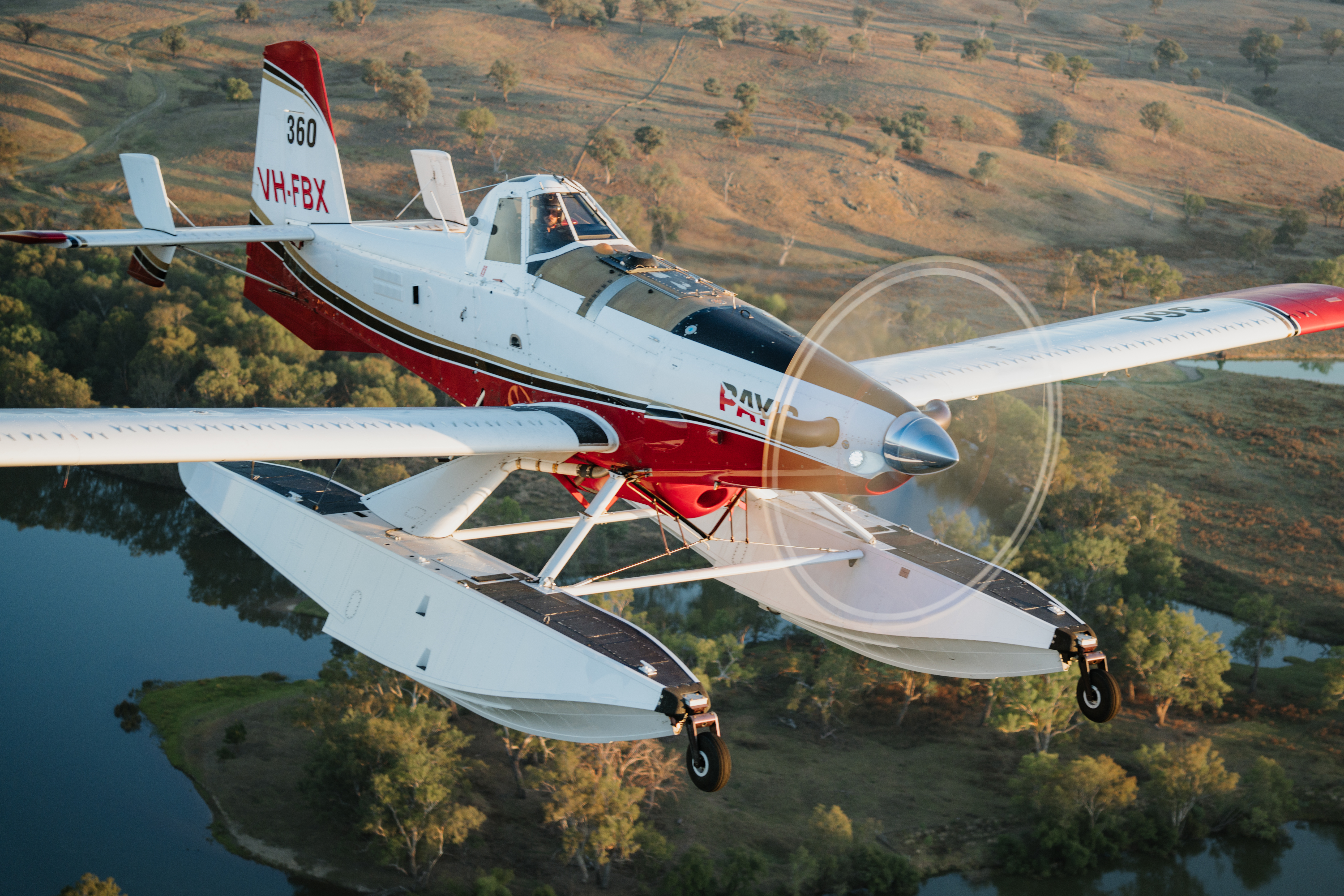
Riley’s list of aviation highlights includes soloing the family T6 and T28 Trojan he grew up dreaming of flying, spraying paddocks alongside his brothers and conducting formation airshow displays and international ferry flights with Steve Death. “I’ve been privy to some of the best sunrises and sunsets this world has to offer, and, most importantly, I believe the friendships you forge in aviation are hard to find or match in any other industry.”
While he counts himself as extremely fortunate in his aviation career, Riley’s life hasn’t been without its harrowing moments. “I lost my boss and good friend to an aviation accident while I was completing my apprenticeship and, more recently, my older brother while he was conducting low-level powerline survey.” But, despite the losses that he and many in this industry have experienced, Riley says nothing could take away his passion for flying. “There are very few jobs that offer the freedom, diversity and constant self-improvement that aviation breeds.”
At the end of April, Riley begins the annual pilgrimage of ferrying Airtractors from Australia to the northern hemisphere for the European fire season. He, his father, and a small crew of ferry pilots will move approximately 20 aircraft through Australia, Cocos Islands, Sri Lanka, the Maldives, Oman, Egypt, and on to Greece or other parts of Europe. The trips are approximately seven-day ferries and ten-day round trips.
His long-term wish is that employers and experienced pilots will continue to carefully foster the next generation in various sectors of aviation, specifically in fire and aerial application. “Ultimately, the passing over of knowledge and mentorship is the single most valuable resource that we have.”
Riley glances at me humbly and says, “One day, I hope to be one of those pilots.”
This article was originally published in Air Attack (#34) magazine. Click the link to download and view. Big props always go to Jack Arthur for the epic photography—thanks, legend!
 Bronni Bowen