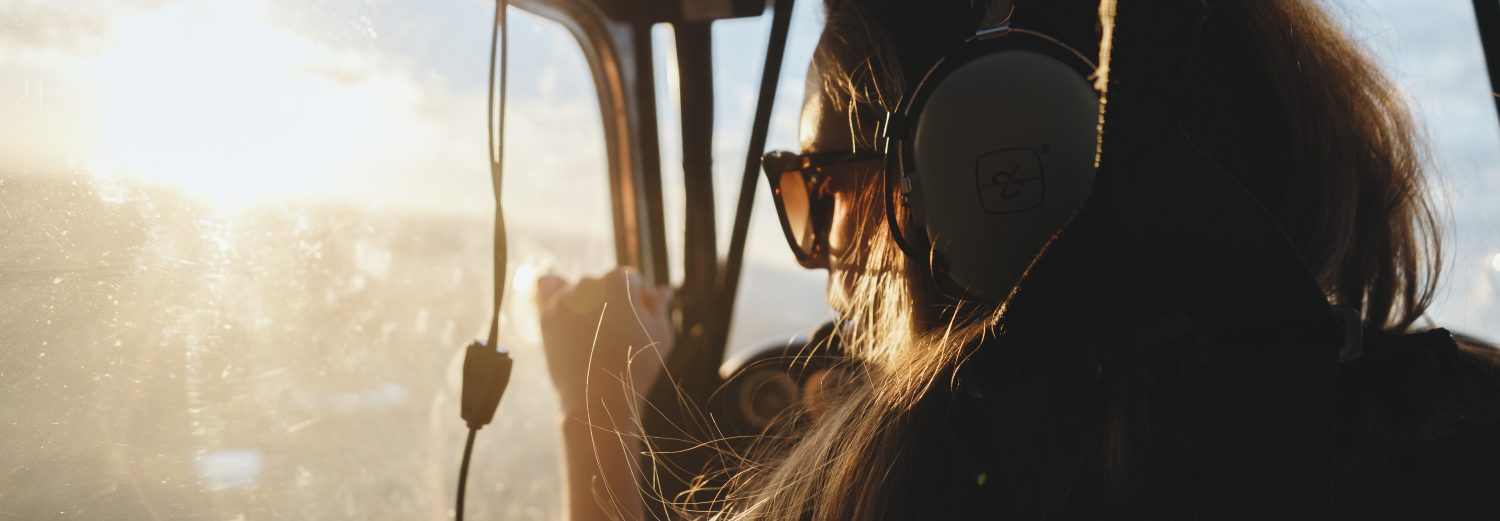

Michelle Astergard’s romance with aviation started early.
“I have always loved aviation,” she smiles impulsively. “Every time you enter an airport, there is this feeling of excitement lingering in the air. People are thrilled to go on a new adventure or happy to reunite with their loved ones.”
“My Godmother had two daughters that I looked up to a lot. They were 10+ years older than me and worked as flight attendants. They had amazing stories from all over the world, and, listening to them, I knew I wanted a job that could take me places.”
Still a child, Michelle remembers reading in the newspaper about a woman who was the youngest ever to fly for a commercial airline in her home country of Sweden. “From that moment, I decided that I also wanted to become a pilot. It stuck with me, and I couldn’t think of any other career that excited me as much.”
“The thought of having a job I loved, with a cockpit as an office, and the world and skies as the backdrop, definitely resonated with me.”
When she was old enough, Michelle became a flight attendant herself as a way to get into the industry while saving money for flight school. She loved that job, and the position further sharpened her focus on the goal of becoming a pilot.
“As the years went on, I realized I wanted to do more ‘hands-on’ flying than the airlines could offer. One of my coworkers mentioned helicopters, and that’s where that all started.”
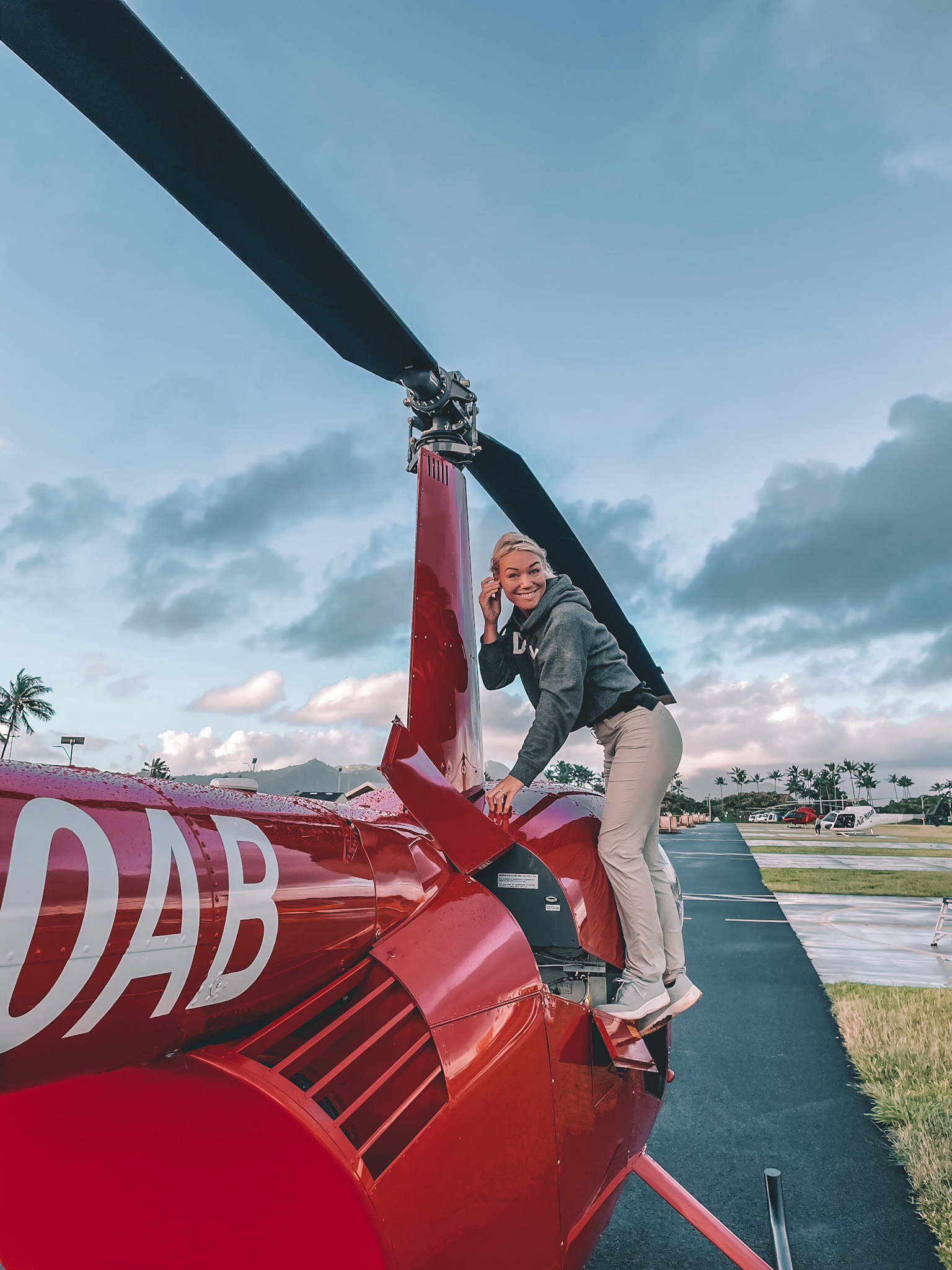
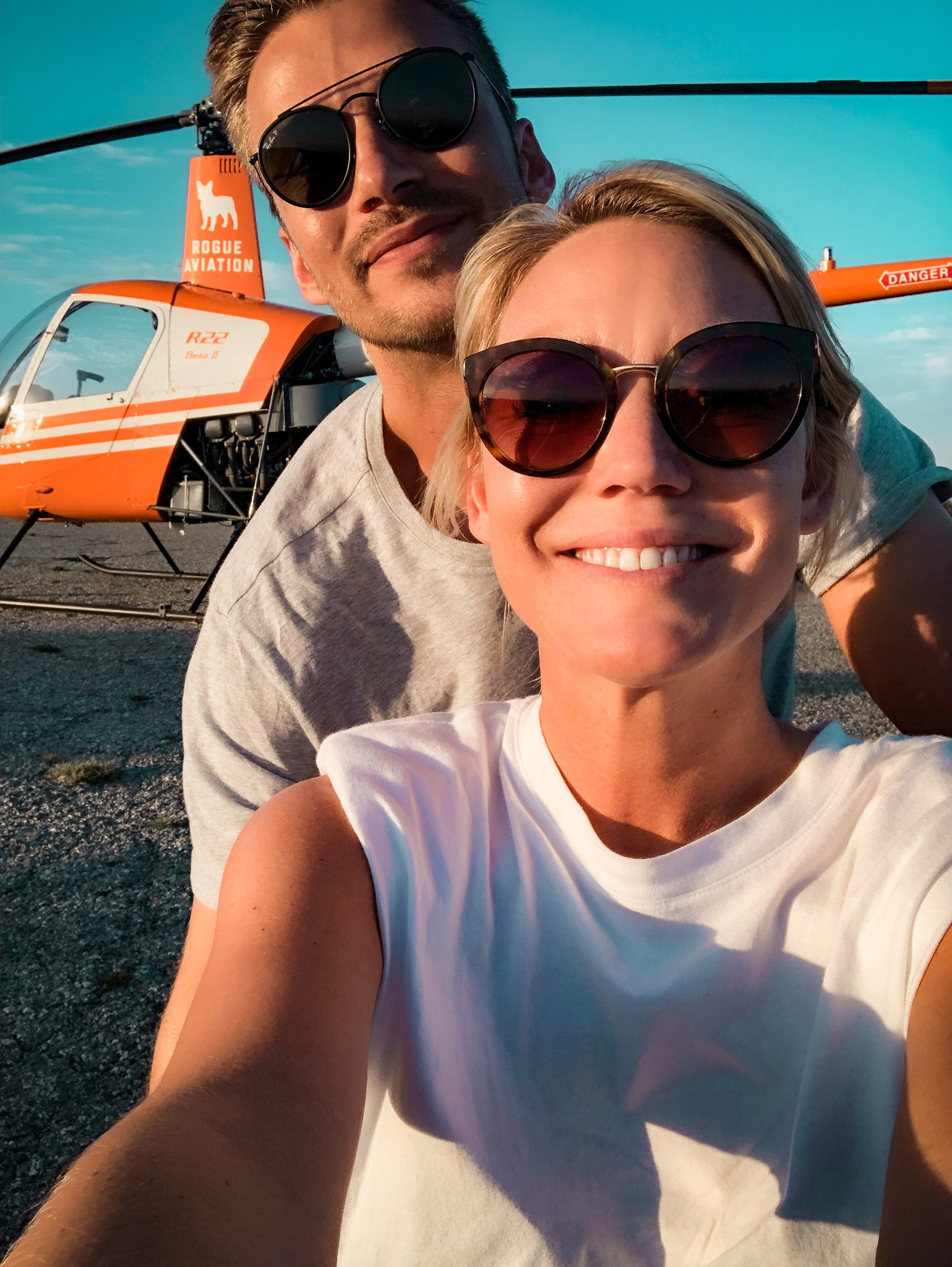
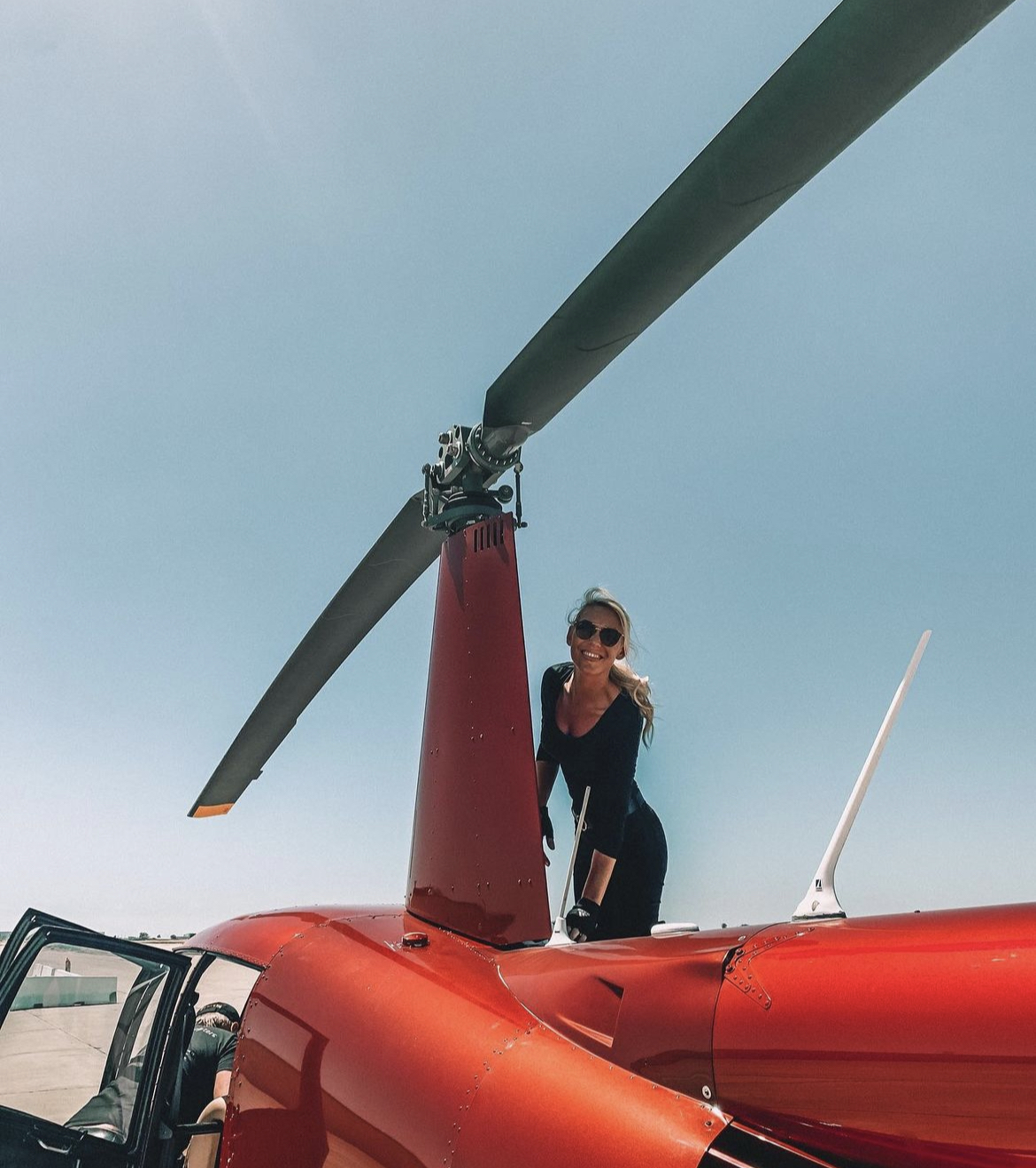
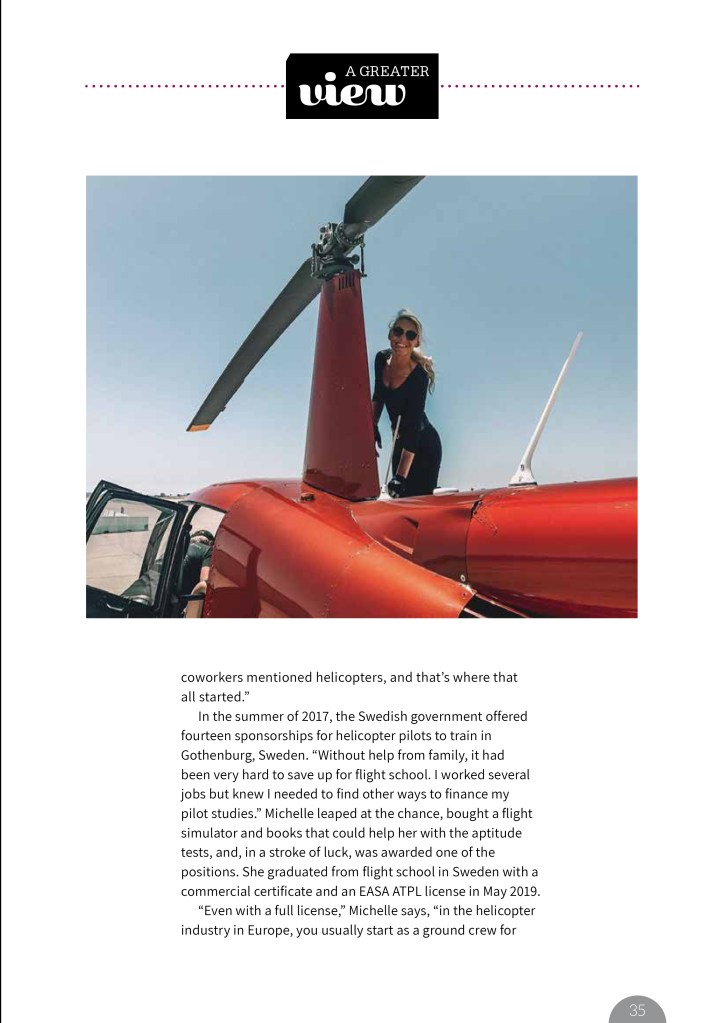
In the summer of 2017, the Swedish government offered fourteen sponsorships for helicopter pilots to train in Gothenburg, Sweden. “Without help from family, it had been very hard to save up for flight school. I worked several jobs but knew I needed to find other ways to finance my pilot studies.” Michelle leaped at the chance, bought a flight simulator and books that could help her with the aptitude tests, and, in a stroke of luck, was awarded one of the positions. She graduated from flight school in Sweden with a commercial certificate and an EASA ATPL license in May 2019.
“Even with a full license,” Michelle says, “in the helicopter industry in Europe, you usually start as a ground crew for the first three to five years; after that, you might get to fly. I wanted to try my wings as soon as possible and took my savings to the United States, where they let you fly sooner.”
To qualify for a visa, Michelle must do most of her training again and become a flight instructor. In a move she would never regret, she decided on Mauna Loa Helicopters in Hawaii – a very different climate to cold Sweden!
Not long into her training at Mauna Loa, Michelle discovered her mother was sick with cancer. “I paused my studies to go home and take care of her, spending half a year by her side until her treatment was done and she appeared to be getting better. I then went back to Hawaii to finish – only to have my studies paused again due to Covid-19.”
Sadly, a few months later, Michelle found out her mom had gotten worse. She traveled home to Sweden to say her final goodbyes.
“From that time, it was difficult to go on. But I knew my mom would have wanted me to continue my studies, and I had also won a five thousand dollar scholarship that I hadn’t used yet.” Michelle bravely headed back to Hawaii at the end of 2020, finishing in May 2021.

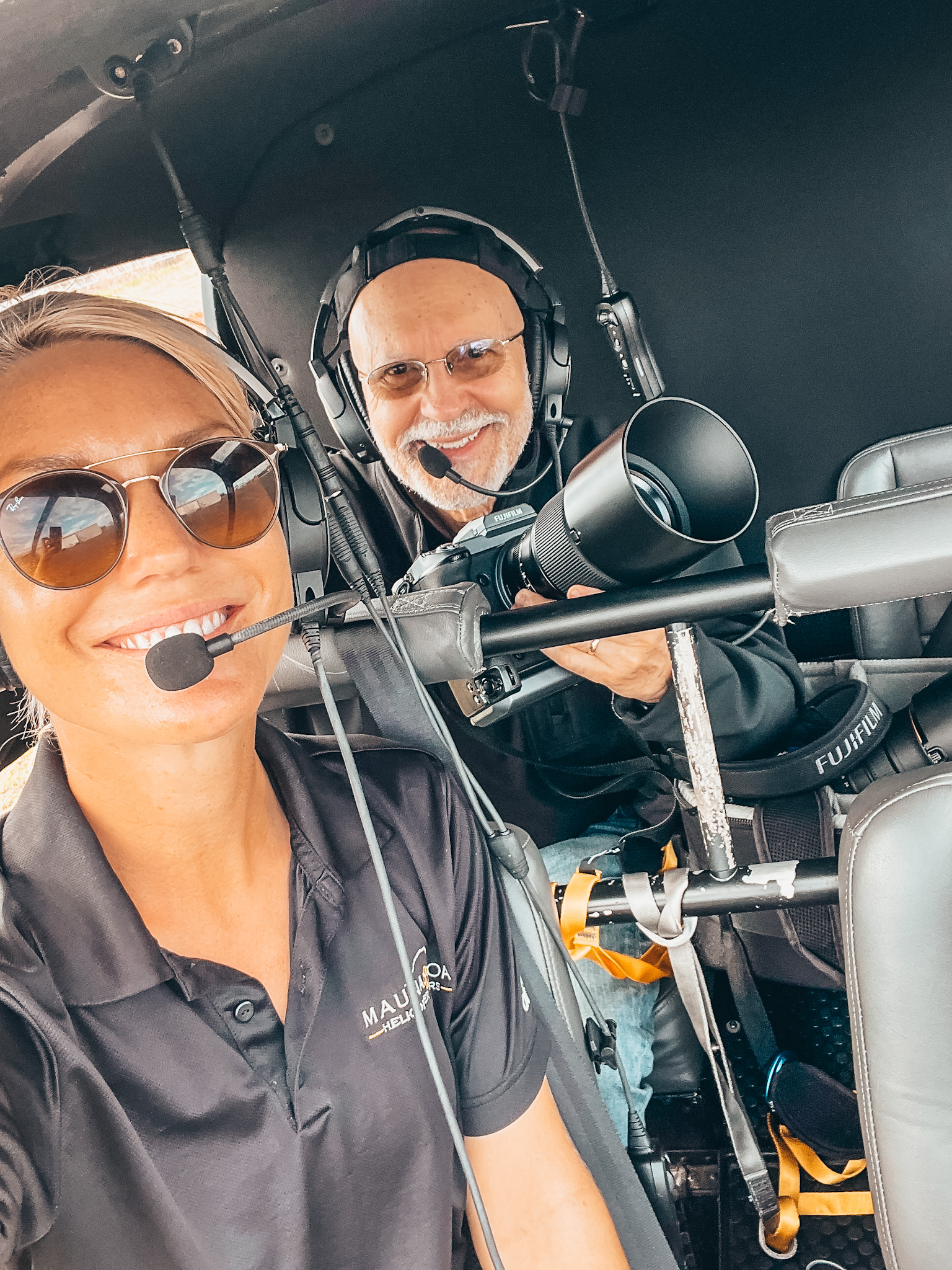
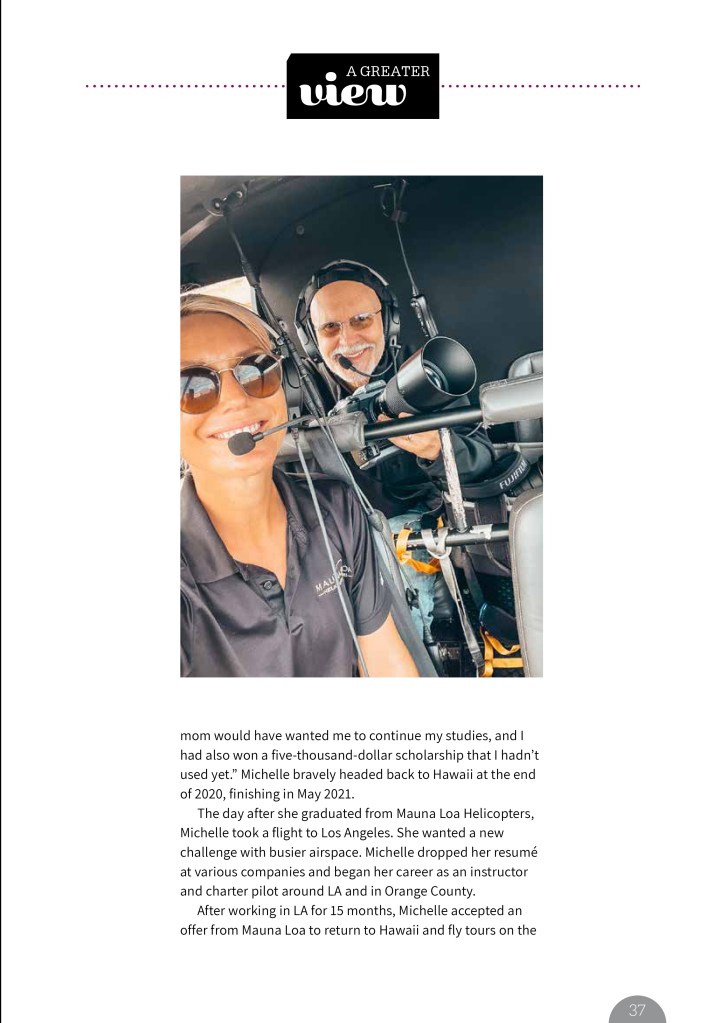
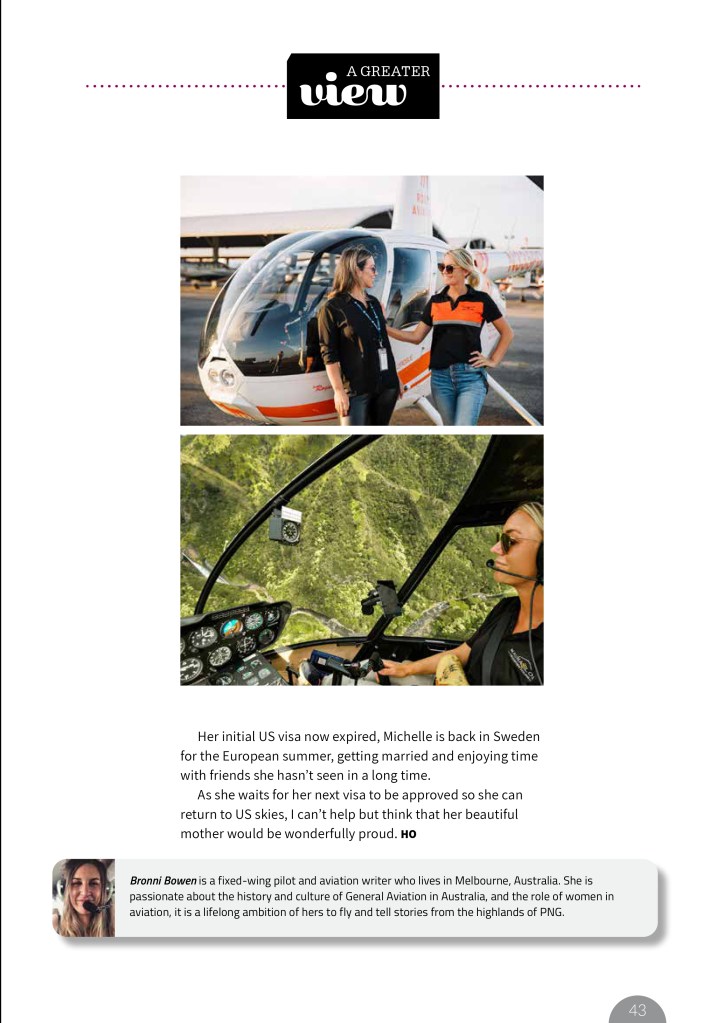
The day after she graduated from Mauna Loa Helicopters, Michelle took a flight to Los Angeles. She wanted a new challenge with busier airspace. Michelle dropped her resumé at various companies and began her career as an instructor and charter pilot around LA and in Orange County.
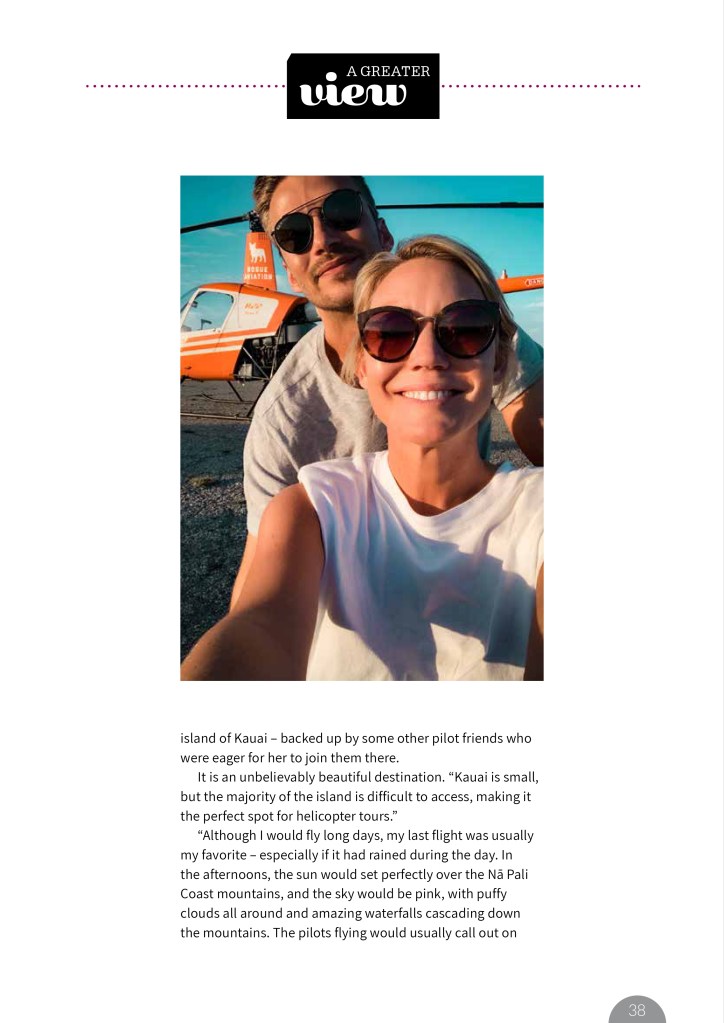
After working in LA for 15 months, Michelle accepted an offer from Mauna Loa to return to Hawaii and fly tours on the island of Kauai – backed up by some other pilot friends who were eager for her to join them there.
It is an unbelievably beautiful destination. “Kauai is small, but the majority of the island is difficult to access, making it the perfect spot for helicopter tours.”
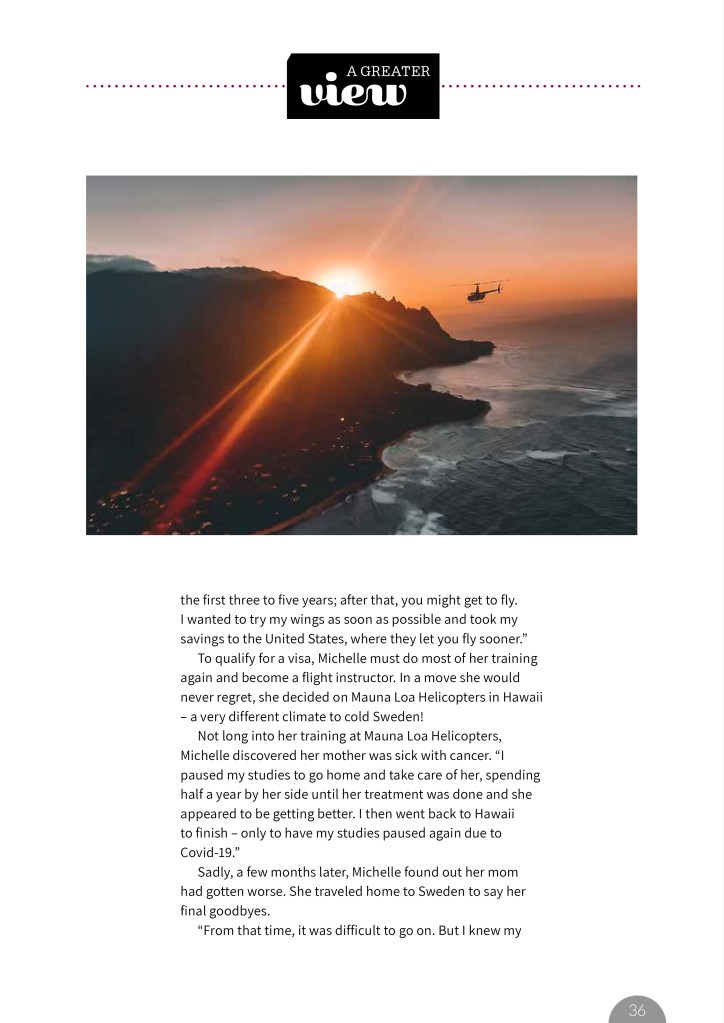
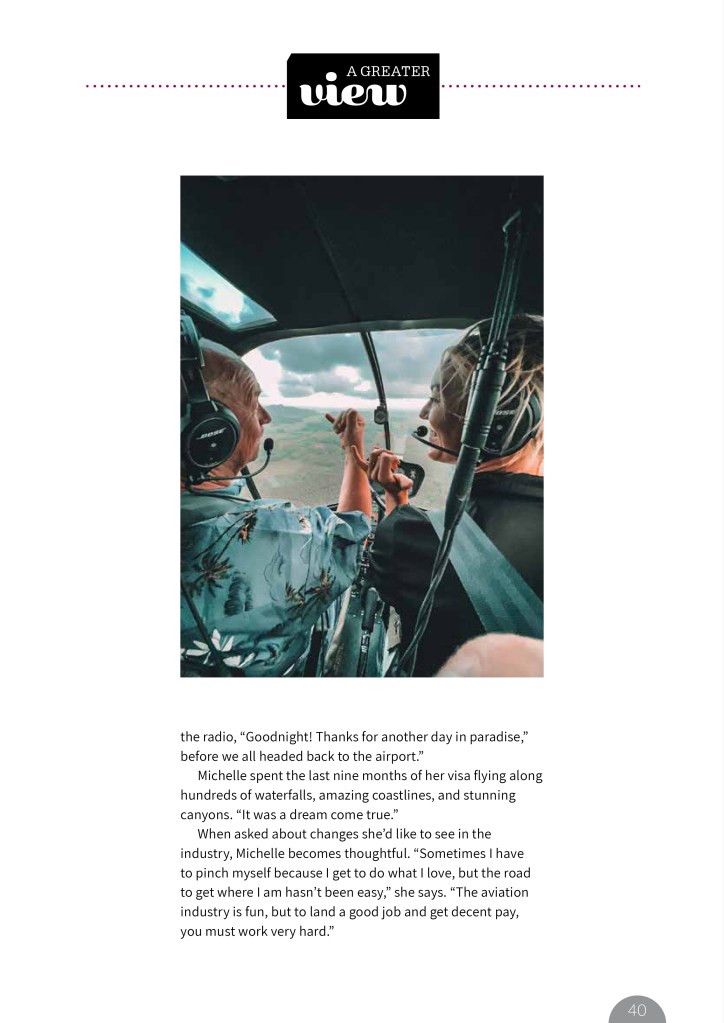
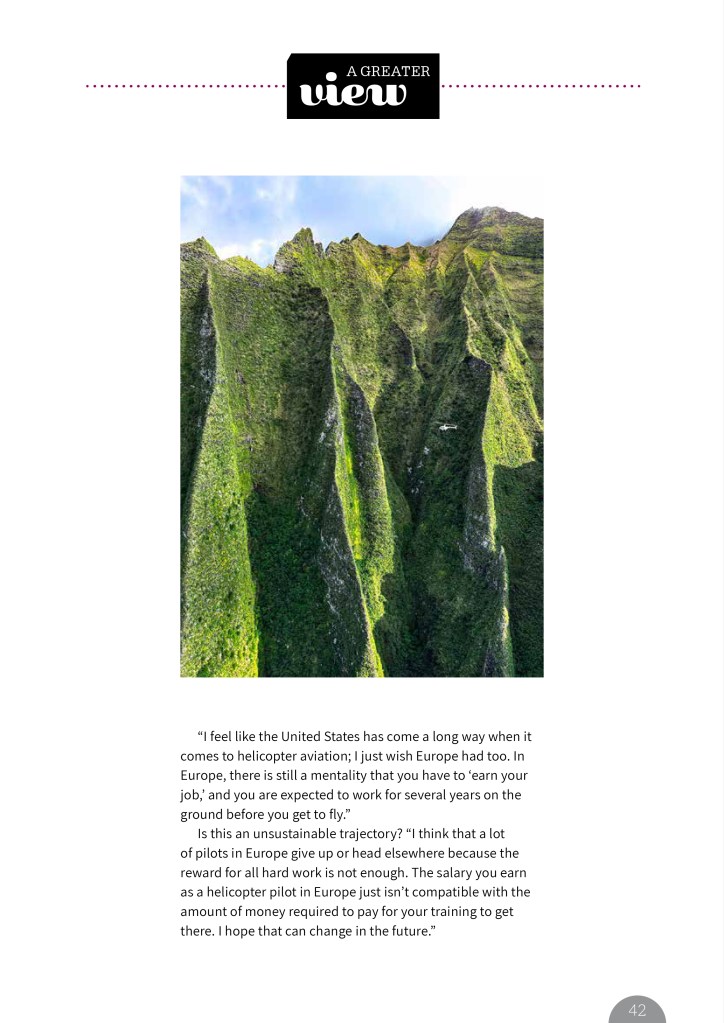
“Although I would fly long days, my last flight was usually my favorite – especially if it had rained during the day. In the afternoons, the sun would set perfectly over the Nā Pali Coast mountains, and the sky would be pink, with puffy clouds all around and amazing waterfalls cascading down the mountains. The pilots flying would usually call out on the radio, “Goodnight! Thanks for another day in paradise,” before we all headed back to the airport.”
Michelle spent the last nine months of her visa flying along hundreds of waterfalls, amazing coastlines, and stunning canyons. “It was a dream come true.”


When asked about changes she’d like to see in the industry, Michelle becomes thoughtful. “Sometimes I have to pinch myself because I get to do what I love, but the road to get where I am hasn’t been easy,” she says. “The aviation industry is fun, but to land a good job and get decent pay, you must work very hard.”
“I feel like the United States has come a long way when it comes to helicopter aviation; I just wish Europe had too. In Europe, there is still a mentality that you have to ‘earn your job,’ and you are expected to work for several years on the ground before you get to fly.”
Is this an unsustainable trajectory? “I think that a lot of pilots in Europe give up or head elsewhere because the reward for all hard work is not enough. The salary you earn as a helicopter pilot in Europe just isn’t compatible with the amount of money required to pay for your training to get there. I hope that can change in the future.”
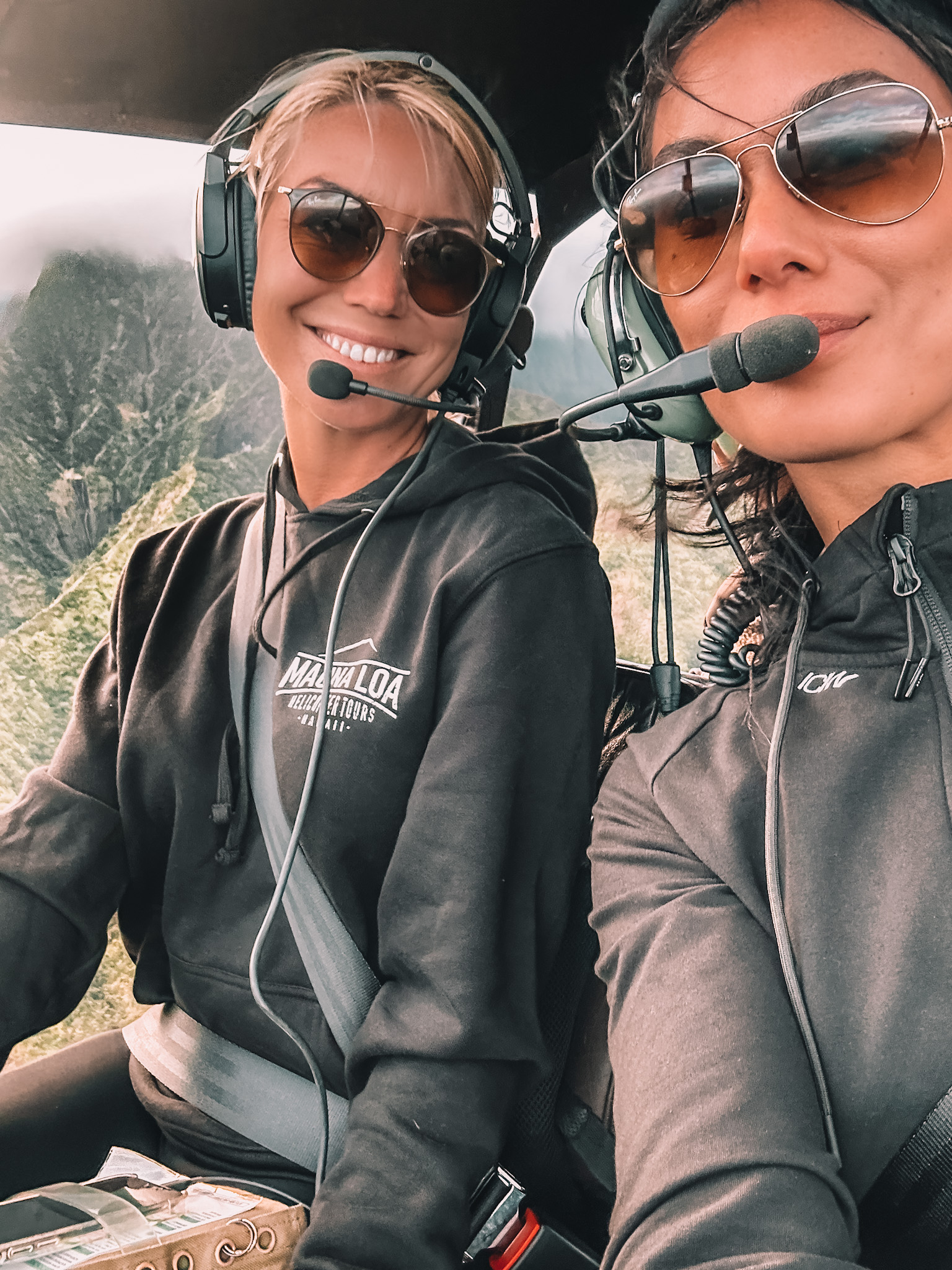
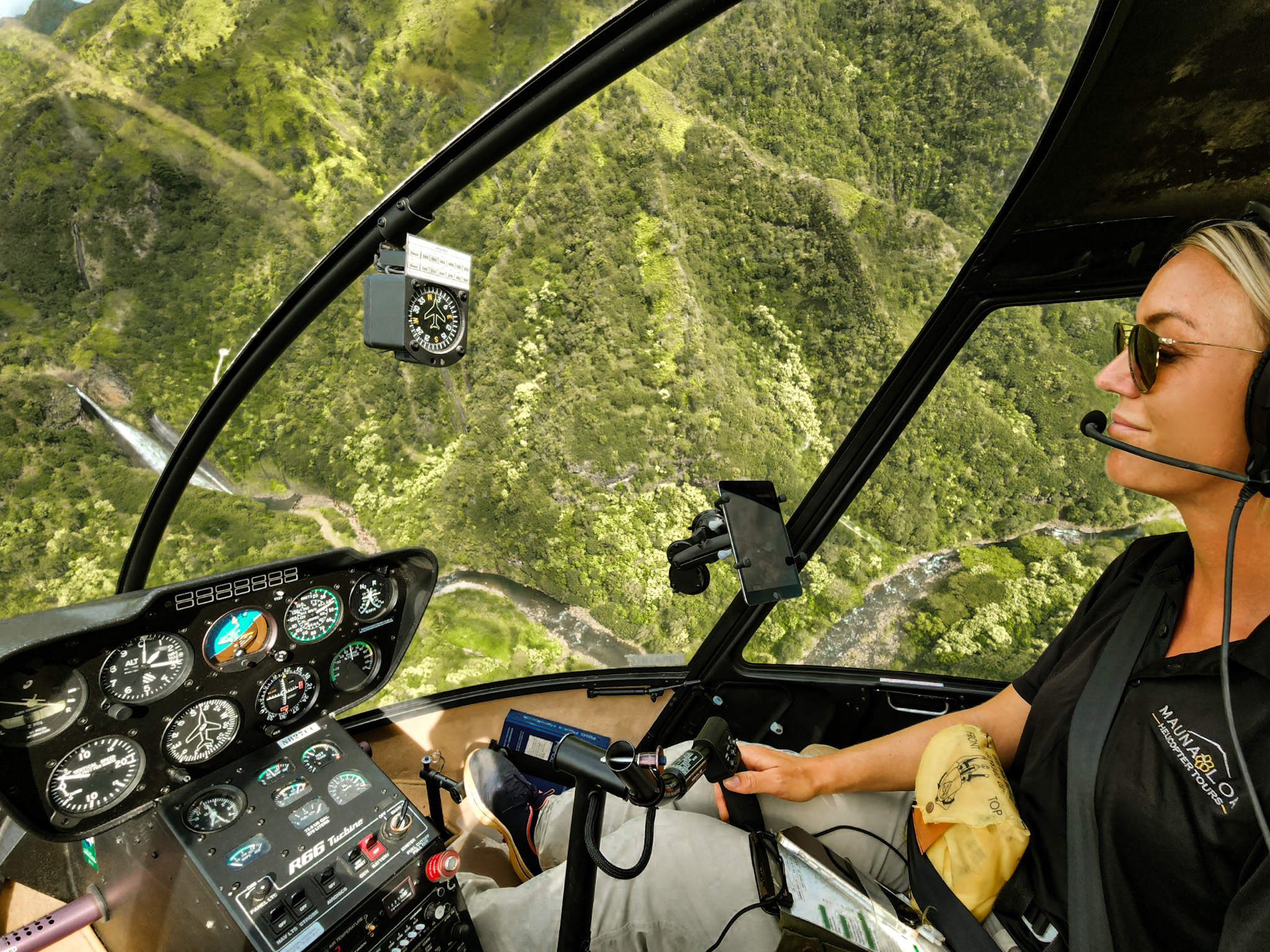
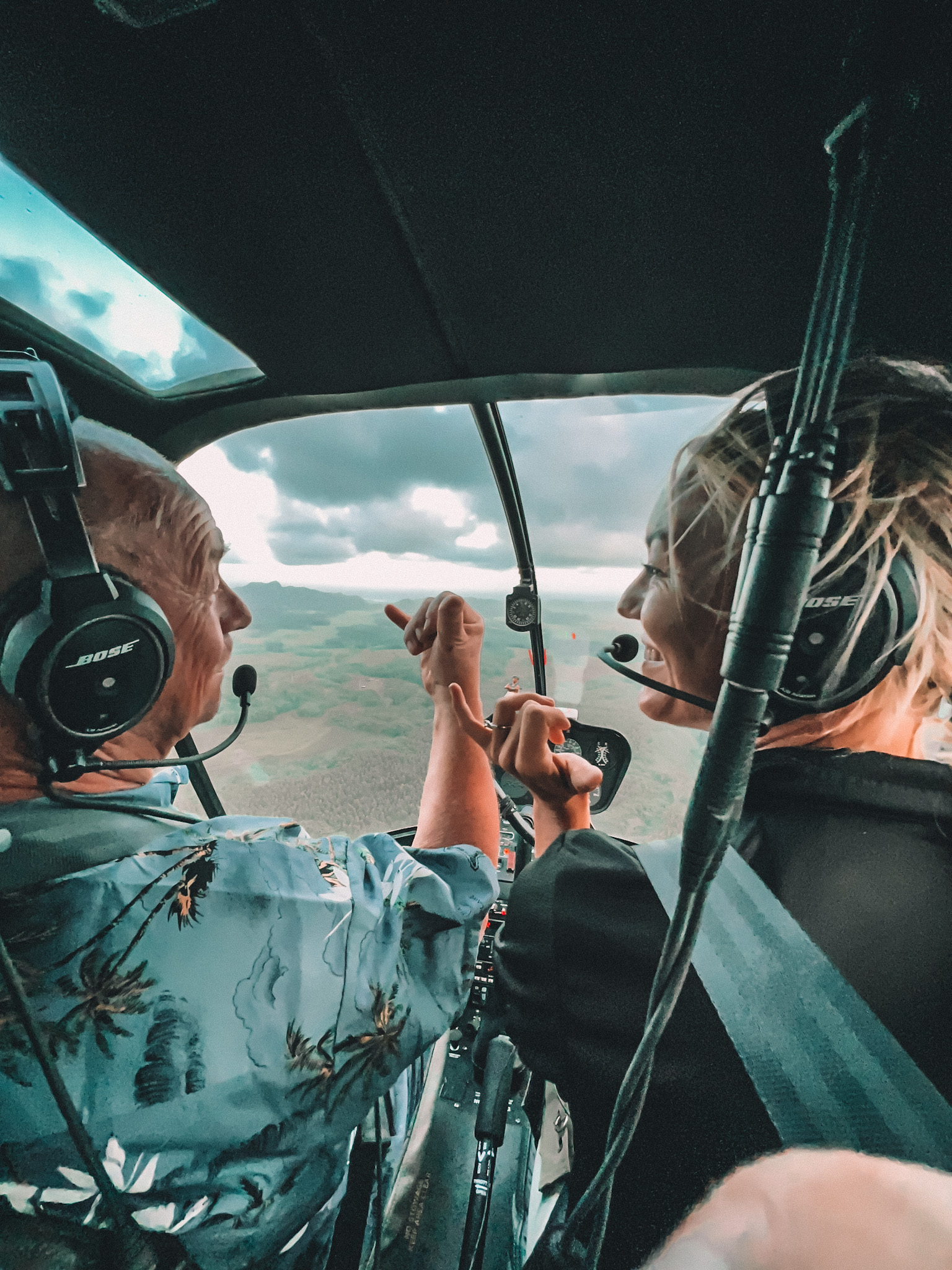
Her initial US visa now expired, Michelle is back in Sweden for the European summer, getting married and enjoying time with friends she hasn’t seen in a long time.
As she waits for her next visa to be approved so she can return to US skies, I can’t help but think that her beautiful mother would be wonderfully proud.
First published in HeliOps Magazine – Issue 145 (Kia Kaha Media) in ‘A Greater View’, a column profiling women in the heli industry

 Bronni Bowen