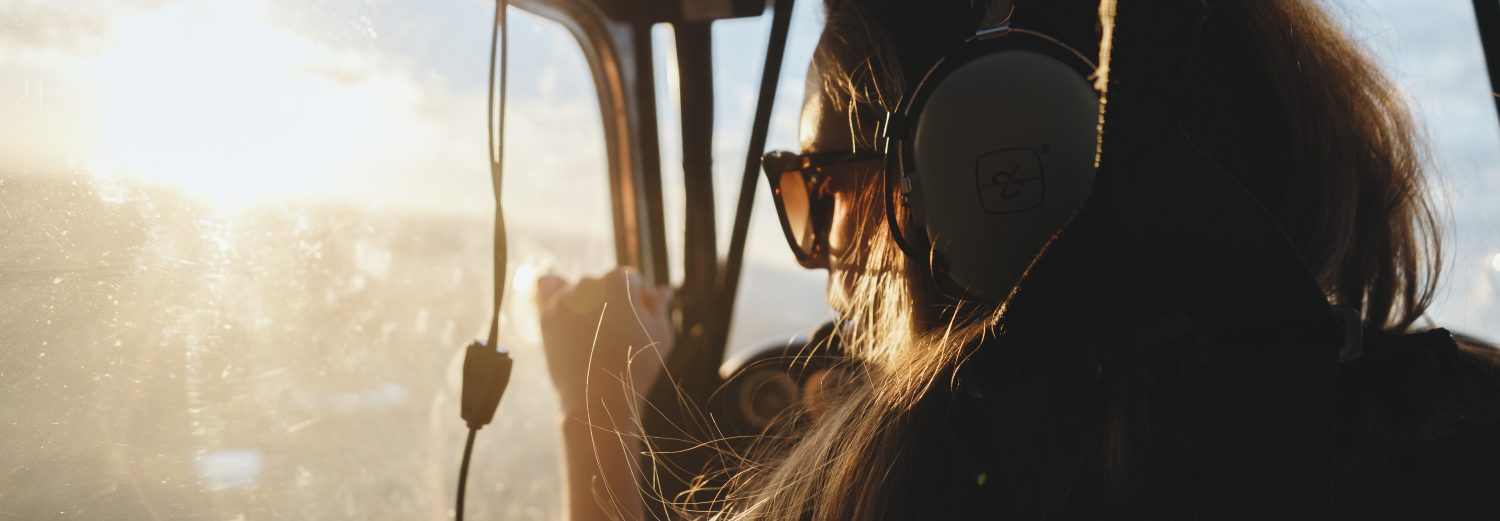
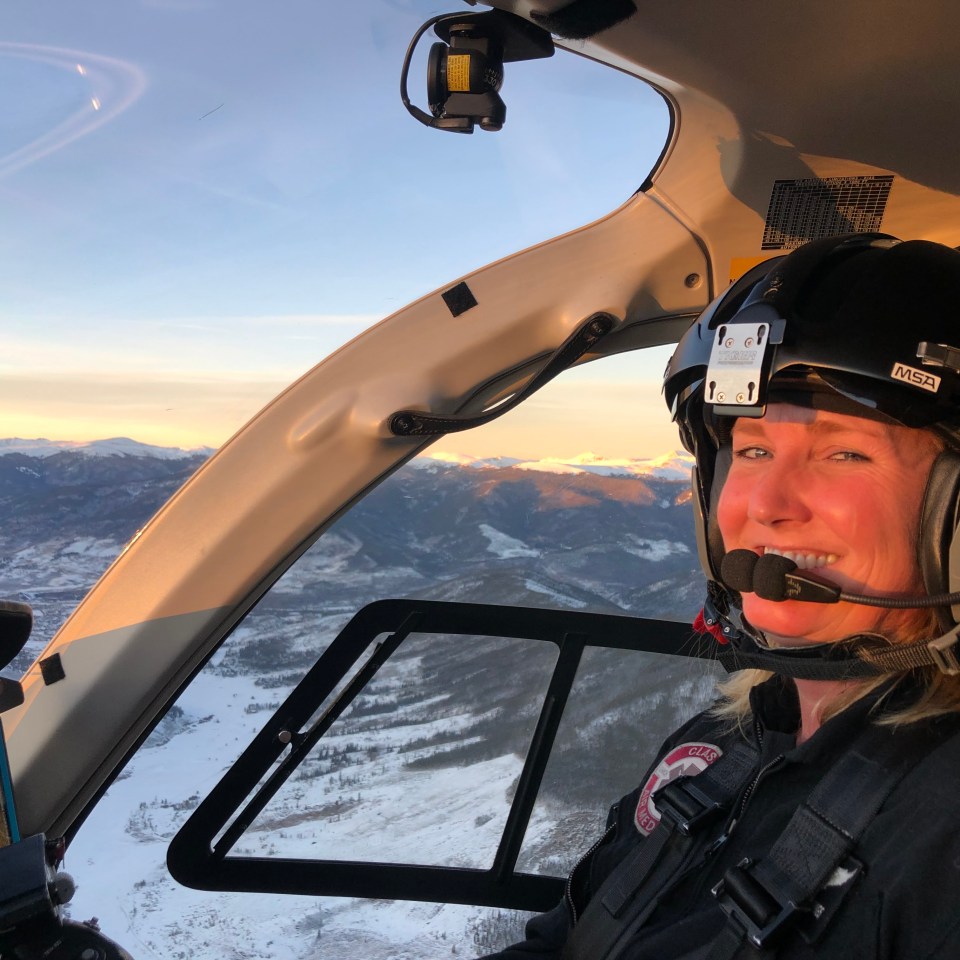
Tracy Stallings’ family moved from northern Nevada up to Fairbanks, Alaska, when she was young. There, the sky was filled with general aviation planes for commuting, mail and delivery, shipping supplies out to isolated towns and villages, and dropping off hunters. “They used them for everything up there, and I got to fly to various places in the state to go camping, fishing, hiking, and on all kinds of adventures. Landings and take-offs were so exciting, especially in the belly of a Widgeon plane on a lake in the middle of the Brooks Range. Or landing on a sandbar in the middle of a river with grizzly bear tracks all over it.”
“That being said, I never thought in a million years that I would become a pilot – let alone a helicopter pilot.”
When Tracy left Alaska in college, she landed in various places: Boston, San Francisco, Lake Tahoe. In Tahoe, she met Leigh Coates (A Greater View, Issue 152), and they quickly became friends. “When I moved to Hawaii a couple of years later, Leigh came too. She was at a BBQ one evening and called, saying, “There’s a helicopter pilot here! You need to come down!” Leigh and I were enamored, and excited to learn there was a school on the island. By the end of the evening, we had it all planned out; we were going to become helicopter babes and travel the world. We did an intro flight soon after and were completely hooked!”
Tracy trained at Mauna Loa on the Big Island. “I had just finished massage school – the original reason for my moving there – and my parents were not thrilled that I wanted to start another occupation after they had just co-signed a loan for me to go to massage school. This meant I had to wait a little bit before I could get my own loan to start training. Leigh started right away, and it was awesome to see her progress and hear her stories. Finally, I was able to get my loan through Utah Valley University, taking online classes for their Bachelor’s Degree, a Professional Pilot Program that also financed the flight training portion.”
Still, Tracy worked full-time, running a painting business and doing flight training early in the mornings. “It took me two years in total to finish. I ran out of funds for my CFI, and my parents graciously helped me finance the rest of that.” Tracy suspects part of the reason they agreed was because, at this point, Leigh was living with them in Alaska when she wasn’t out on her contract work. “She’d come home with beer and pizza, and magically, my parents warmed to the idea of me being a helicopter pilot!”
“My heli career has been and continues to be amazing. Once I finished with Mauna Loa Helicopters, I moved to Paso Robles, California, to be an instructor at Blue Sky Aviation. It was scary but refreshing to leave the island after ten years for a new place. Training in coastal California was so beautiful, and this is also where I met my husband, John, during his flight training at the school.”
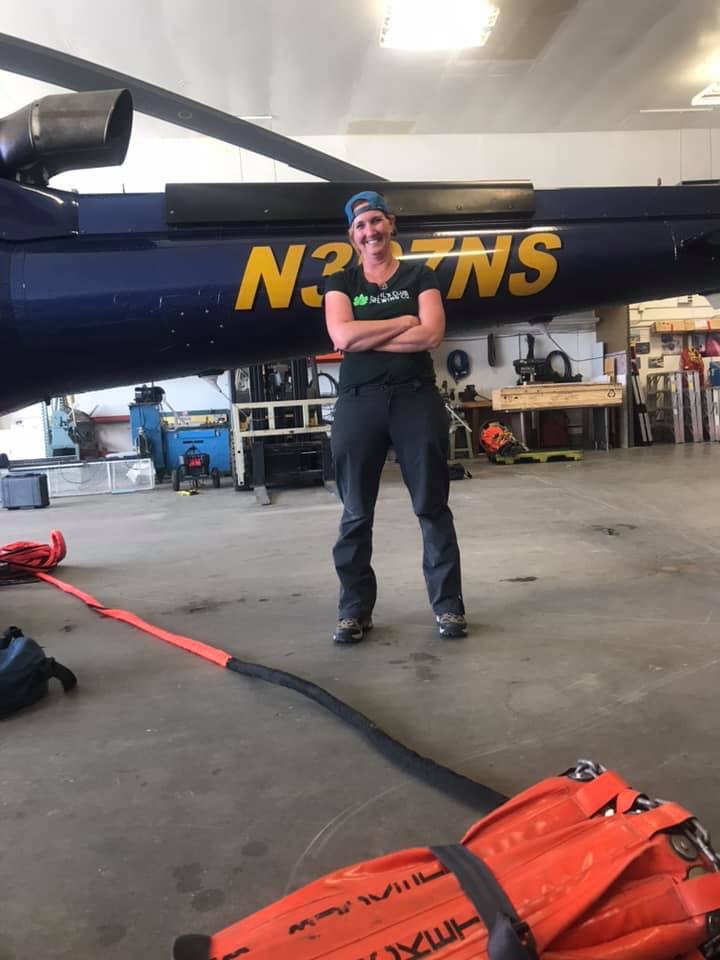
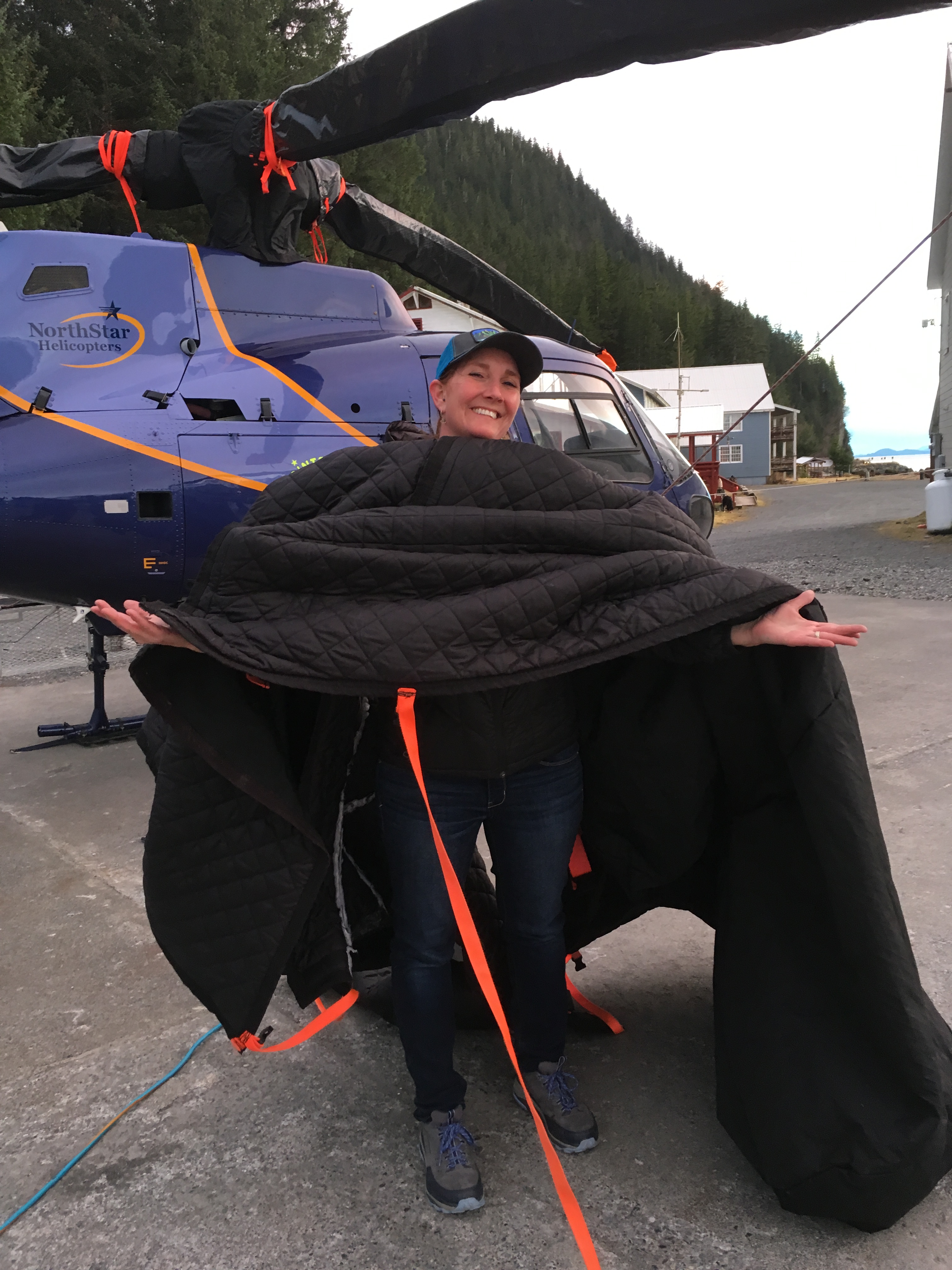
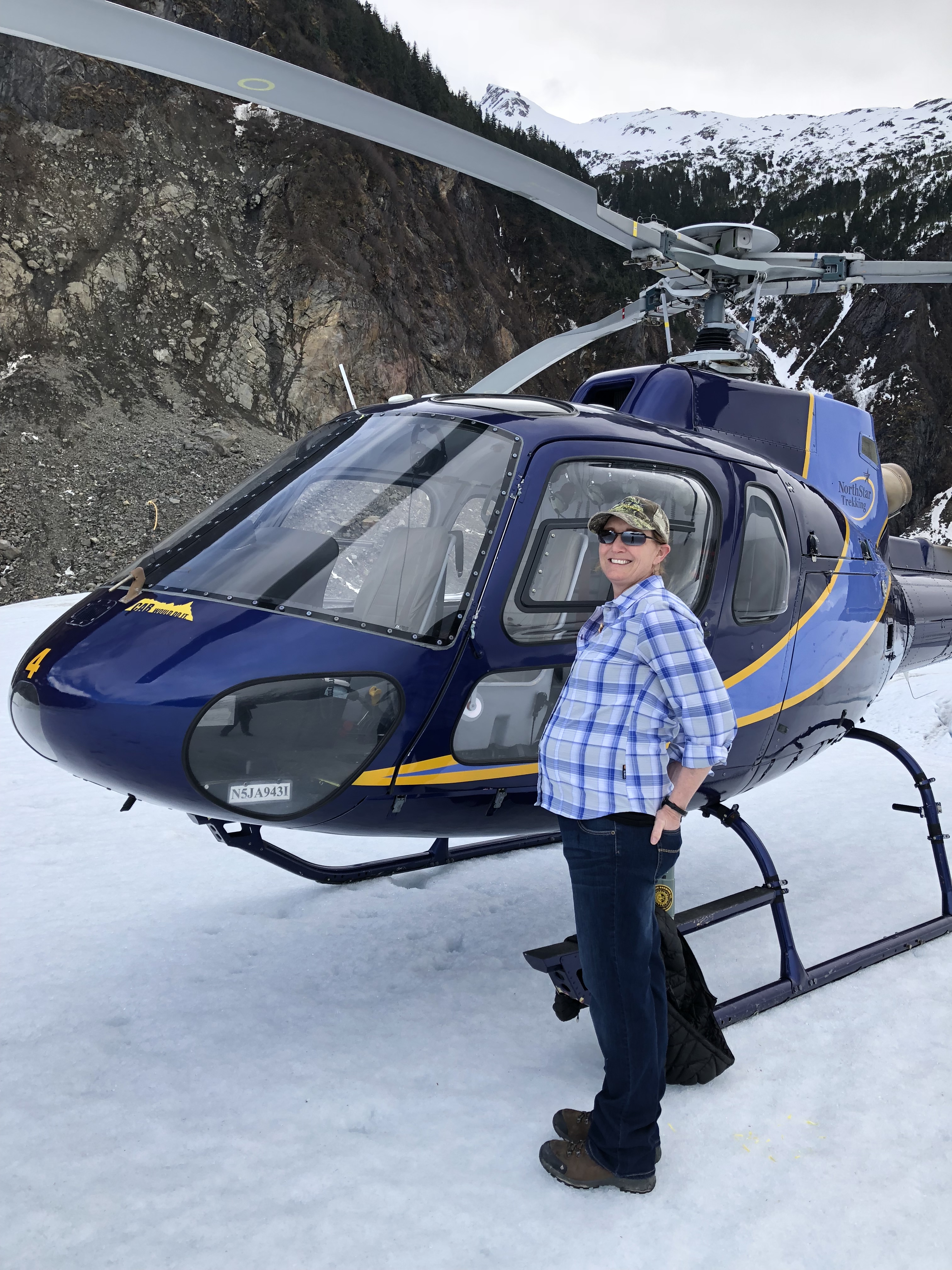
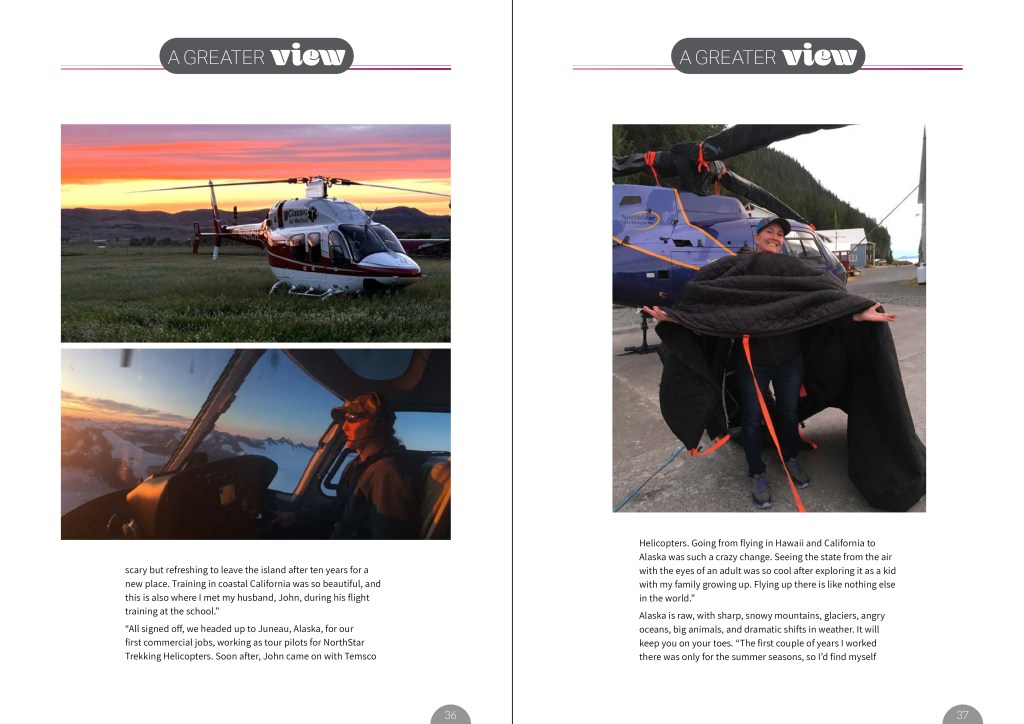
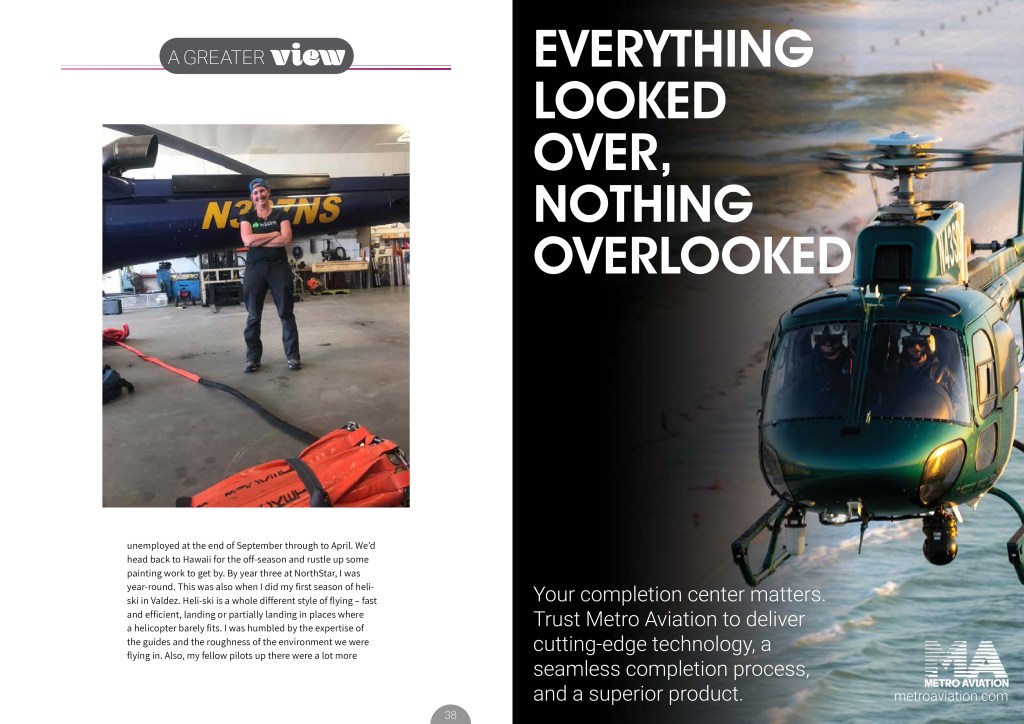
“All signed off, we headed up to Juneau, Alaska, for our first commercial jobs, working as tour pilots for NorthStar Trekking Helicopters. Soon after, John came on with Temsco Helicopters. Going from flying in Hawaii and California to Alaska was such a crazy change. Seeing the state from the air with the eyes of an adult was so cool after exploring it as a kid with my family growing up. Flying up there is like nothing else in the world.”
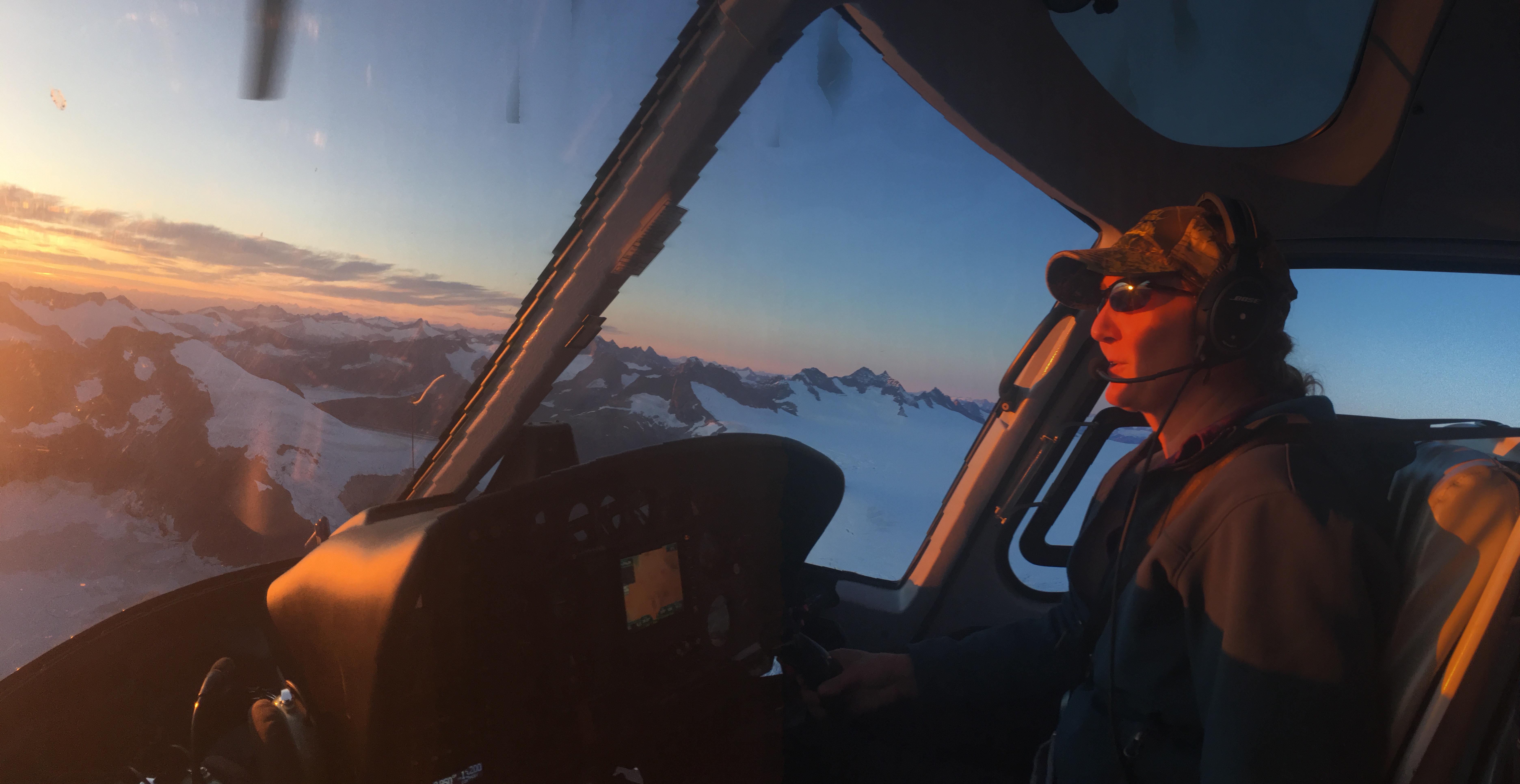
Alaska is raw, with sharp, snowy mountains, glaciers, angry oceans, big animals, and dramatic shifts in weather. It will keep you on your toes. “The first couple of years I worked there was only for the summer seasons, so I’d find myself unemployed at the end of September through to April. We’d head back to Hawaii for the off-season and rustle up some painting work to get by. By year three at NorthStar, I was year-round. This was also when I did my first season of heli-ski in Valdez. Heli-ski is a whole different style of flying – fast and efficient, landing or partially landing in places where a helicopter barely fits. I was humbled by the expertise of the guides and the roughness of the environment we were flying in. Also, my fellow pilots up there were a lot more experienced than me and always had great advice.”
Spread out fuel stops across Alaska often meant Tracy could visit Leigh in Valdez or have dinner with her Dad in Fairbanks on the way up to the Brooks Range for work. “I loved those opportunities.”
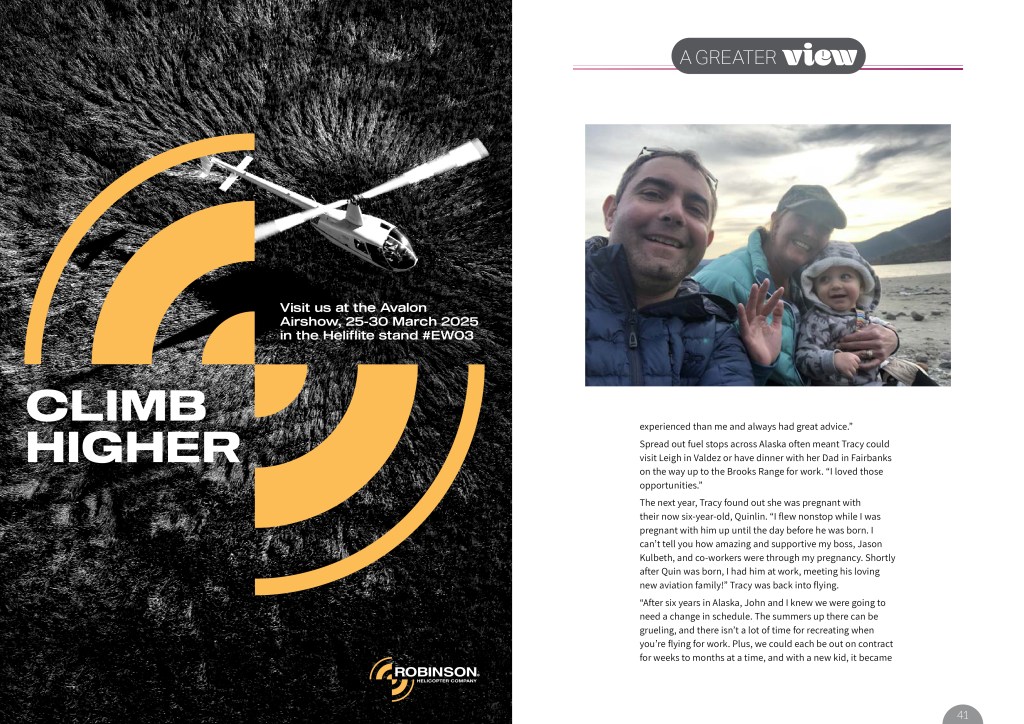
The next year, Tracy found out she was pregnant with their now six-year-old, Quinlin. “I flew nonstop while I was pregnant with him up until the day before he was born. I can’t tell you how amazing and supportive my boss, Jason Kulbeth, and co-workers were through my pregnancy. Shortly after Quin was born, I had him at work, meeting his loving new aviation family!” Tracy was back into flying.
“After six years in Alaska, John and I knew we were going to need a change in schedule. The summers up there can be grueling, and there isn’t a lot of time for recreating when you’re flying for work. Plus, we could each be out on contract for weeks to months at a time, and with a new kid, it became unsustainable. My parents helped constantly, and my mom would stay for months, even though they lived hours away in Anchorage.”
“We decided to go for Medevac, where we could have a consistent schedule and be home part of the time. I spoke with Adam West, the Chief Pilot of Classic Air Medical, a family operation run out of Utah, and this is where we really got lucky. He and Kory Hale, Director of Ops, are some of the most stand-up guys we could possibly work with.”
“They really took a gamble hiring us. I was the first female rotor pilot they hired, we were the first couple they’d had, and we didn’t have any direct connections or referrals to Classic. Nevertheless, in August of 2019, we moved from Alaska to Glenwood Springs, Colorado, and have been living a unicorn life since then.”
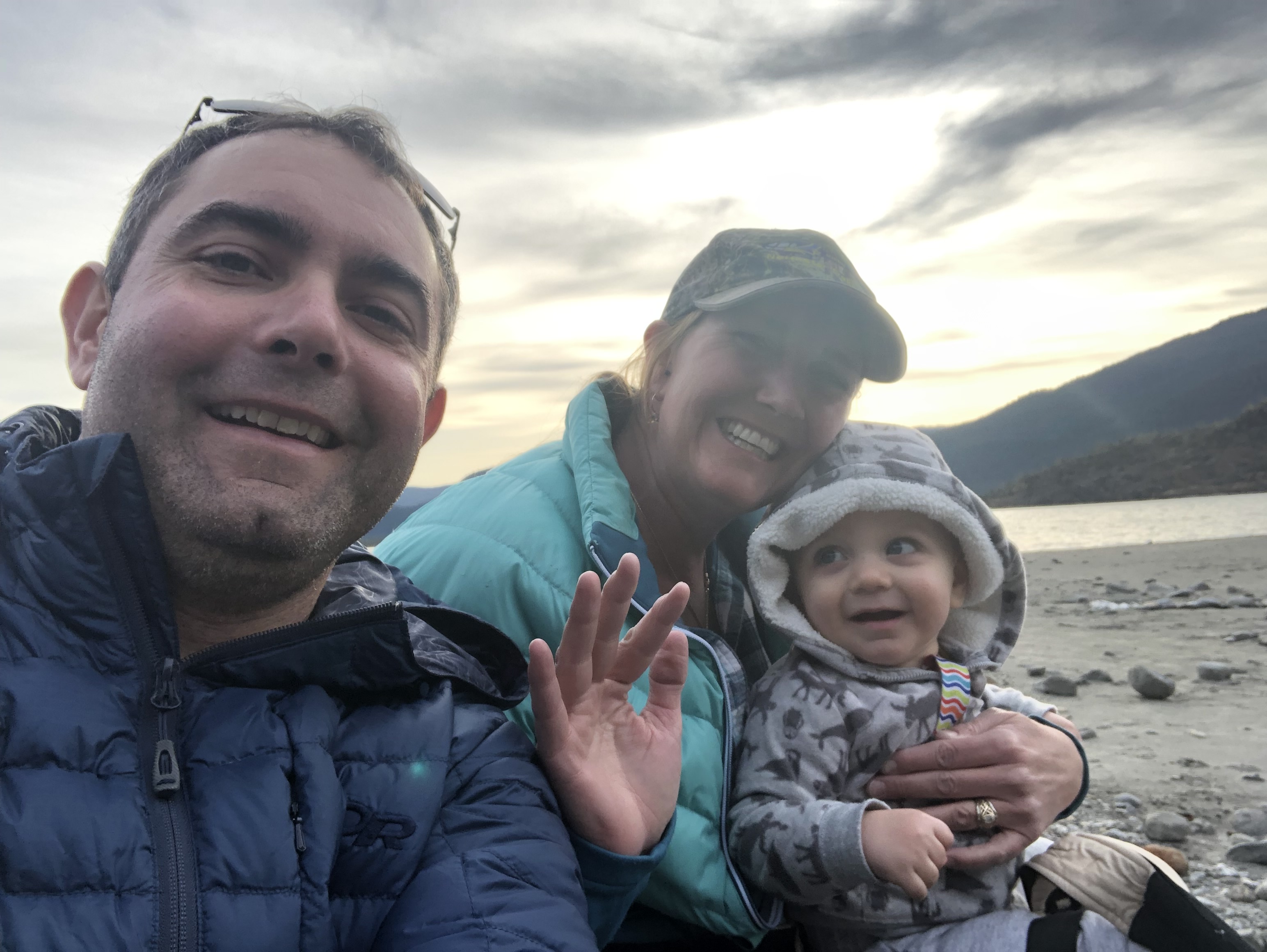
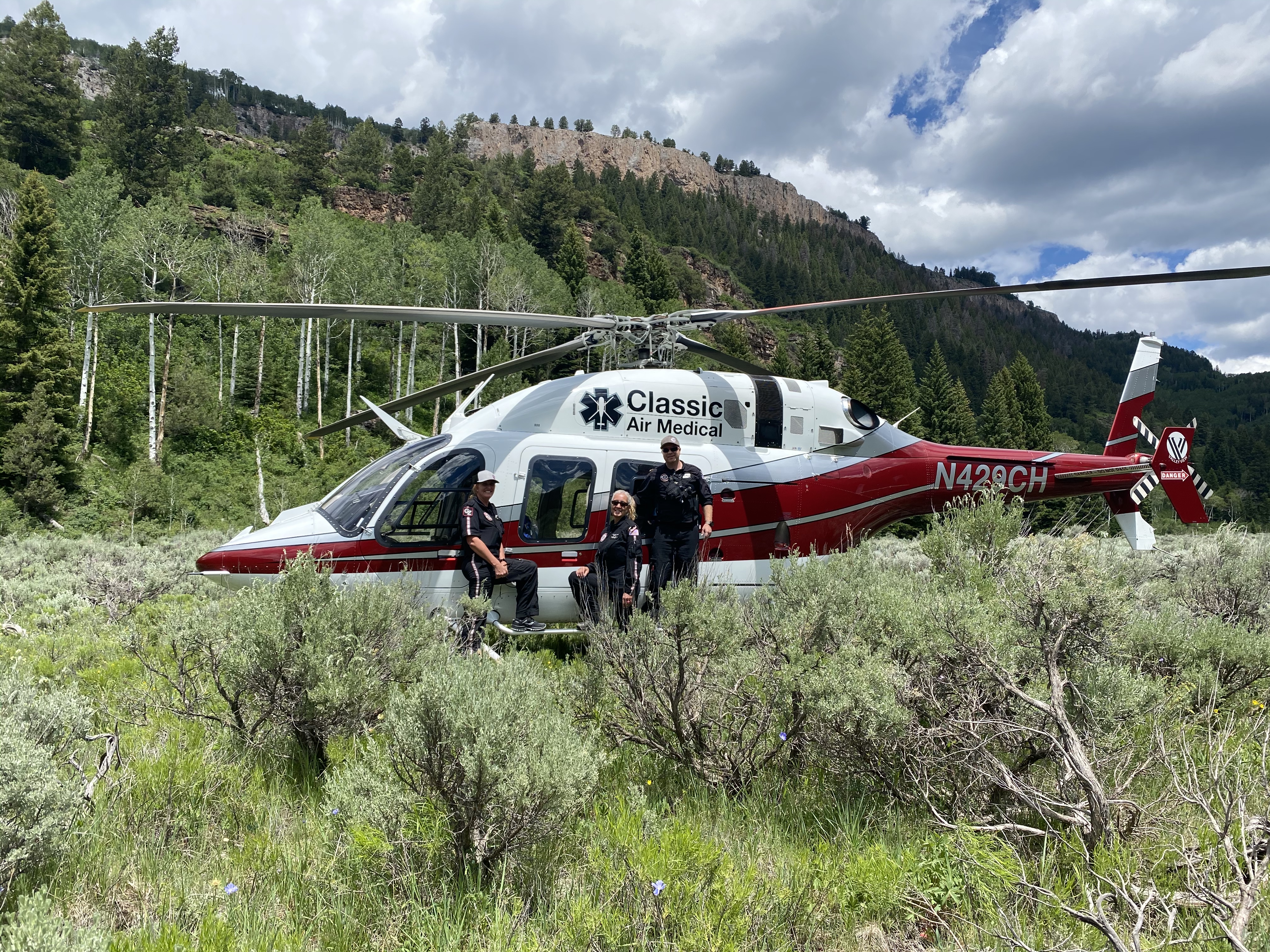
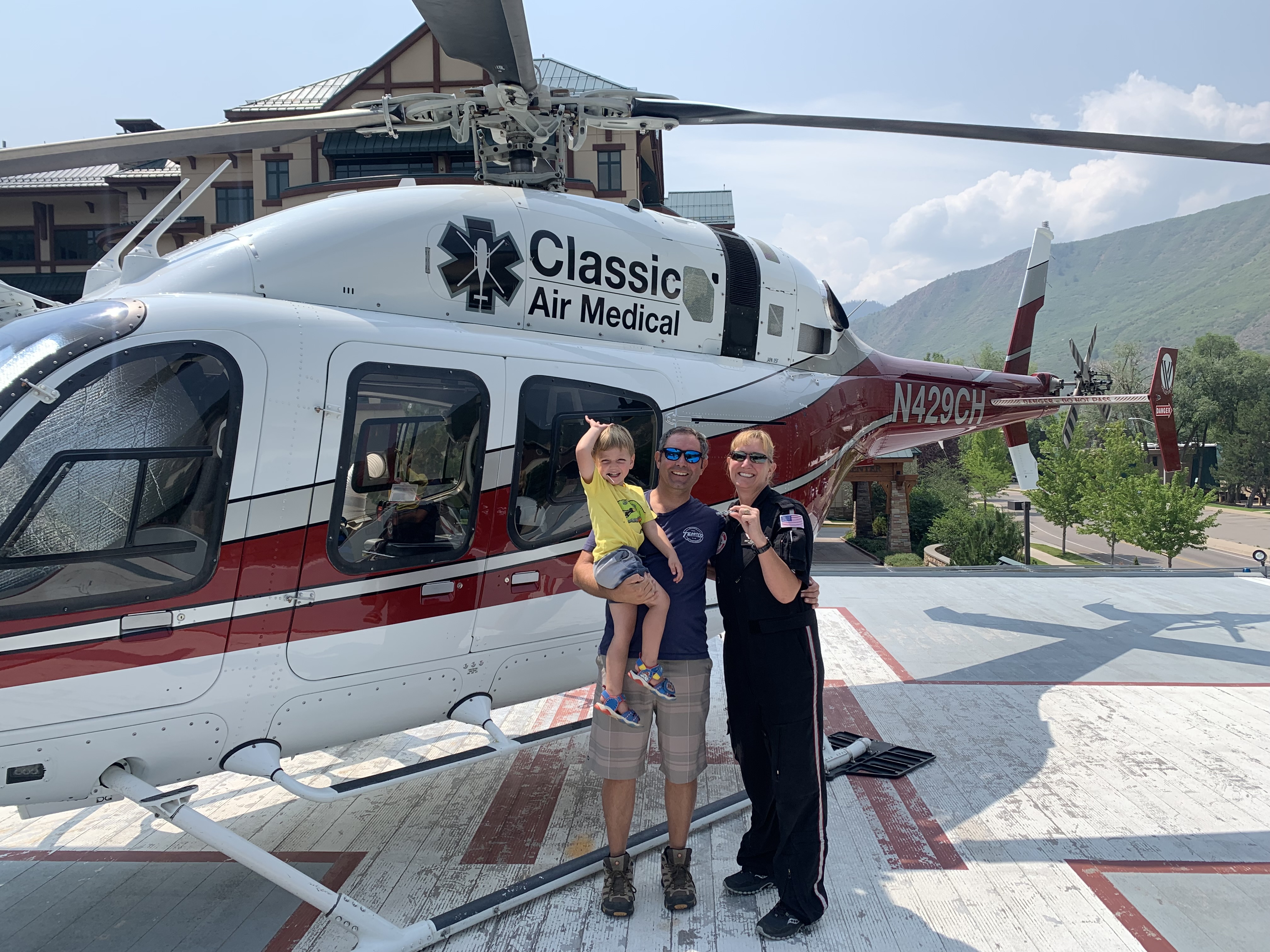
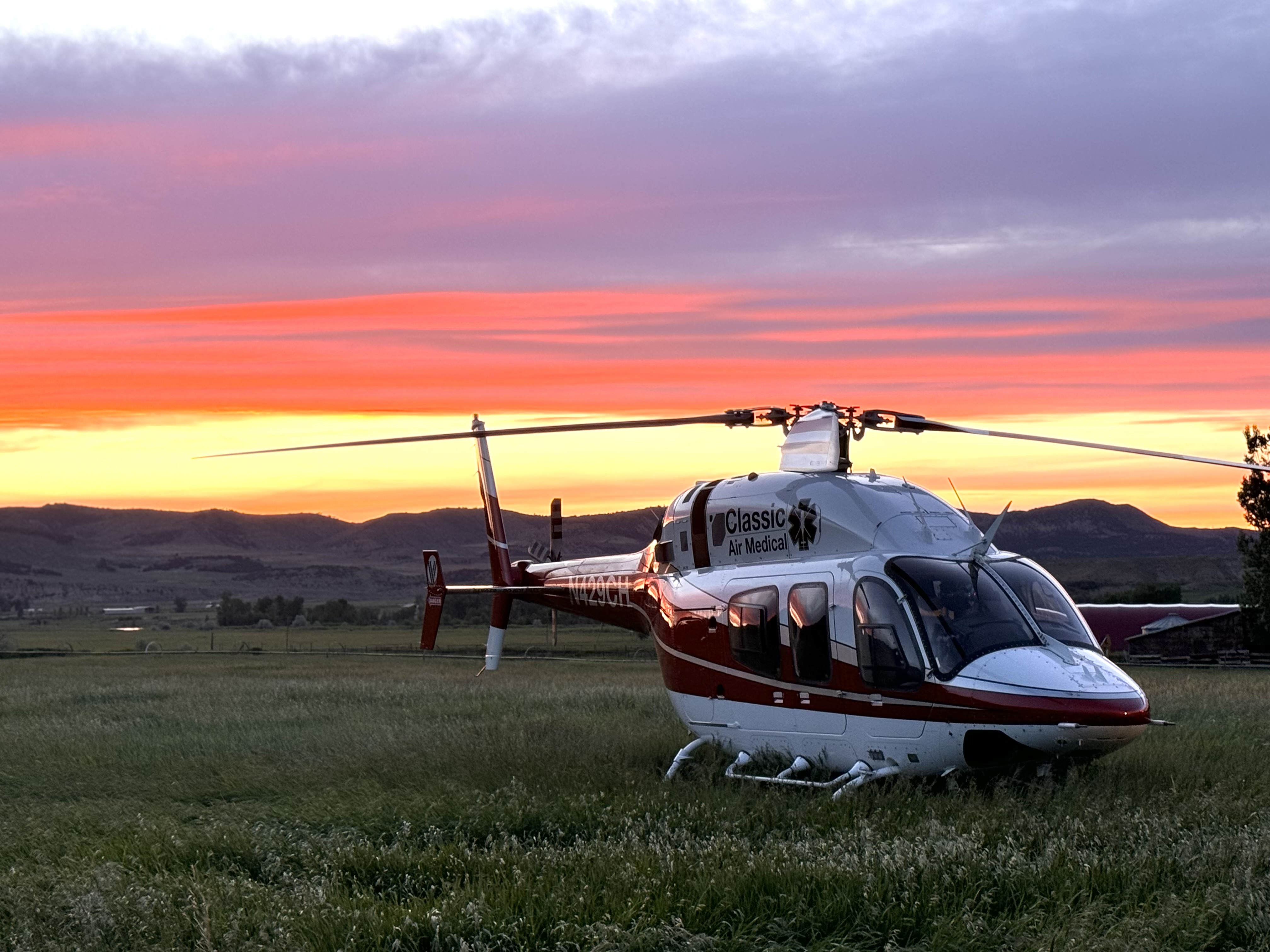
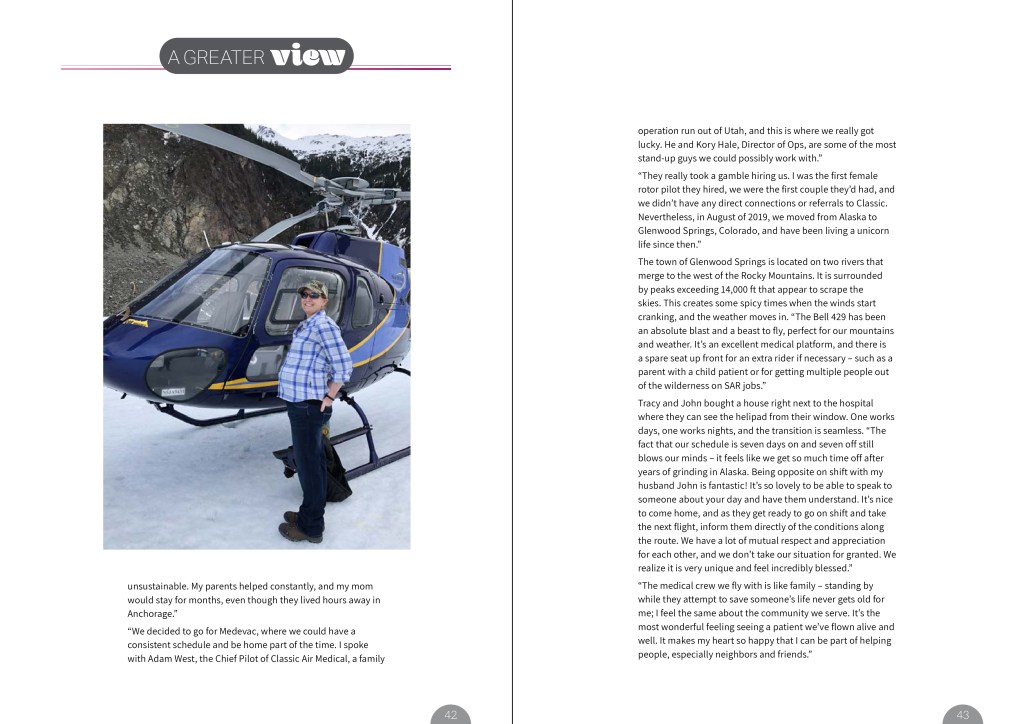
The town of Glenwood Springs is located on two rivers that merge to the west of the Rocky Mountains. It is surrounded by peaks exceeding 14,000 ft that appear to scrape the skies. This creates some spicy times when the winds start cranking, and the weather moves in. “The Bell 429 has been an absolute blast and a beast to fly, perfect for our mountains and weather. It’s an excellent medical platform, and there is a spare seat up front for an extra rider if necessary – such as a parent with a child patient or for getting multiple people out of the wilderness on SAR jobs.”
Tracy and John bought a house right next to the hospital where they can see the helipad from their window. One works days, one works nights, and the transition is seamless. “The fact that our schedule is seven days on and seven off still blows our minds – it feels like we get so much time off after years of grinding in Alaska. Being opposite on shift with my husband John is fantastic! It’s so lovely to be able to speak to someone about your day and have them understand. It’s nice to come home, and as they get ready to go on shift and take the next flight, inform them directly of the conditions along the route. We have a lot of mutual respect and appreciation for each other, and we don’t take our situation for granted. We realize it is very unique and feel incredibly blessed.”
“The medical crew we fly with is like family – standing by while they attempt to save someone’s life never gets old for me; I feel the same about the community we serve. It’s the most wonderful feeling seeing a patient we’ve flown alive and well. It makes my heart so happy that I can be part of helping people, especially neighbors and friends.”
“To top it all off, my sweet parents moved down from Alaska, and my brother moved over from Hawaii, so now I have all the people I love and want to share adventures with living in the same area. The bond our kid has with his grandparents and uncle is so cool, and we all adore being in a blue-sky area spending time with each other.”

First published in Issue 154 HeliOps Magazine
 Bronni Bowen