
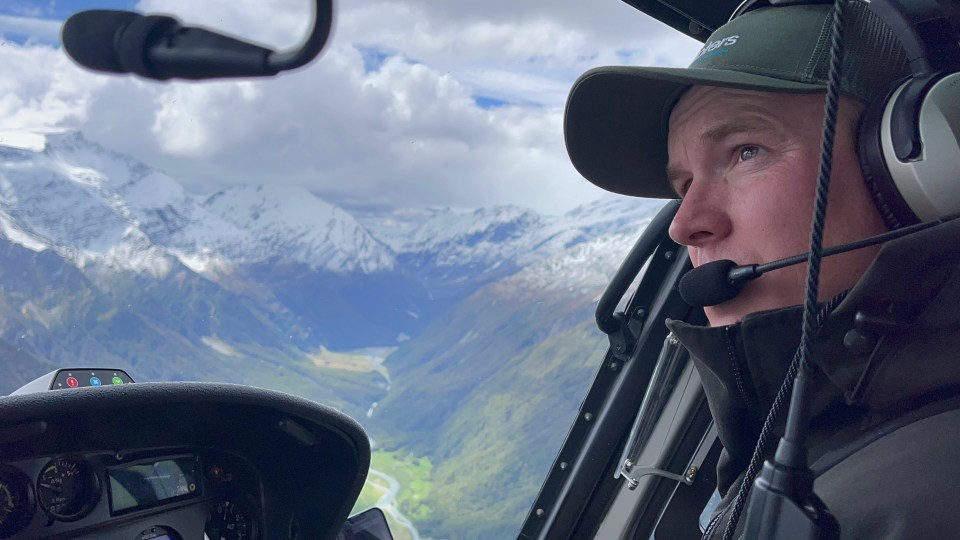
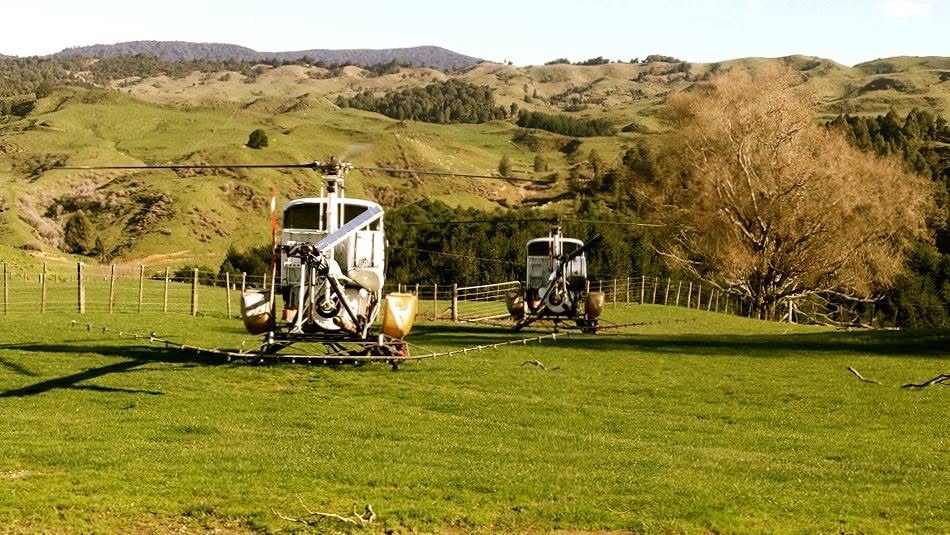
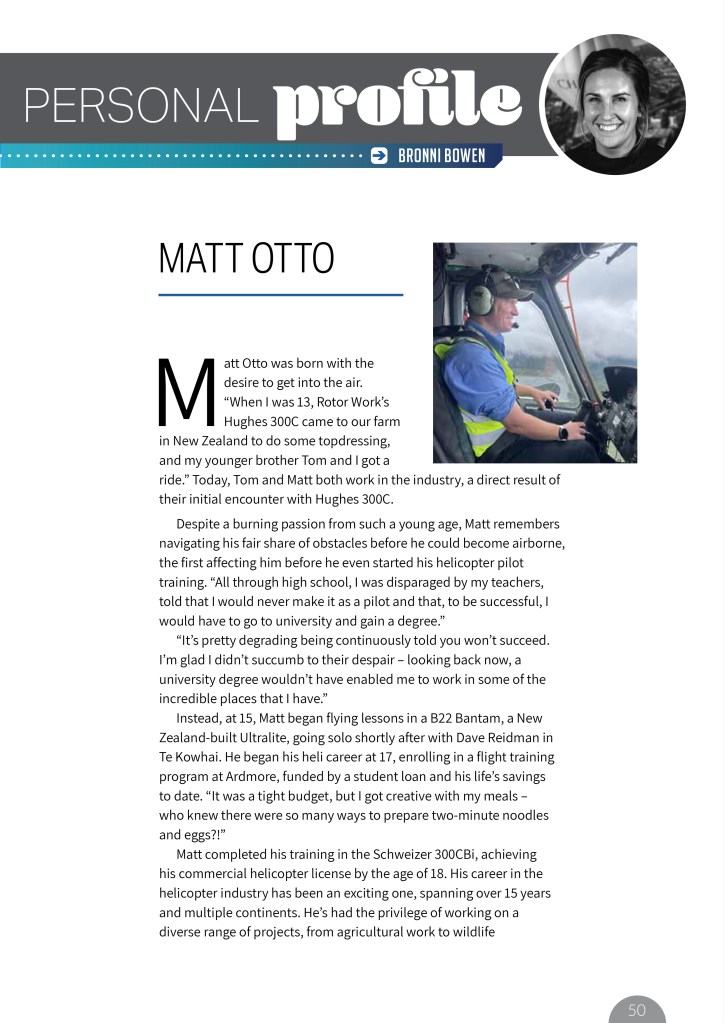
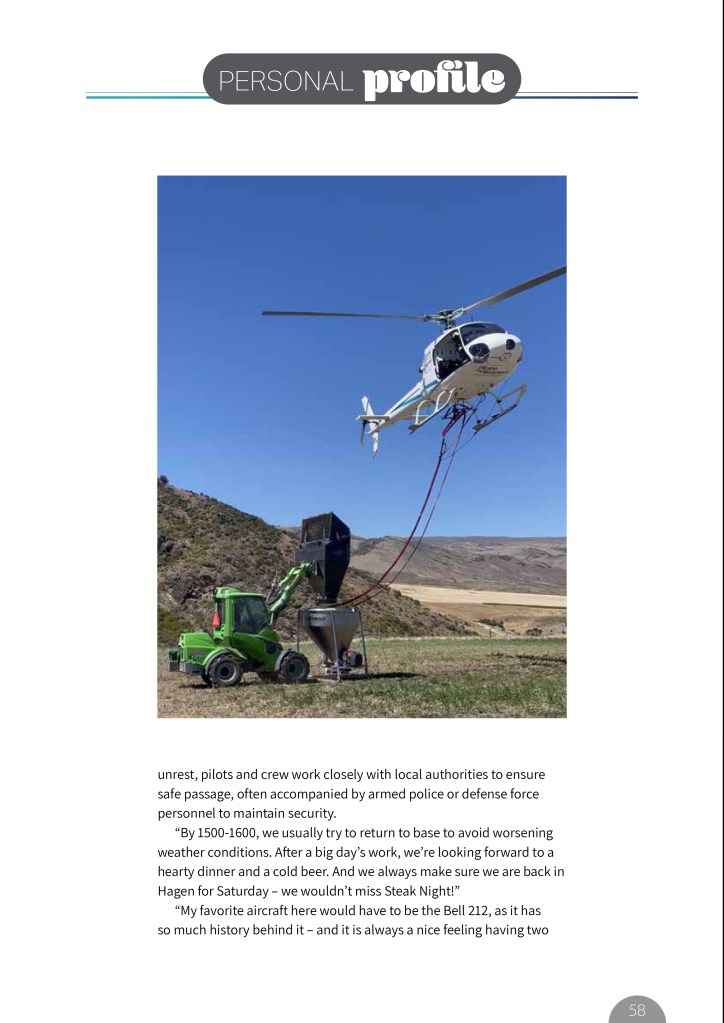
Matt Otto was born with the desire to get into the air. “When I was 13, Rotor Work’s Hughes 300C came to our farm in New Zealand to do some topdressing, and my younger brother Tom and I got a ride.” Today, Tom and Matt both work in the industry, a direct result of their initial encounter with Hughes 300C.
Despite a burning passion from such a young age, Matt remembers navigating his fair share of obstacles before he could become airborne, the first affecting him before he even started his helicopter pilot training. “All through high school, I was disparaged by my teachers, told that I would never make it as a pilot and that, to be successful, I would have to go to university and gain a degree.”
“It’s pretty degrading being continuously told you won’t succeed. I’m glad I didn’t succumb to their despair – looking back now, a university degree wouldn’t have enabled me to work in some of the incredible places that I have.”
Instead, at 15, Matt began flying lessons in a B22 Bantam, a New Zealand-built Ultralite, going solo shortly after with Dave Reidman in Te Kowhai. He began his heli career at 17, enrolling in a flight training program at Ardmore, funded by a student loan and his life’s savings to date. “It was a tight budget, but I got creative with my meals – who knew there were so many ways to prepare two-minute noodles and eggs?!”
Matt completed his training in the Schweizer 300CBi, achieving his commercial helicopter license by the age of 18. His career in the helicopter industry has been an exciting one, spanning over 15 years and multiple continents. He’s had the privilege of working on a diverse range of projects, from agricultural work to wildlife conservation, fighting fire, and precision drill moves, and under all kinds of work arrangements, including contracts, seasonal jobs, and permanent positions.
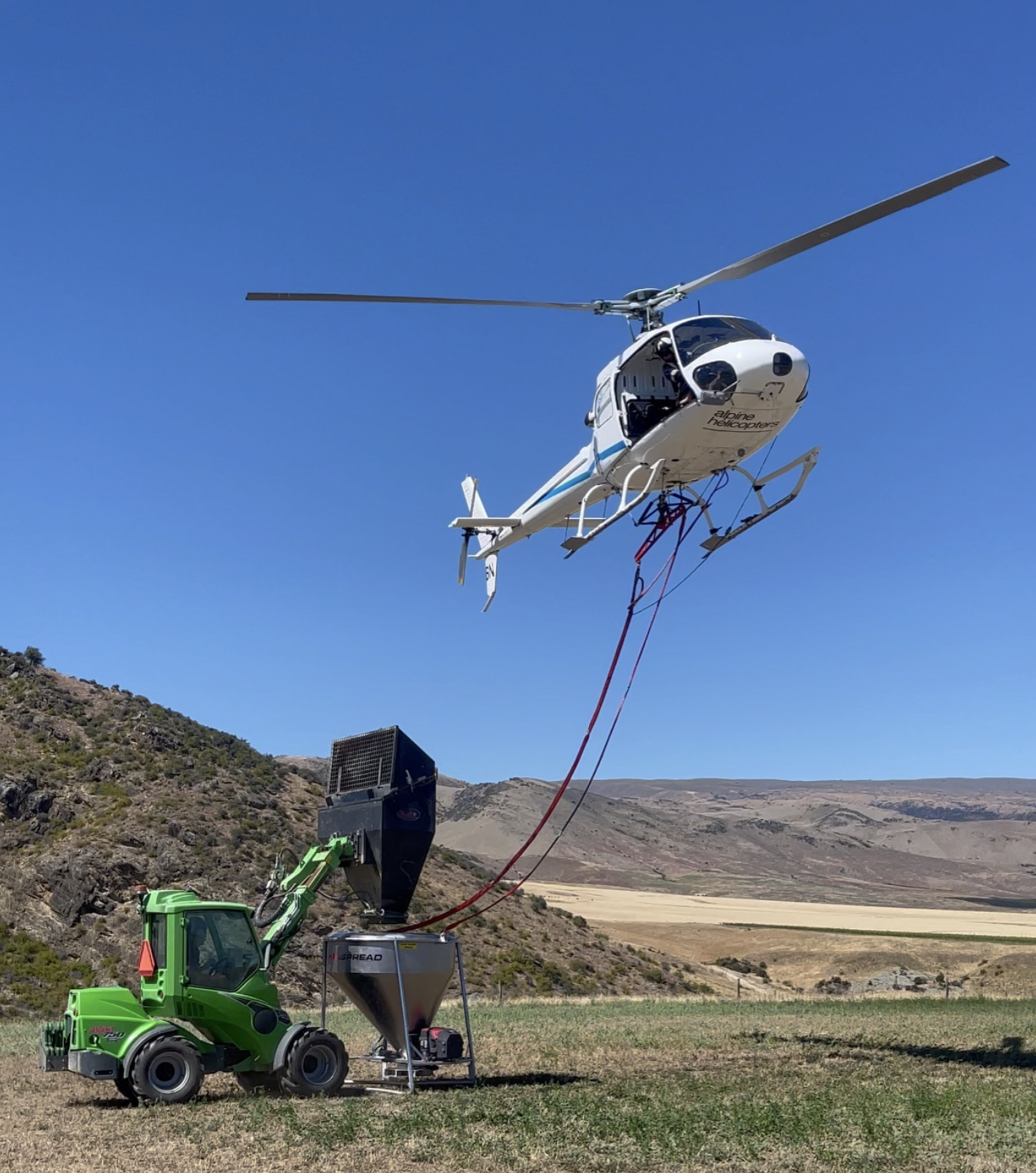

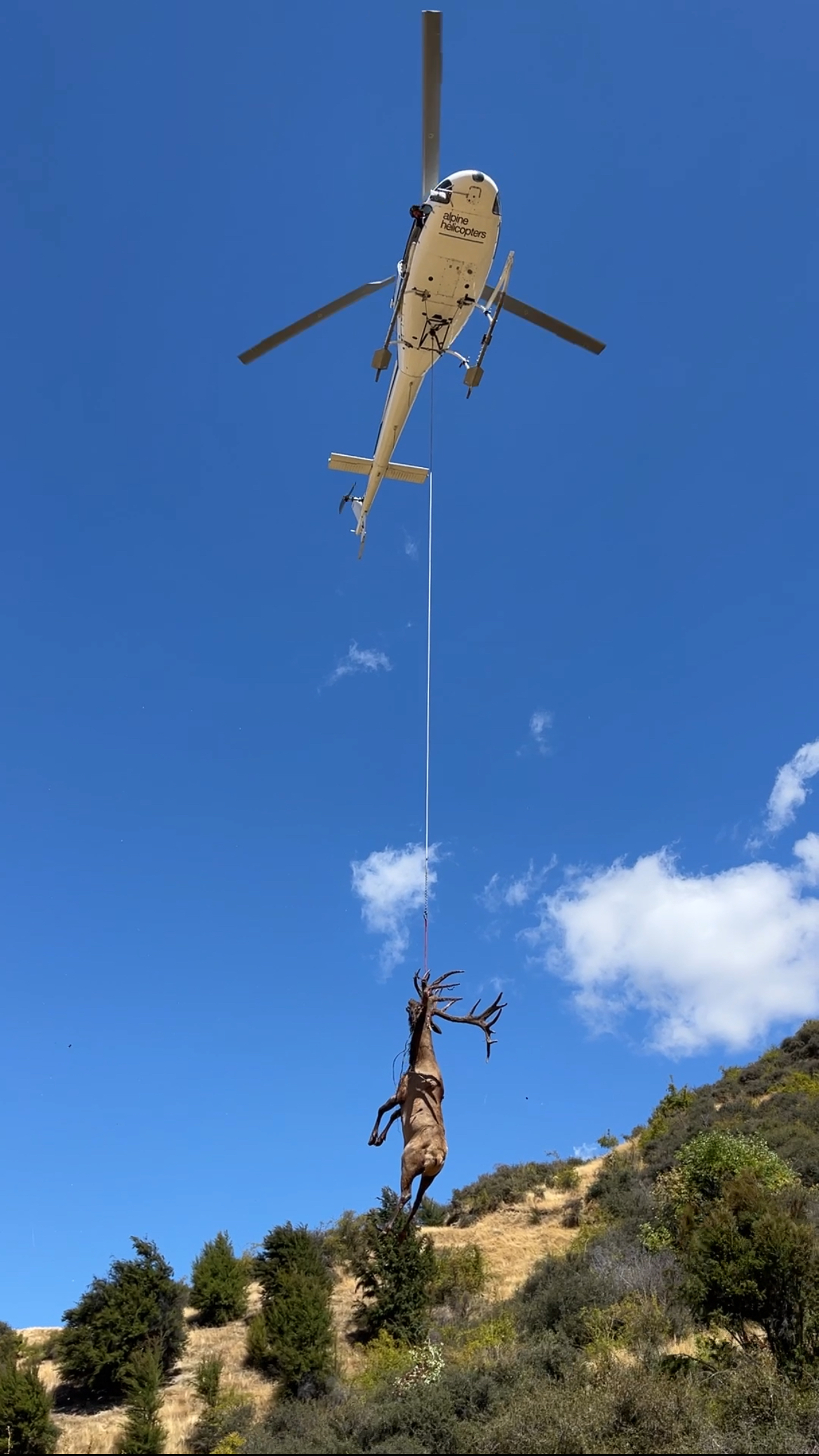
“My first job was as a loader driver for Outback Helicopters on remote Australian cattle stations. Although the hours were long and the pay modest, I was grateful for the opportunity to get my foot in the door. The role also afforded me some valuable ferry flying experience, which helped me build my skills and make industry connections. It was a challenging but crucial stepping stone in my aviation career.”
The following eight years Matt spent back in New Zealand with Rotor Work, specializing in helicopter ag flying. This is where he really got his first break. “They were a great family to work for. I’ve been fortunate to have had several influential mentors throughout my career, but Ben Dellow stands out here. He not only guided me through my agricultural rating but also instilled in me a profound mindset of safety.” Ben’s mentorship extended far beyond flying skills; he was also an exceptional businessman who taught Matt the value of prudent financial decisions. “His ability to turn a dollar into two was truly impressive, and his entrepreneurial acumen has had a lasting impact on my approach to business and aviation.”
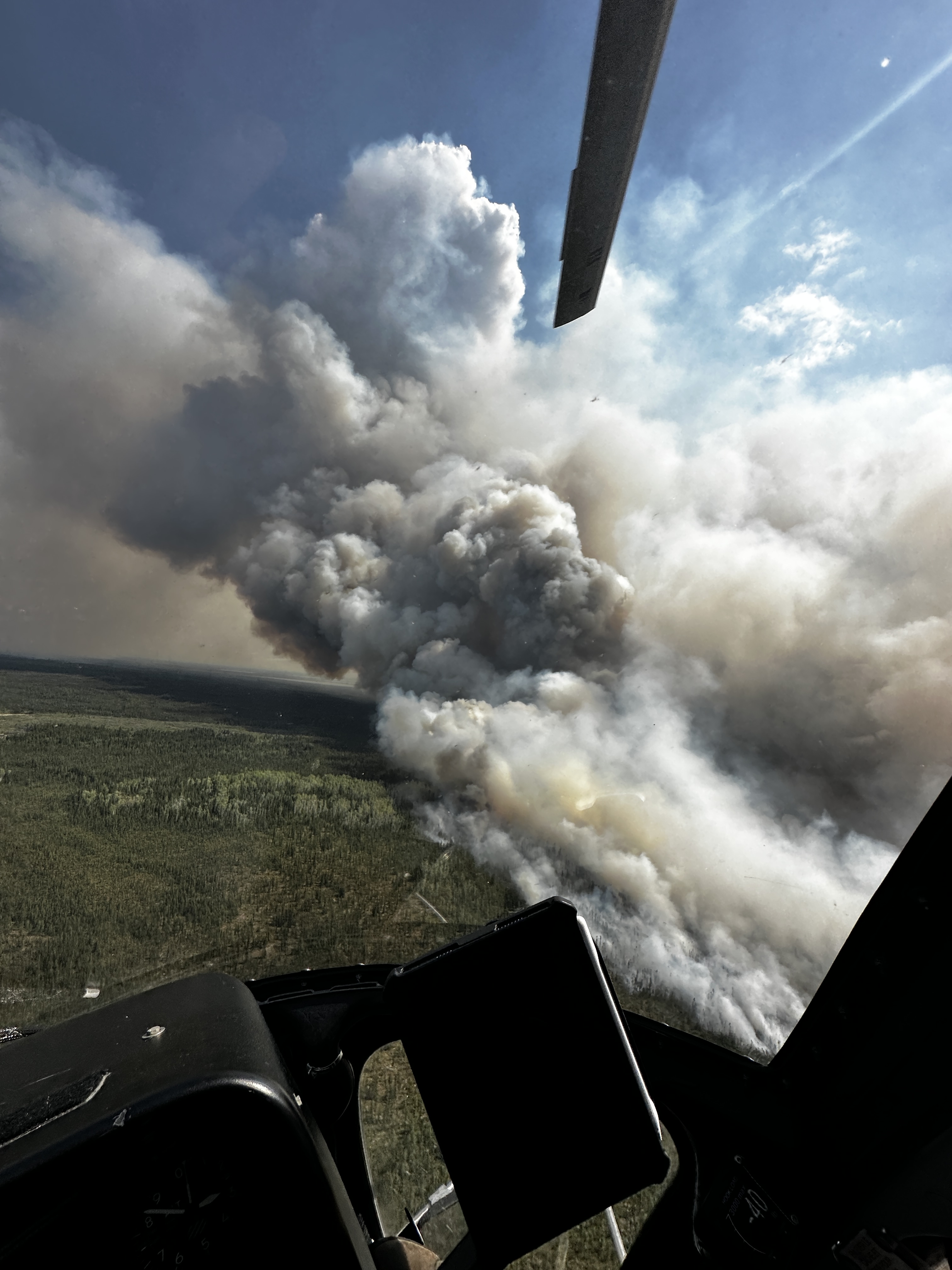
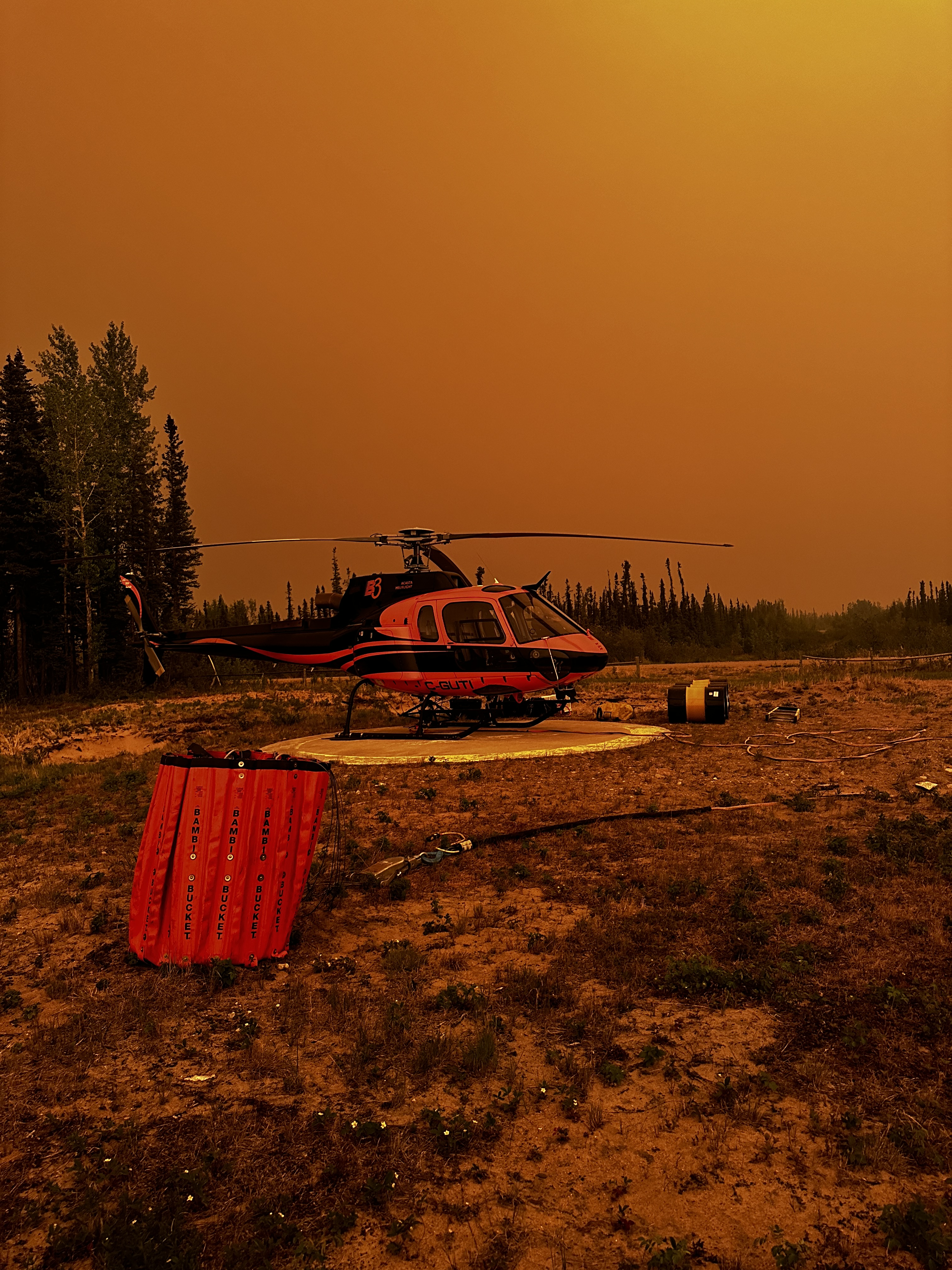
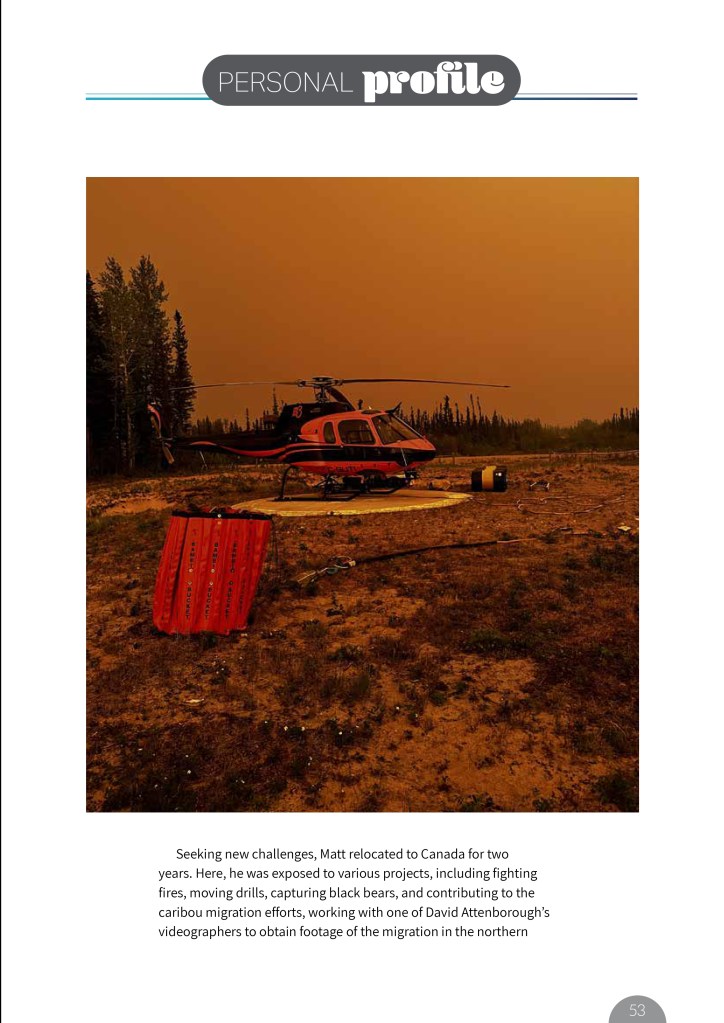
Seeking new challenges, Matt relocated to Canada for two years. Here, he was exposed to various projects, including fighting fires, moving drills, capturing black bears, and contributing to the caribou migration efforts, working with one of David Attenborough’s videographers to obtain footage of the migration in the northern Arctic of Canada. “One of my absolute career highlights was working alongside my brother, Tom, helping fight the Canadian wildfires of 2023, one of the worst seasons in recorded history.”

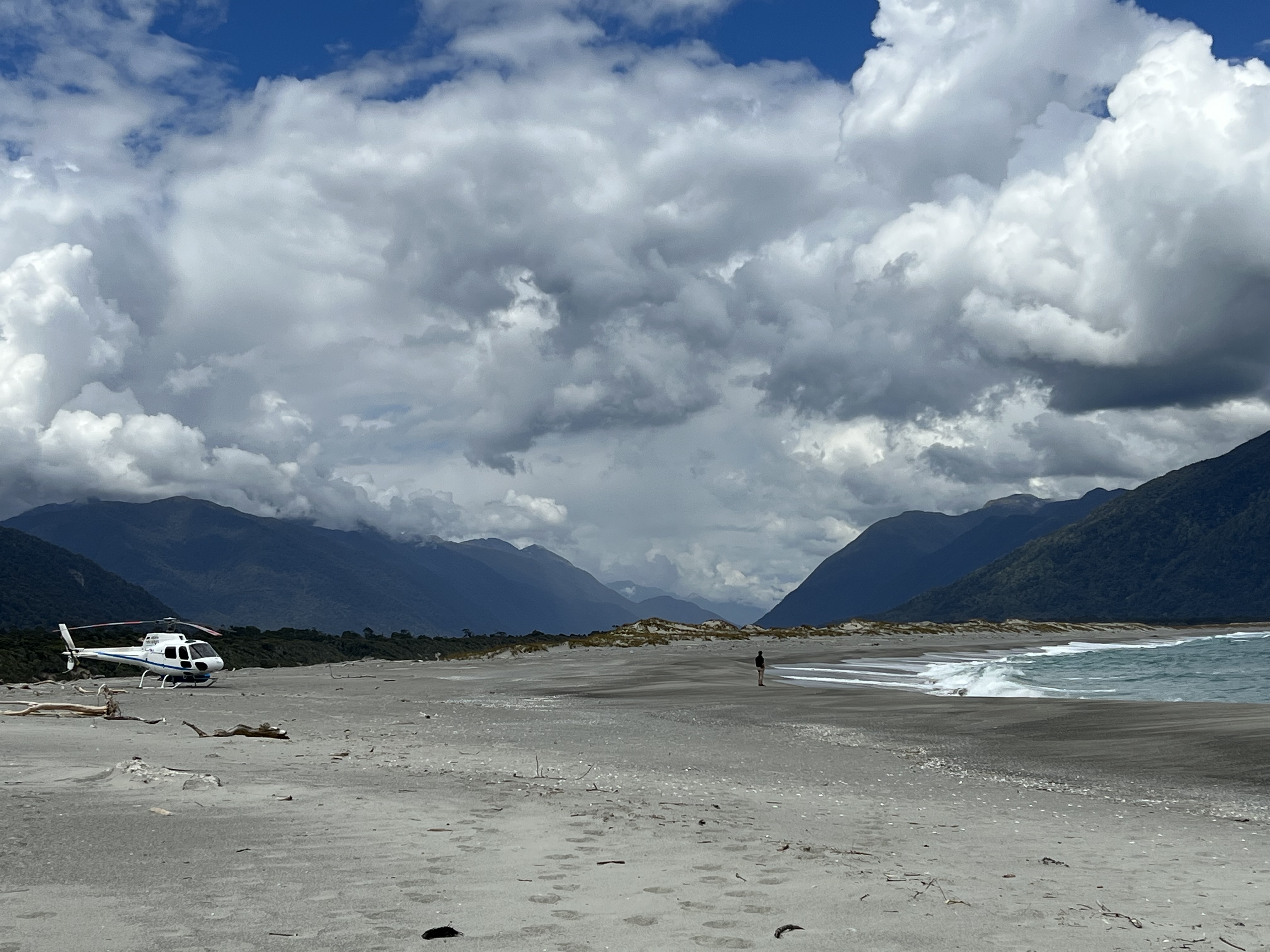
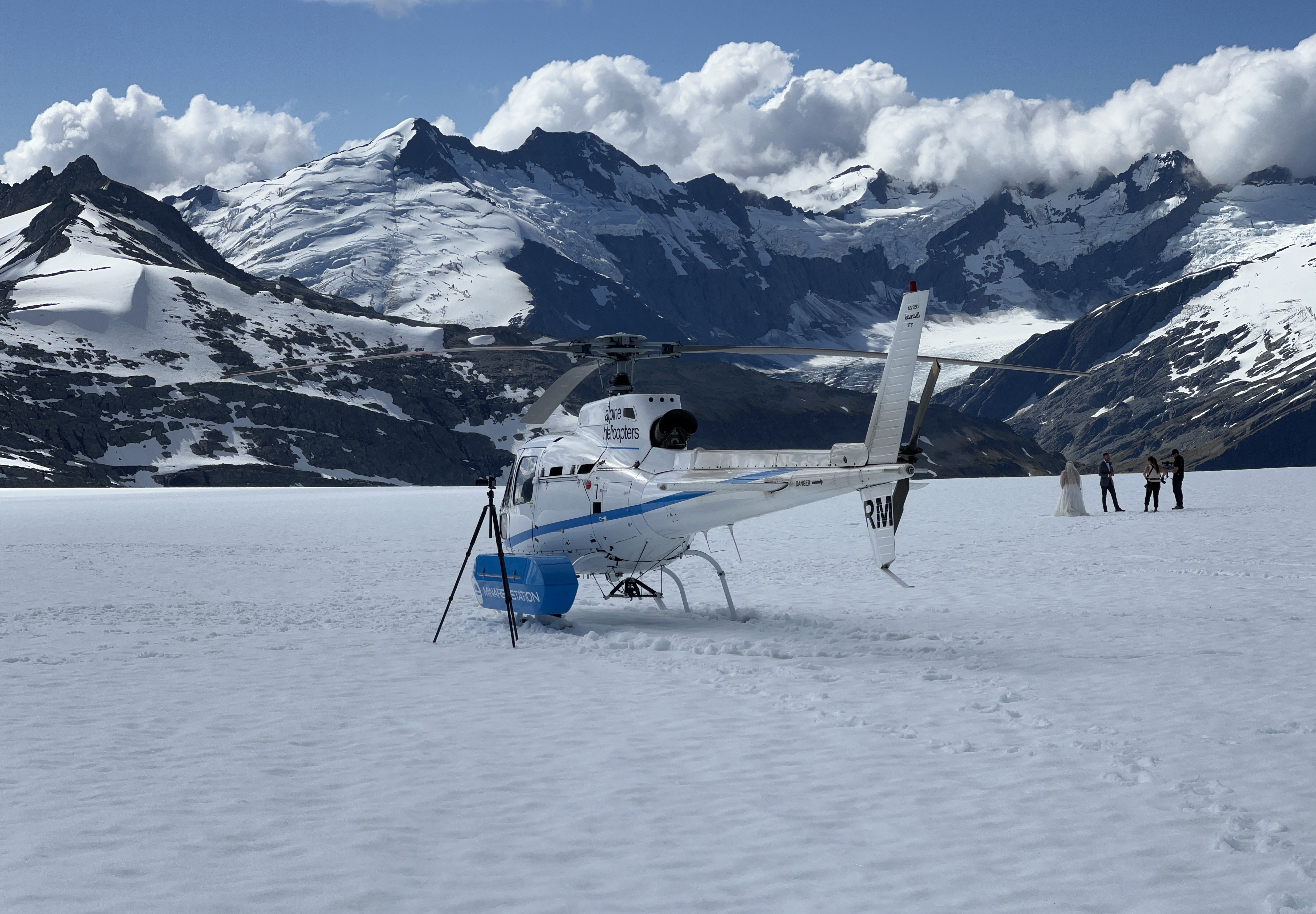
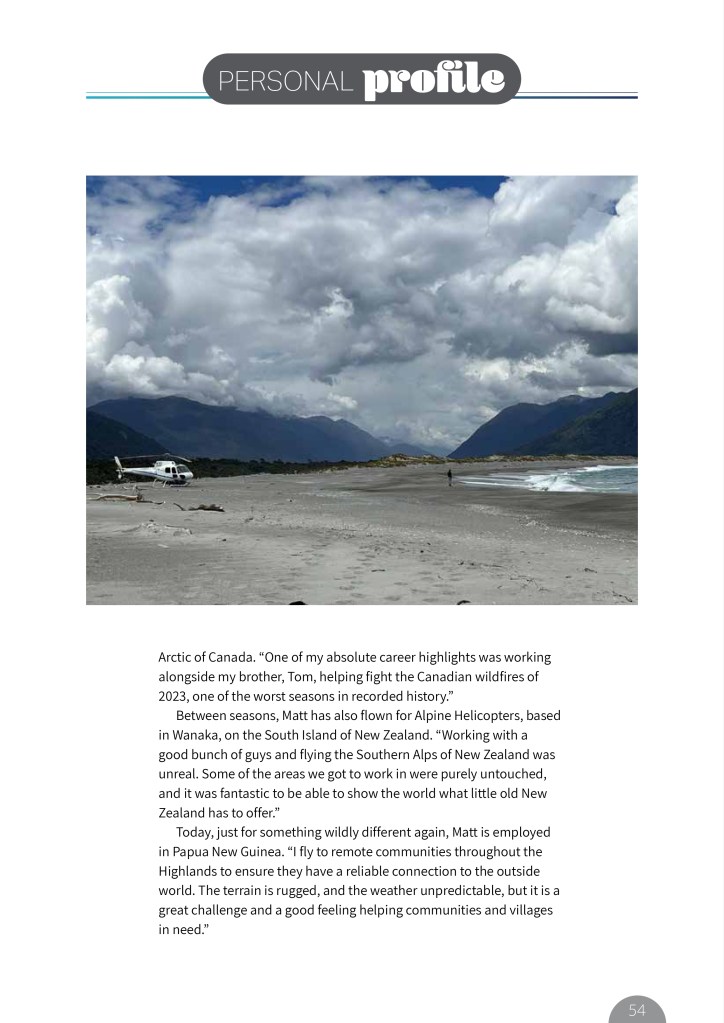
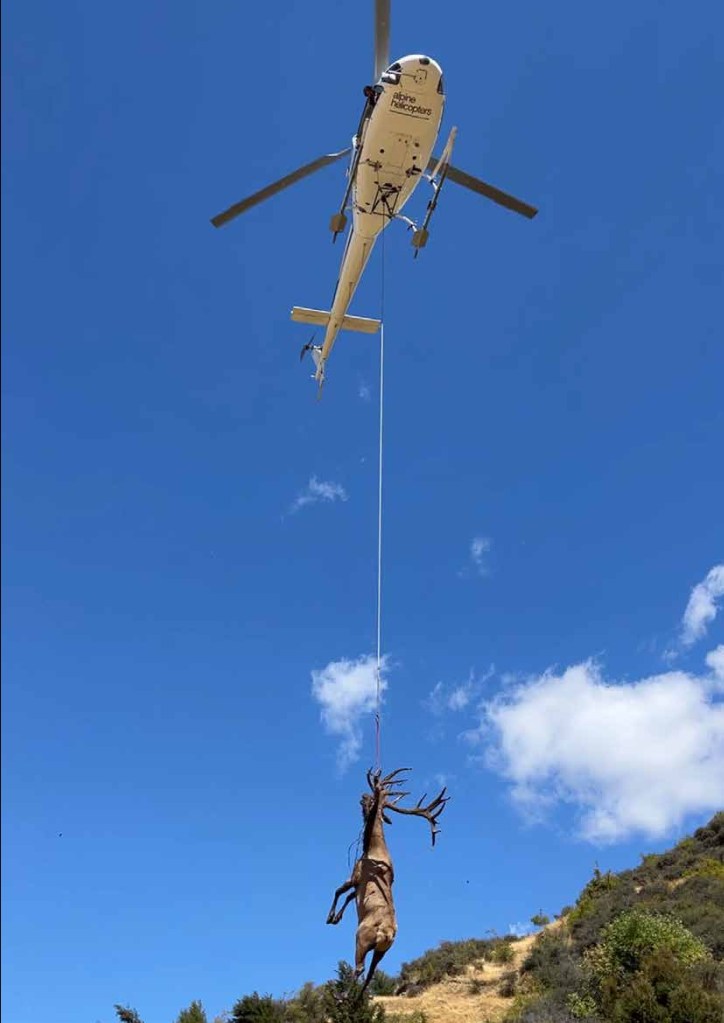
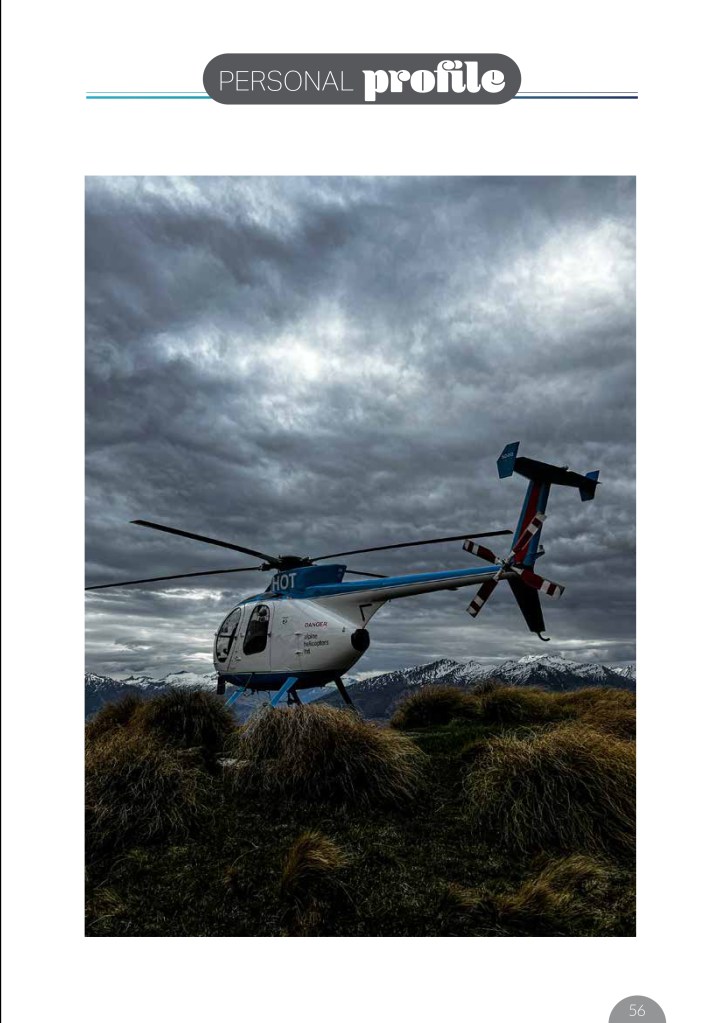
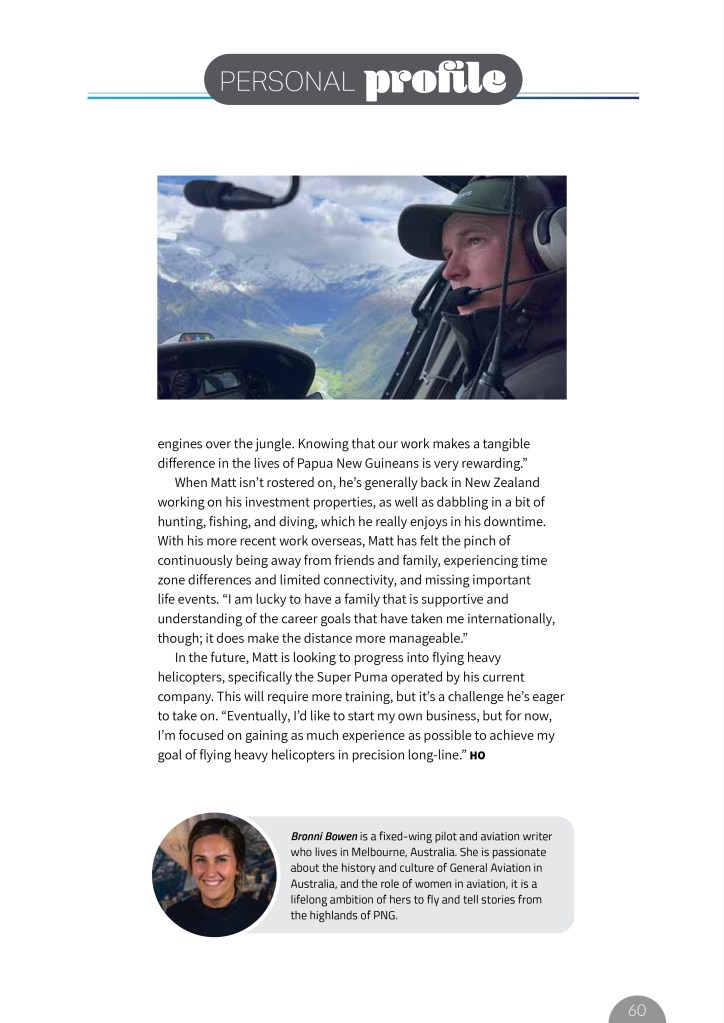
Between seasons, Matt has also flown for Alpine Helicopters, based in Wanaka, on the South Island of New Zealand. “Working with a good bunch of guys and flying the Southern Alps of New Zealand was unreal. Some of the areas we got to work in were purely untouched, and it was fantastic to be able to show the world what little old New Zealand has to offer.”
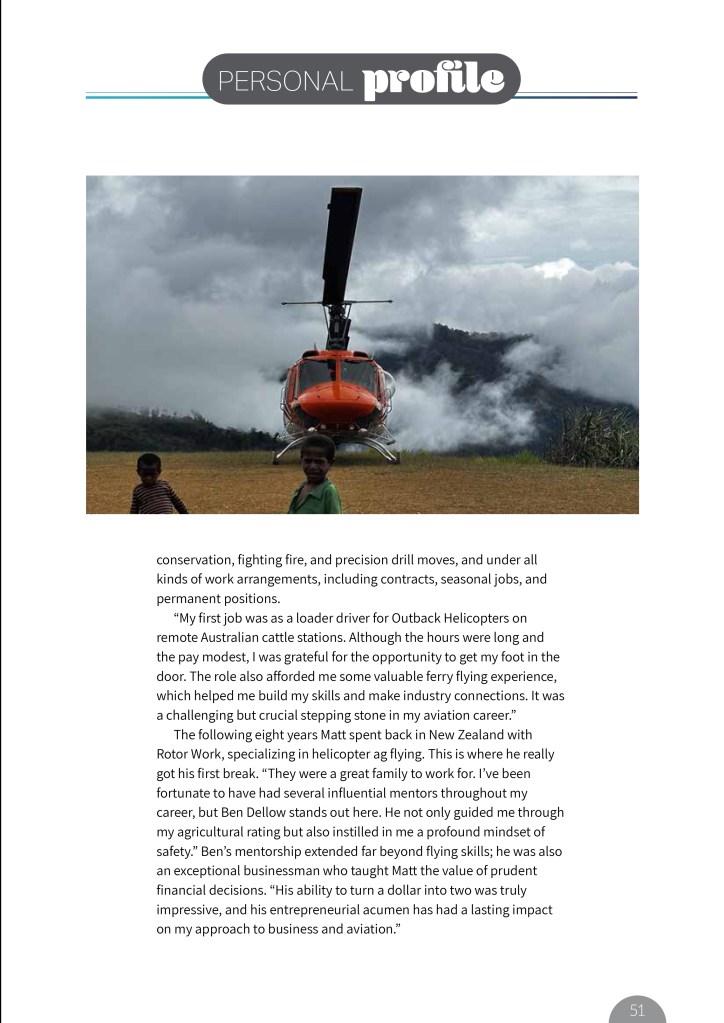
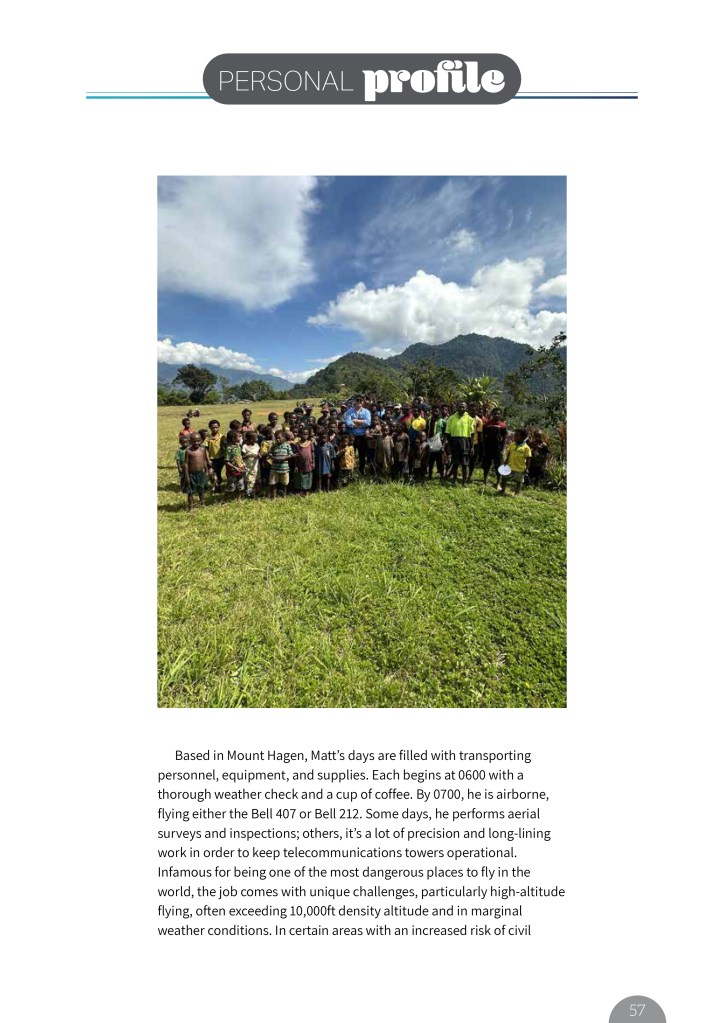
Today, just for something wildly different again, Matt is employed in Papua New Guinea. “I fly to remote communities throughout the Highlands to ensure they have a reliable connection to the outside world. The terrain is rugged, and the weather unpredictable, but it is a great challenge and a good feeling helping communities and villages in need.”
Based in Mount Hagen, Matt’s days are filled with transporting personnel, equipment, and supplies. Each begins at 0600 with a thorough weather check and a cup of coffee. By 0700, he is airborne, flying either the Bell 407 or Bell 212. Some days, he performs aerial surveys and inspections; others, it’s a lot of precision and long-lining work in order to keep telecommunications towers operational. Infamous for being one of the most dangerous places to fly in the world, the job comes with unique challenges, particularly high-altitude flying, often exceeding 10,000ft density altitude and in marginal weather conditions. In certain areas with an increased risk of civil unrest, pilots and crew work closely with local authorities to ensure safe passage, often accompanied by armed police or defense force personnel to maintain security.

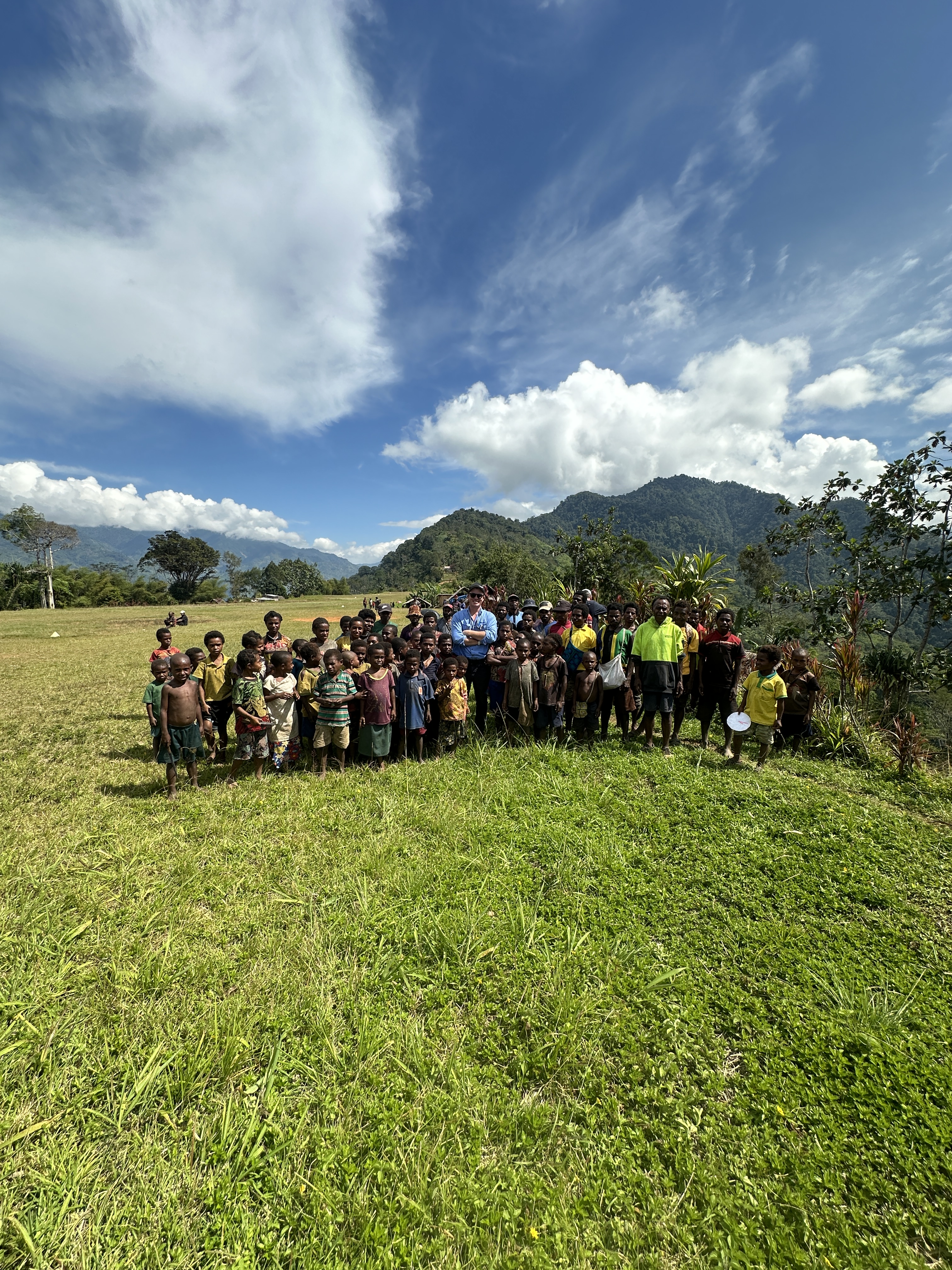
“By 1500-1600, we usually try to return to base to avoid worsening weather conditions. After a big day’s work, we’re looking forward to a hearty dinner and a cold beer. And we always make sure we are back in Hagen for Saturday – we wouldn’t miss Steak Night!”
“My favorite aircraft here would have to be the Bell 212, as it has so much history behind it – and it is always a nice feeling having two engines over the jungle. Knowing that our work makes a tangible difference in the lives of Papua New Guineans is very rewarding.”
When Matt isn’t rostered on, he’s generally back in New Zealand working on his investment properties, as well as dabbling in a bit of hunting, fishing, and diving, which he really enjoys in his downtime. With his more recent work overseas, Matt has felt the pinch of continuously being away from friends and family, experiencing time zone differences and limited connectivity, and missing important life events. “I am lucky to have a family that is supportive and understanding of the career goals that have taken me internationally, though; it does make the distance more manageable.”
In the future, Matt is looking to progress into flying heavy helicopters, specifically the Super Puma operated by his current company. This will require more training, but it’s a challenge he’s eager to take on. “Eventually, I’d like to start my own business, but for now, I’m focused on gaining as much experience as possible to achieve my goal of flying heavy helicopters in precision long-line.”

Originally published in HeliOps magazine Issue 153
 Bronni Bowen