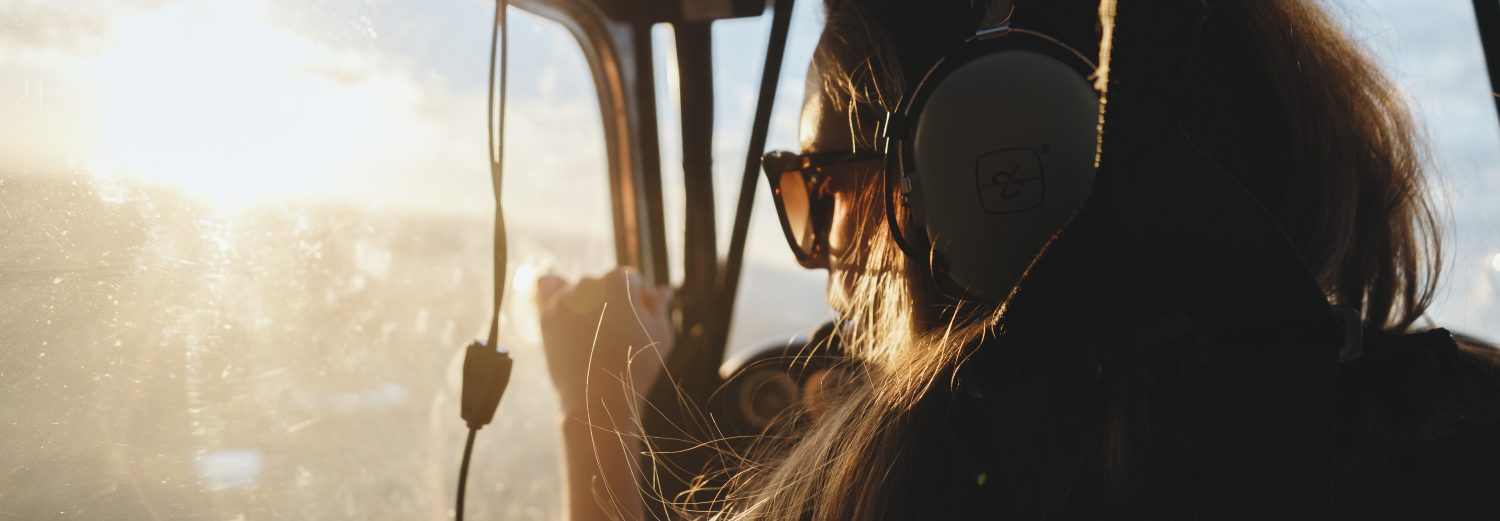
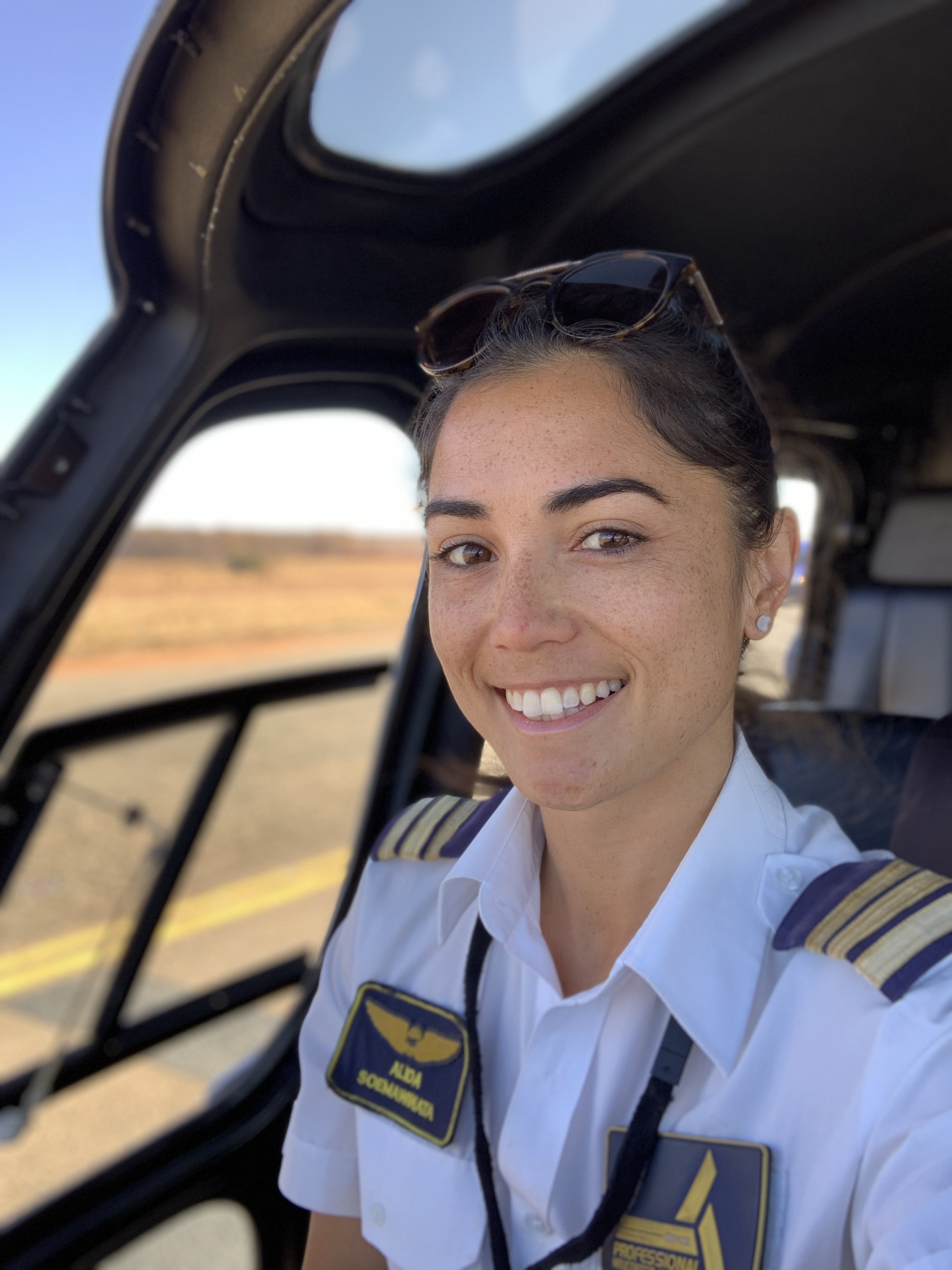
Growing up in Melbourne’s eastern suburbs, Alida Soemawinata’s foray into aviation began with the rite of passage of many Australian kids: Air Force Cadets. “Both my older sisters and my older brother joined when they were in high school, so, of course, I looked forward to my 13th birthday when I could too,” she chuckles. Alida has a wonderful grin.
“Being a member of the Australian Air Force Cadets opened up a whole new world; I made lifelong friends and became a part of military life. It gave me access to many aviation experiences, including camps away on base and flights in iconic aircraft like the C-130 Hercules and HS 748.”
But helicopters won her heart when she scored a ride in an S-76 out of RAAF Base East Sale. “Strapped in, the door open, out across the water… that was incredible. A flight in a Sea King at Nowra a year later cemented it. The capability of these machines and the stories shared with me by their captains and crew were inspiring, and I just knew one day I’d make it happen.”
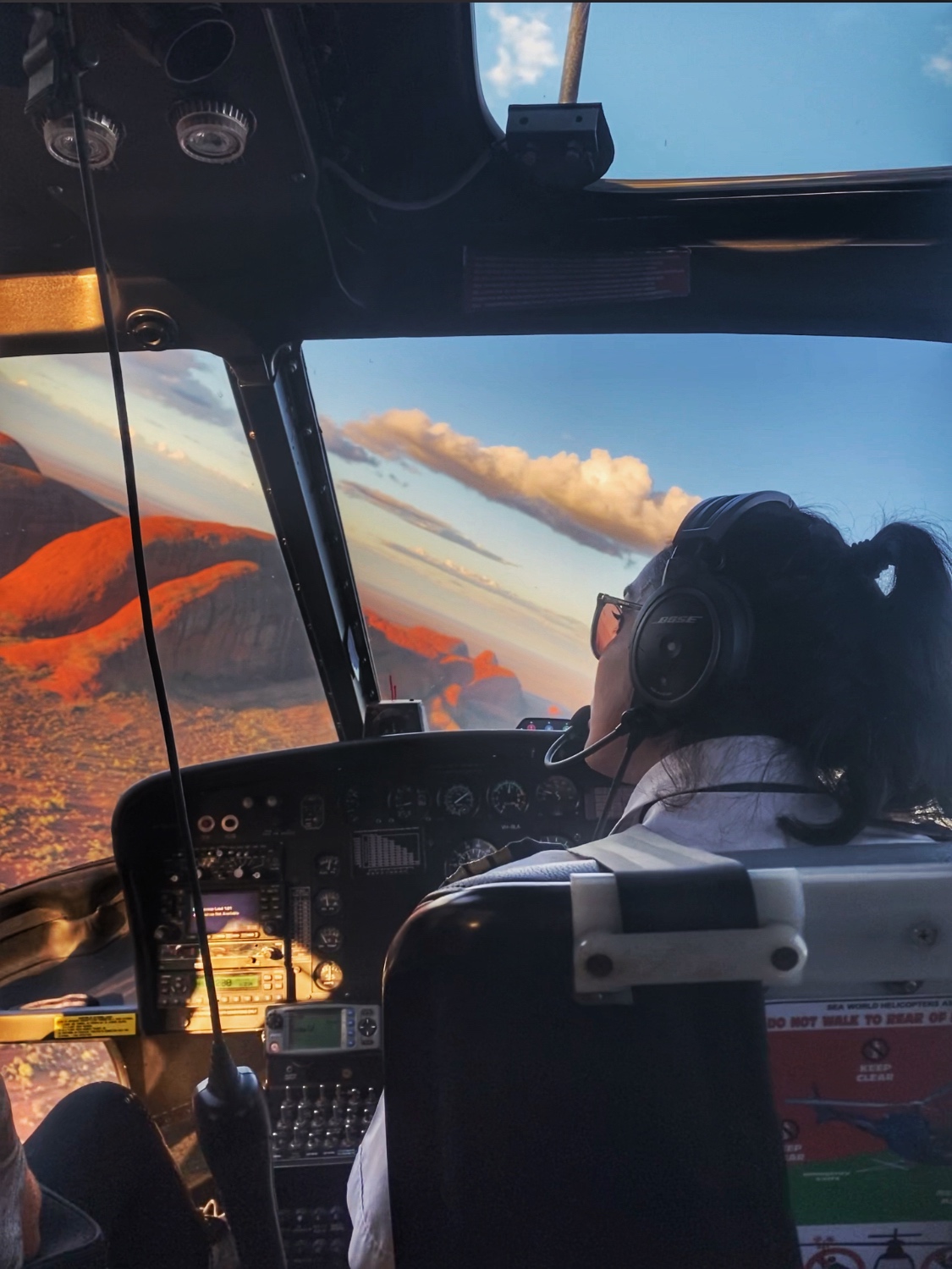
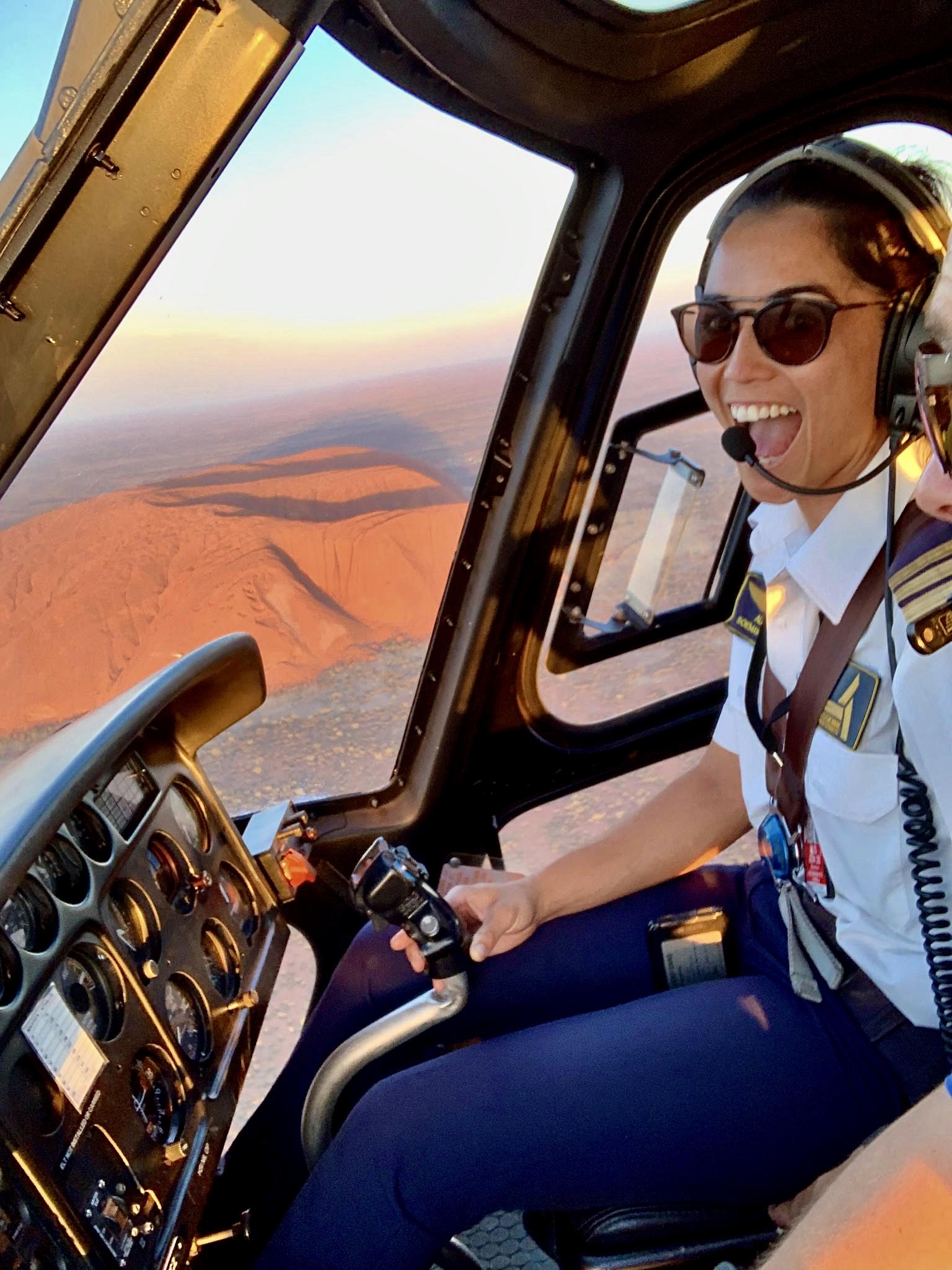
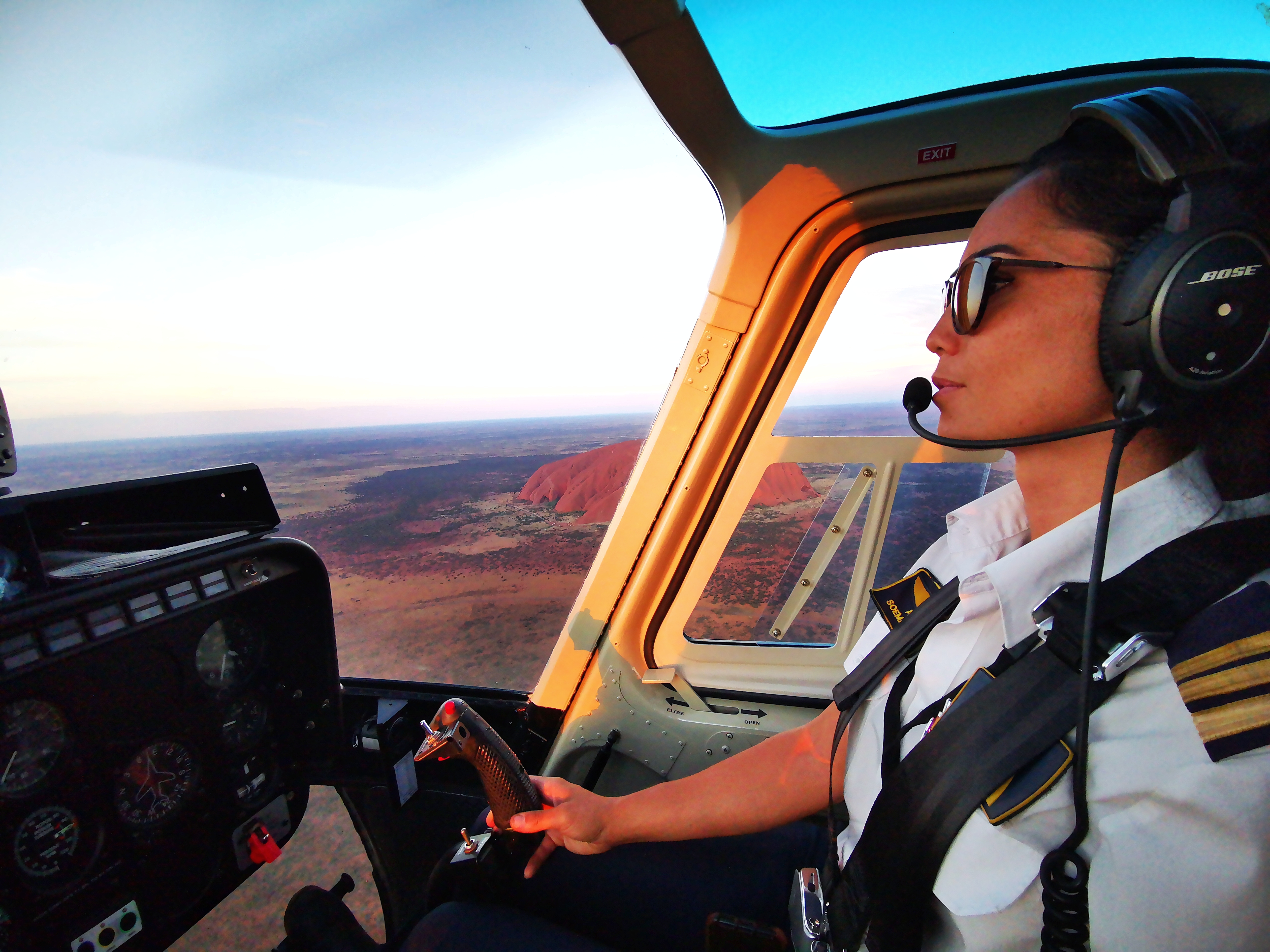
Today, Alida flies in Sarawak, Borneo, the nautical heart of Southeast Asia. It’s a far cry from Cadets, the Moorabbin runways she learnt to hover on, and the Outback skies above Uluru, where she worked her first season as a fully-fledged commercial heli pilot. There are about as many ways to earn a pilot’s licence as there are young Australians trying to crack into the industry; the common denominators? Time and money. The trick is to do the research and be ready to adapt.
In 2010, after much Googling and more than a few phone calls to local flight schools, Alida booked her trial intro flight at Professional Helicopter Services in Melbourne. “At the time, it was a family-run business, and Ronny Newman had literally written the book on helicopters in Australia. Their reputation was unrivalled, and of the pilots I’d spoken to, most had either undergone their training there or worked with someone who had.”
Self-funded and working multiple jobs in hospitality as a barista to earn each flight hour, Alida was looking for flexibility and the best chance at securing a job the moment she stepped out of flying school. “PHS offered full-time and part-time ground school, lots of ferry flight and event volunteering opportunities, but, most importantly, a clear career pathway.”
One of the struggles for new pilots learning part-time is a lack of currency and cohesion. “It was very slow going; in two years, I spent over $16,000 and only logged 28 hours. I’d be super excited for a lesson and then find myself spending half the time just dialling in to get a feel for the heli again. It’s very intensive, and for good reason; the basics are revisited over and over, but at times, it felt like I was making no progress.”
Taking advice from her instructors, Alida stopped flying, with the focus being to save up bulk funds and complete all of the theory first.
Alida returned to the cockpit in 2015, and with some help over the line from her parents, in 2017, she achieved her Commercial license for her 30th birthday. “Six years all up, but I got it done!”
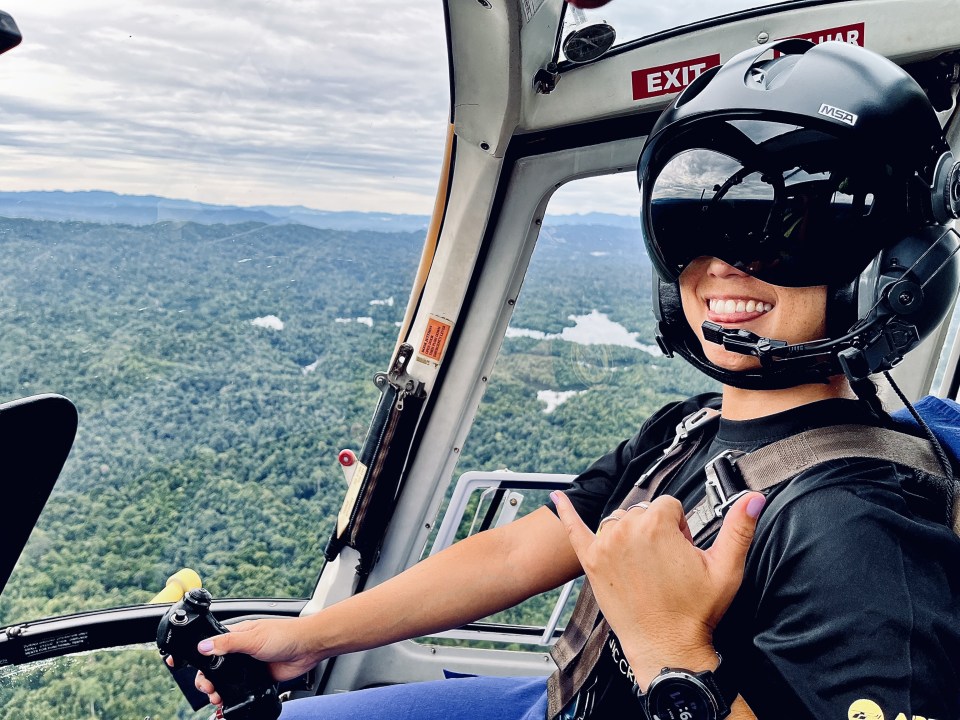
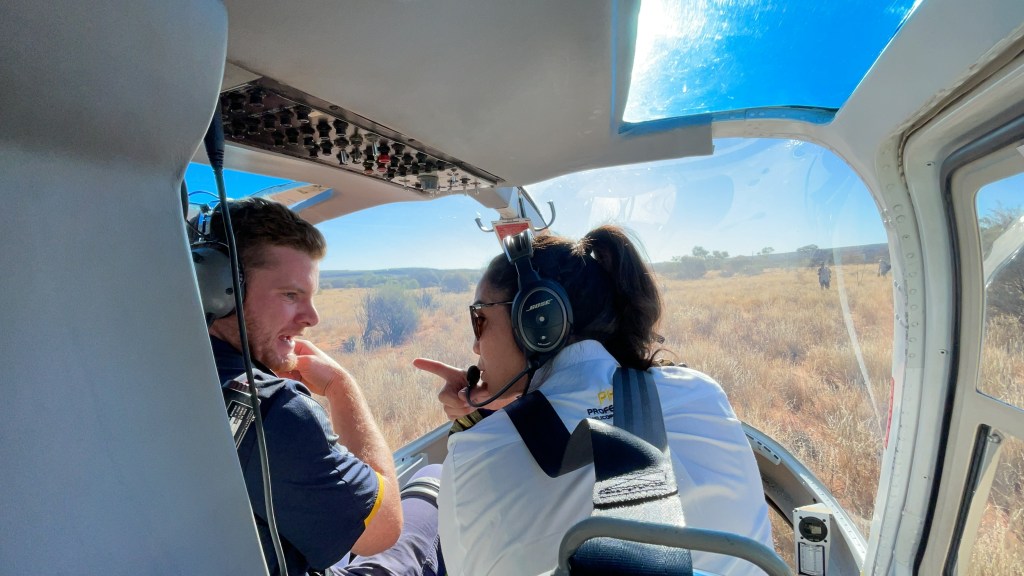
PHS had an opening on the reception desk, which she happily filled for a few months. From there, she was employed as a hangar assistant, which included daily aircraft prep, cleaning, and refuelling. After a year as ground crew, Alida shifted up to the Northern Territory base, where she began her first real flying job as a line pilot conducting scenic tours, aerial surveys, and search and rescue.
“I was fortunate enough to gain full-time employment in the industry even before I’d finished my CPL. It’s where my research really came into play – I found networking and finding a lead into a first job far more important than perhaps flying closer to home or saving some dollars on the hourly rate.”
According to aviation career lore, hours-wise, the next step would often be to become an instructor. “But, after flying the Squiz, the Jetty, and the Long Ranger, I wasn’t ready to get back in a little two-seater to teach!”
“I fly to make a positive impact on people’s lives, to have adventures, and to enjoy every day – so I went all in and invested in myself by completing a BO 105 multi-engine rating and taking a job in Borneo instead.”
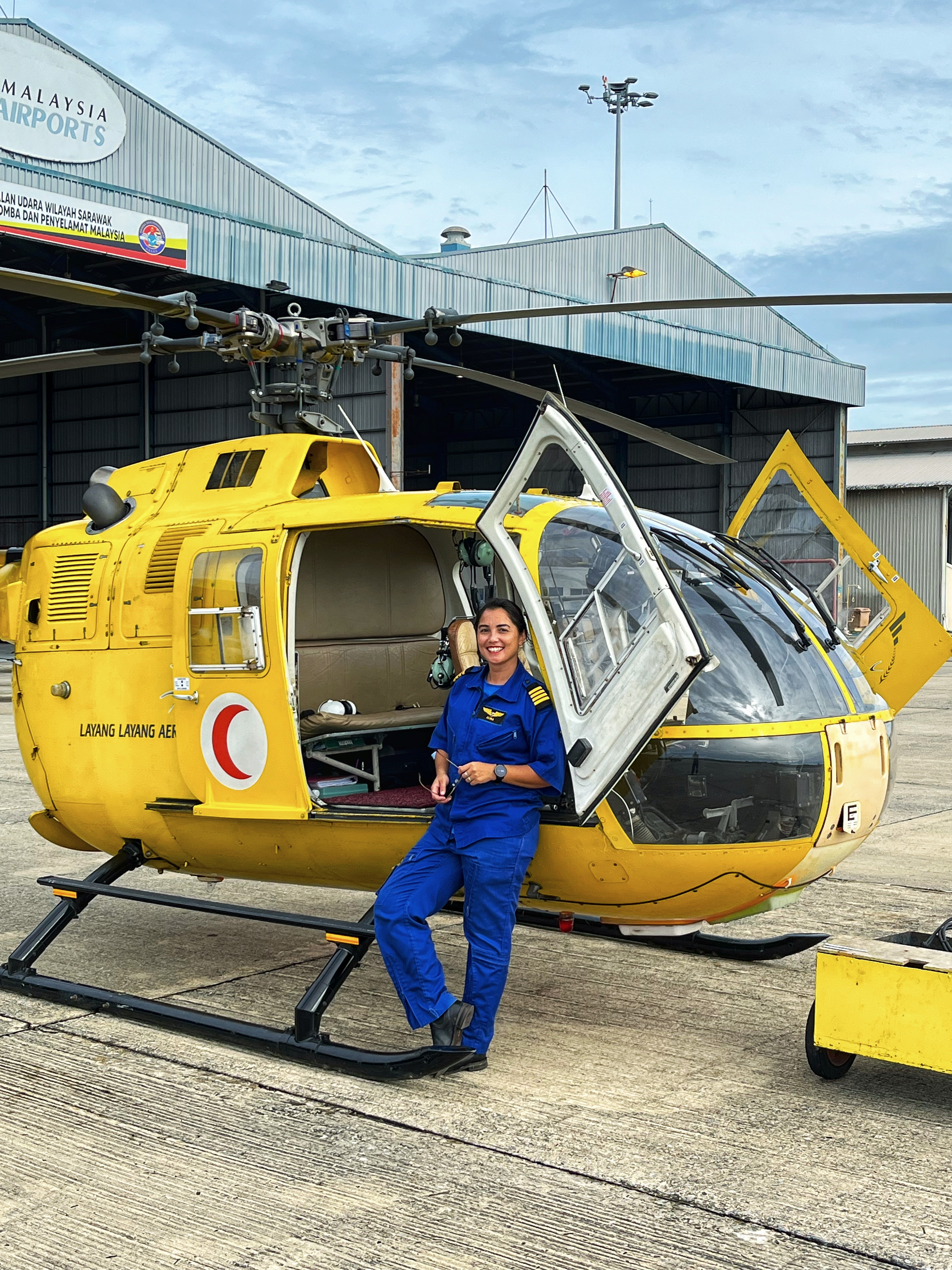
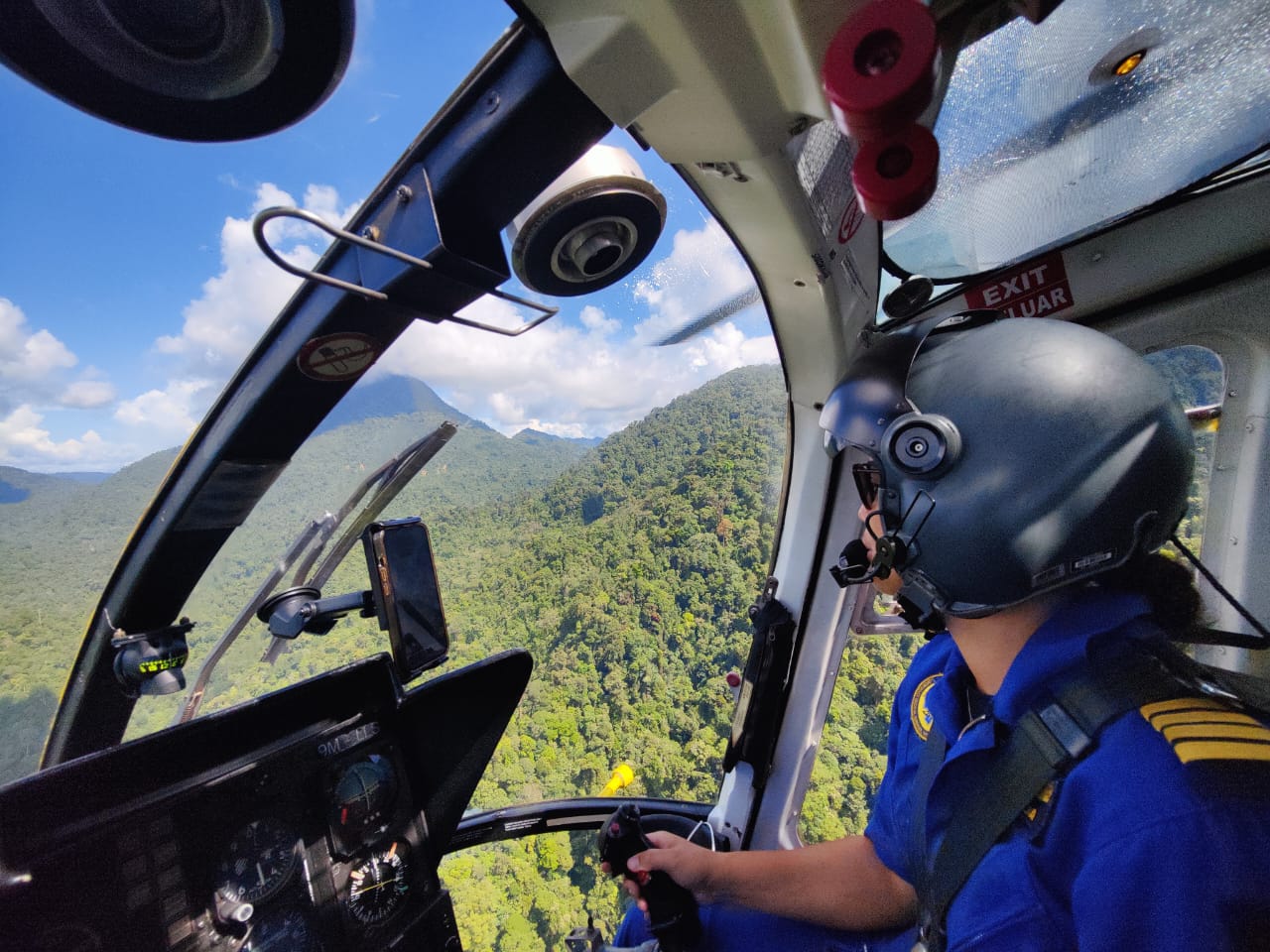
Borneo’s highlands consist of plunging ravines and soaring, lush-green mountains, hugged by humidity in the shape of heavy, quickly forming cloud. Alida’s been flying here for two years doing Emergency Medical and Flying Doctor Service work across the Malaysian state. You can tell by her wide smile that she loves what she does.
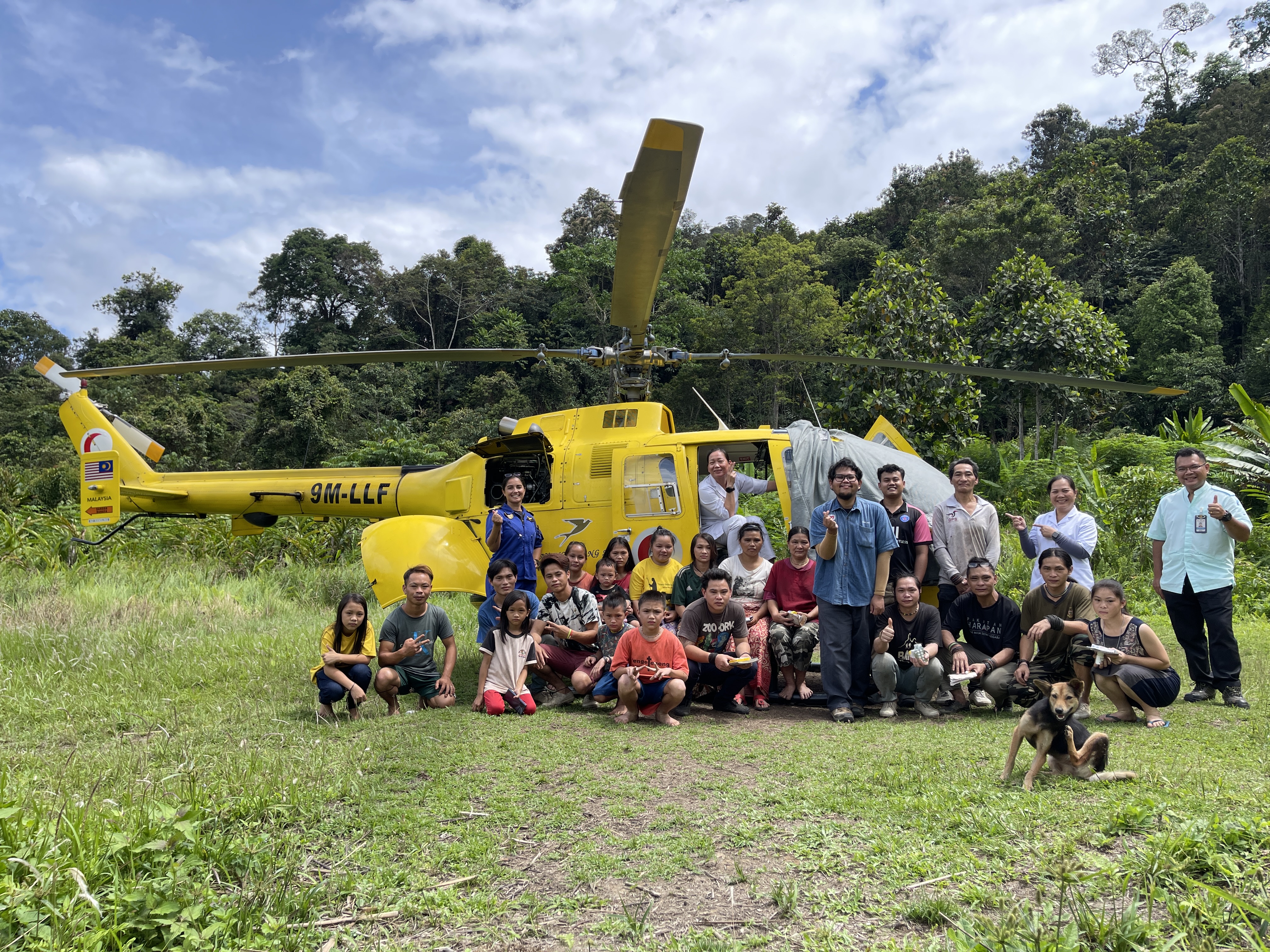
“The EMS involves standby for medevacs from interior villages or patient transport between hospitals, while the FDS requires flying a medical team, supplies, and equipment out to remote villages on a monthly scheduled clinic.” General Aviation helicopters are nearly nonexistent here, so most days, Alida is the only one out and about flying this region. “I’ve visited many remote villages and met people from over 20 ethnic groups.”
“I love flying after the rains when the waterfalls are flowing strongly; it’s a real highlight to fly over the dense green jungle and follow the winding rivers through the mountains, always looking for the eagles and hornbills.”
“Some villages can take upwards of ten hours to drive to from the city. Others are only accessible by boat, so I really feel like I’m making a difference in helping to provide crucial medical care.”
Alida’s dream is to get into longline and utility so she can join the ranks of Australian aerial firefighters contributing to communities in her home country, but she knows it’s a slow-and-steady race. Her story highlights many of the challenges young Australian pilots come up against as they strive to follow their calling into aviation.
Location is one, with many going regional to fill logbooks and pilot postings in the Outback. Some venture even further abroad. “I have a number of friends who, like myself, have headed overseas to build experience. The options can be pretty limited in Australia for pilots with low flight hours – it’s mostly scenic tours and instructing in the cities.”
“Maintaining relationships or families when touring or contracting remotely is tough. It can be extremely isolating and lonely, and I think that’s a contributing factor for young pilots – particularly female helicopter pilots – not pursuing the career further.”
And, while the going award is okay on paper, in reality, the pay isn’t great. “I took a 40% pay cut when I went from barista to line pilot. I was actually shocked. I have seen positive changes in working conditions and pay increases during my 12 years in the Australian aviation industry, but I still speak with new pilots who are struggling to progress and feel like there’s no option but to accept jobs that don’t pay overtime, for example.”
“There are some amazing companies and golden opportunities for sure… but the culture in the industry seems to be that everyone has to go through the tough times and scrimp to get by until they land a better gig – like a rite of passage. I don’t agree; if the conditions offered were better from the beginning, there’d be fewer pilots leaving prematurely, and the pilot shortage and gap in seniority at the top end mightn’t be as big as it is now.”
Insurance is probably the most difficult obstacle to tackle, and climbing costs are affecting everyone, from AOC holders to pilots, worldwide. For aviators looking to level up, the minimum operational prerequisites can be tricky to obtain. “While I see a lot of jobs advertised that I’d like to learn how to do, they all require initial experience, for example, 100 hours longline, 100 on fires or 100 hours IFR – but where do you gain the experience?”
There aren’t many companies that currently offer the bridge in training. It’s expensive, time-consuming, and awkward to complete on professional jobs; all understandable, of course – but it has to come from somewhere. “It would be great to see some of the larger companies who are operating the mediums and heavies implement some sort of partnership training strategy and career advancement with small operators or flight schools to help make those transitions more accessible.”
It’s not easy to air the negative topics; often, they can feel overwhelming to discuss. But it is crucial to keep these conversations open in any industry. They give way to opportunities and provide support to those who may feel alone in their struggles.
When it comes to the future, Alida’s outlook is one of optimism and positivity, particularly for those about to climb into the cockpit for the first time. “I’ve discovered there is so much support within the aviation industry and lots more scholarships for heli students. And it’s great to see there are now some government-assisted programs available – when I went through, that was just only for fixed-wing. I would have loved to have done an aviation degree while getting my CPL.”
But for now, Alida is keeping an eye out for opportunities to earn her IFR and, eventually, looks forward to rejoining her friends in Australian airspace. If you’re after a dedicated heli pilot, you know who to call!
 Bronni Bowen