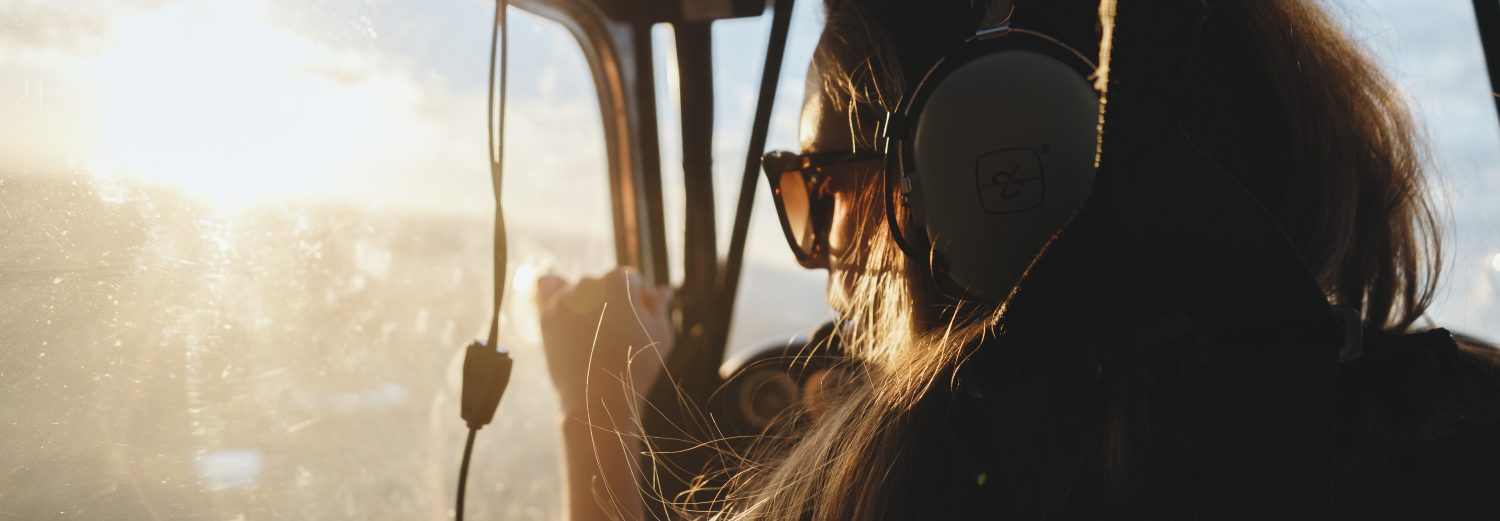

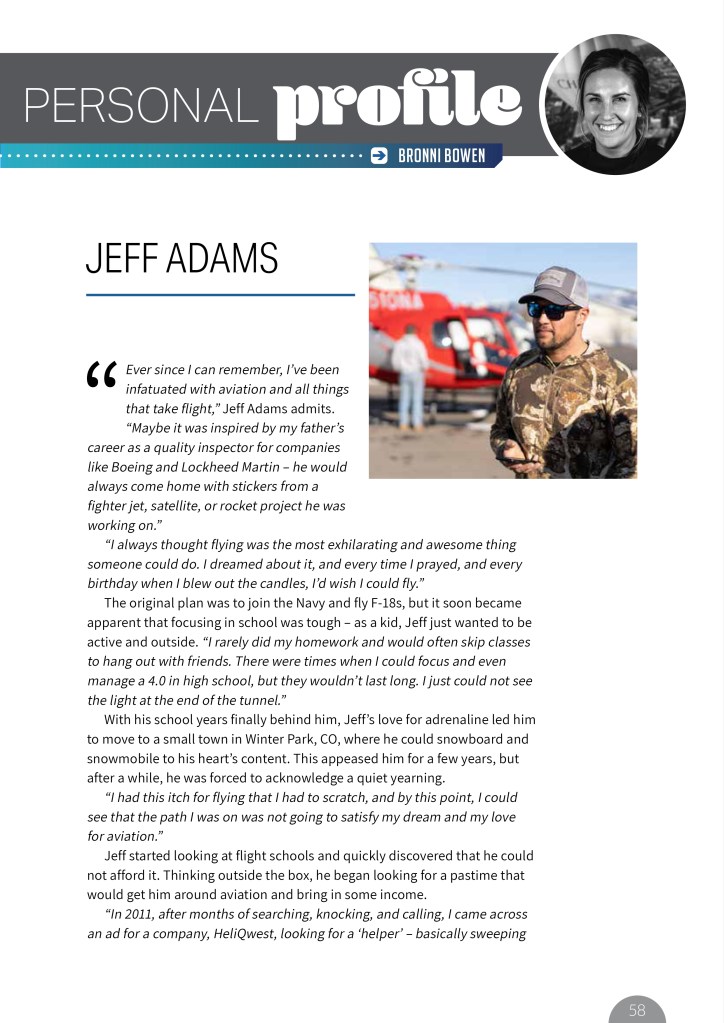
“Ever since I can remember, I’ve been infatuated with aviation and all things that take flight,” Jeff Adams admits. “Maybe it was inspired by my father’s career as a quality inspector for companies like Boeing and Lockheed Martin – he would always come home with stickers from a fighter jet, satellite, or rocket project he was working on.”
“I always thought flying was the most exhilarating and awesome thing someone could do. I dreamed about it, and every time I prayed, and every birthday when I blew out the candles, I’d wish I could fly.”
The original plan was to join the Navy and fly F-18s, but it soon became apparent that focusing in school was tough – as a kid, Jeff just wanted to be active and outside. “I rarely did my homework and would often skip classes to hang out with friends. There were times when I could focus and even manage a 4.0 in high school, but they wouldn’t last long. I just could not see the light at the end of the tunnel.”
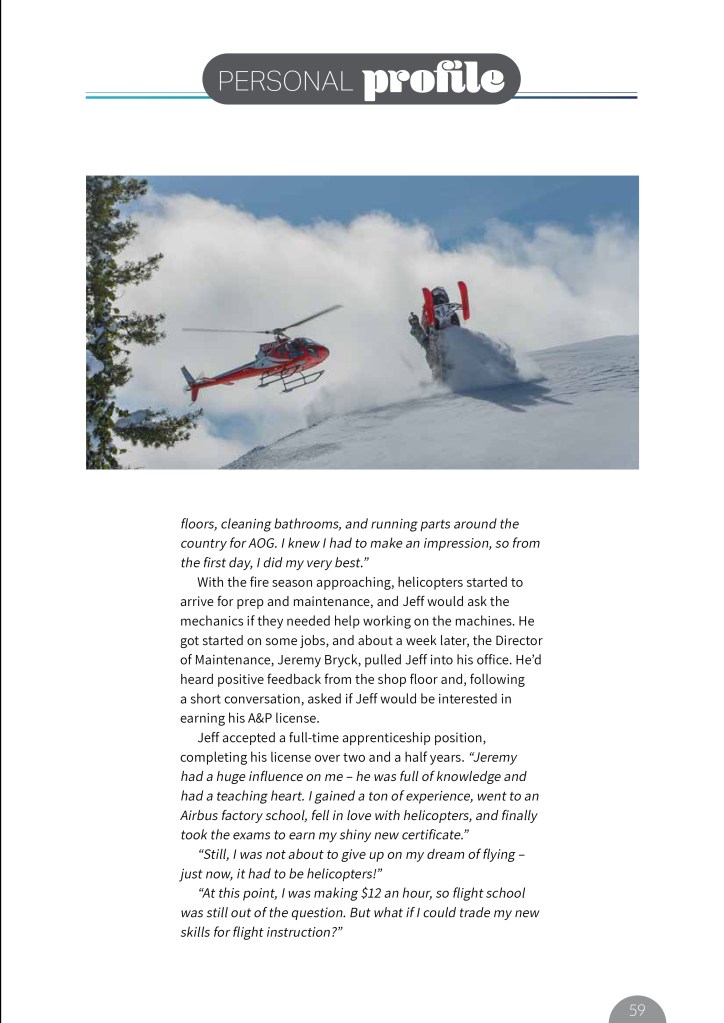
With his school years finally behind him, Jeff’s love for adrenaline led him to move to a small town in Winter Park, CO, where he could snowboard and snowmobile to his heart’s content. This appeased him for a few years, but after a while, he was forced to acknowledge a quiet yearning.
“I had this itch for flying that I had to scratch, and by this point, I could see that the path I was on was not going to satisfy my dream and my love for aviation.”

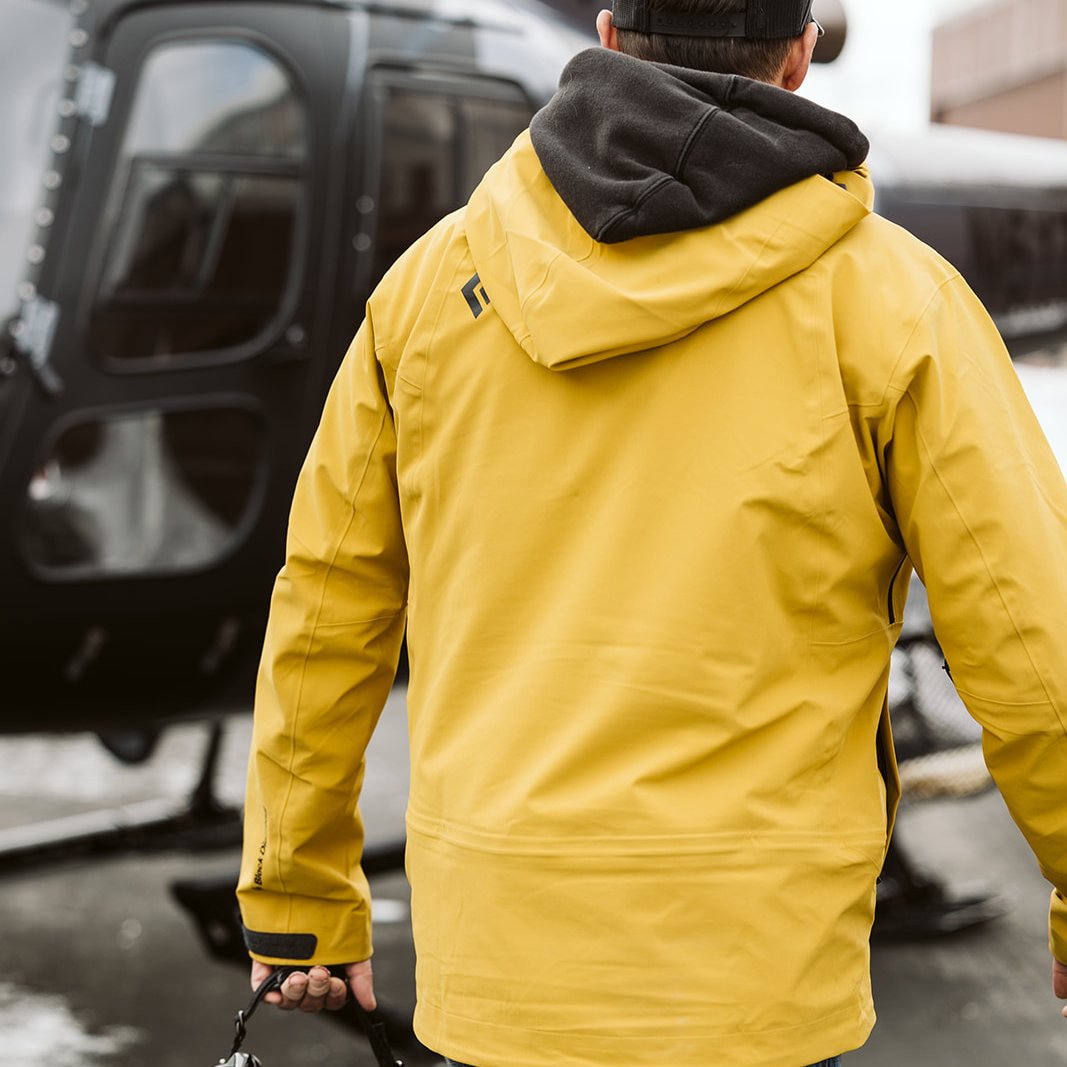
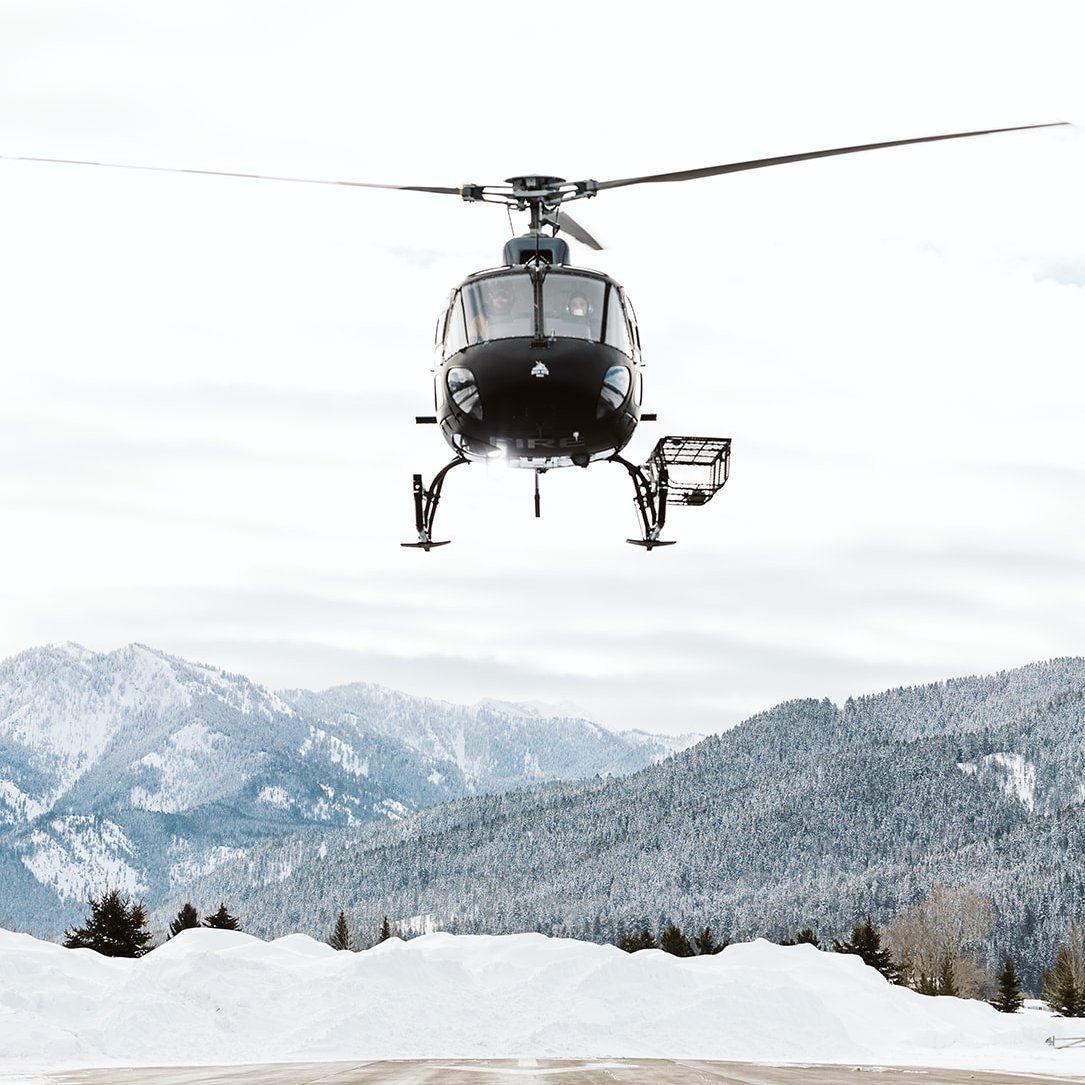

Jeff started looking at flight schools and quickly discovered that he could not afford it. Thinking outside the box, he began looking for a pastime that would get him around aviation and bring in some income.
“In 2011, after months of searching, knocking, and calling, I came across an ad for a company, HeliQwest, looking for a ‘helper’ – basically sweeping floors, cleaning bathrooms, and running parts around the country for AOG. I knew I had to make an impression, so from the first day, I did my very best.”
With the fire season approaching, helicopters started to arrive for prep and maintenance, and Jeff would ask the mechanics if they needed help working on the machines. He got started on some jobs, and about a week later, the Director of Maintenance, Jeremy Bryck, pulled Jeff into his office. He’d heard positive feedback from the shop floor and, following a short conversation, asked if Jeff would be interested in earning his A&P license.
Jeff accepted a full-time apprenticeship position, completing his license over two and a half years. “Jeremy had a huge influence on me – he was full of knowledge and had a teaching heart. I gained a ton of experience, went to an Airbus factory school, fell in love with helicopters, and finally took the exams to earn my shiny new certificate.”
“Still, I was not about to give up on my dream of flying – just now, it had to be helicopters!”
“At this point, I was making $12 an hour, so flight school was still out of the question. But what if I could trade my new skills for flight instruction?”
Jeff had recently contracted for Corporate Helicopters – an operator and maintenance facility in California with its own flight school. “So I called Ivor Shier, the owner, and asked him what he thought of the idea. He loved it.”
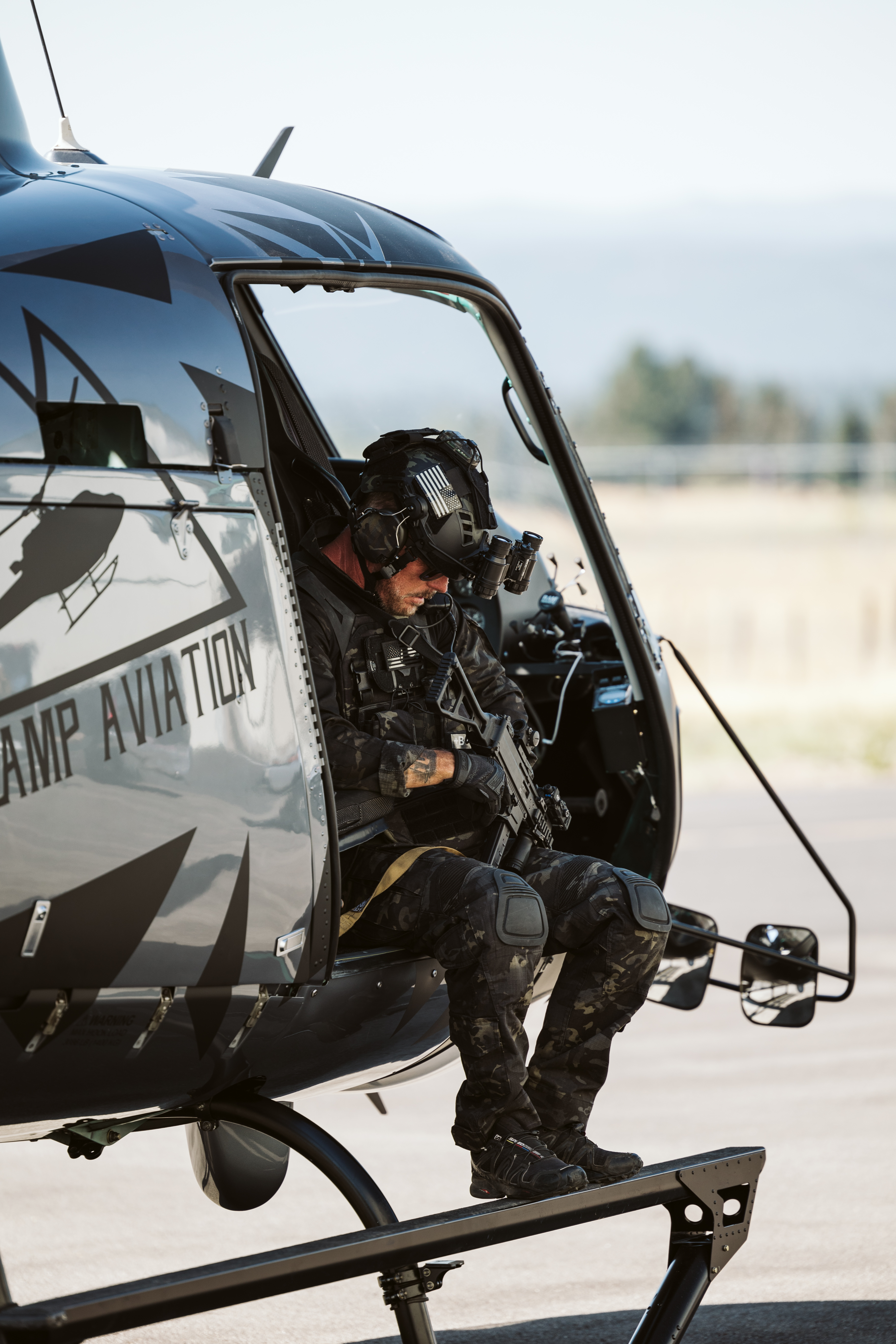
Jeff would fly to San Diego for weeks at a time, where he’d trade a day of work for an hour in the R22. Before long, Jeff had his private license. There was little cash left over for practicalities, though.
“By now, I was considered very skilled and knowledgeable on a few different airframes, particularly the Bell 205 and AS350. So I went in search of a similar scenario – one with a bit of meat left on the bone for me to take home. I had worked briefly with a company called Precision Aviation, out of Newberg, OR, which also had a flight school department. They had a contract with an AS350 that traveled around the world on a science/research vessel called the Alucia. I contacted another great friend and mentor, David Rath, and asked if they needed a mechanic. Turns out they did, and they were on board with the idea of me earning a flight training ‘credit’ that was a percentage of my pay. After a long tour on the ship, I would return to Oregon, grab some rest, and continue my flight training.”
It was hard work and took a long time, but he never gave up. And that’s how Jeff got his instrument and commercial ratings.
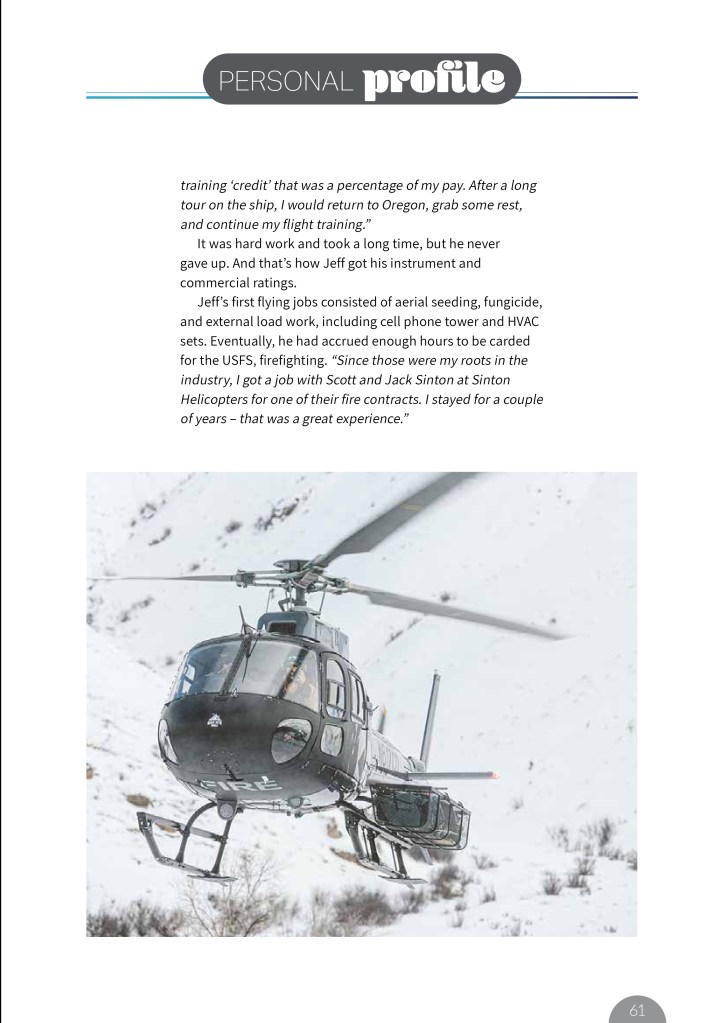
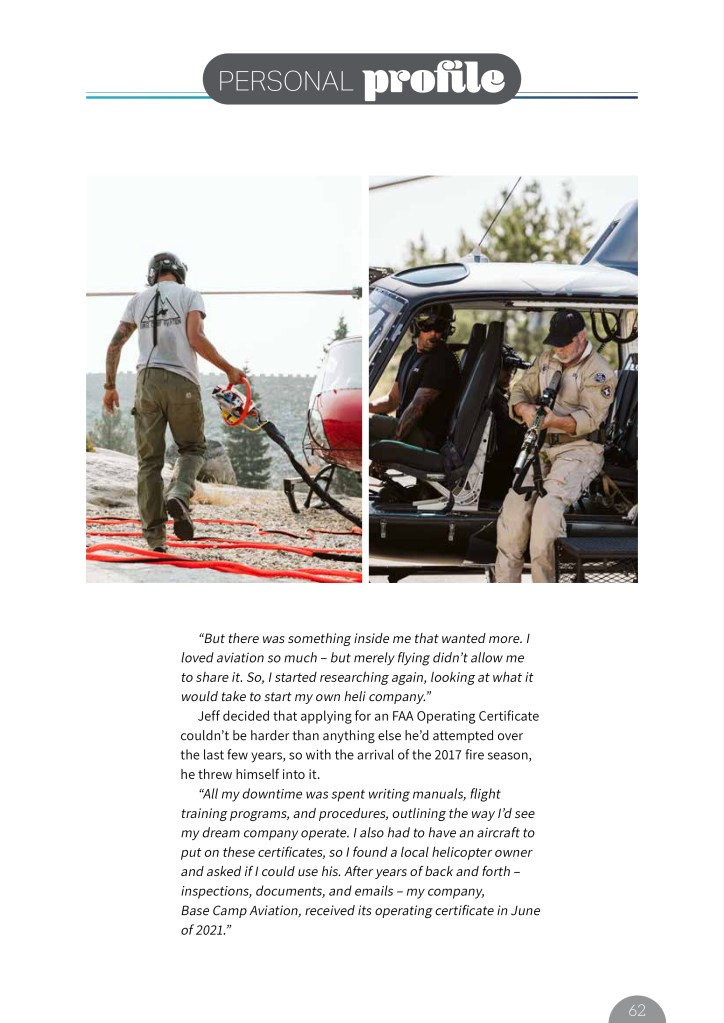
Jeff’s first flying jobs consisted of aerial seeding, fungicide, and external load work, including cell phone tower and HVAC sets. Eventually, he had accrued enough hours to be carded for the USFS, firefighting. “Since those were my roots in the industry, I got a job with Scott and Jack Sinton at Sinton Helicopters for one of their fire contracts. I stayed for a couple of years – that was a great experience.”
“But there was something inside me that wanted more. I loved aviation so much – but merely flying didn’t allow me to share it. So, I started researching again, looking at what it would take to start my own heli company.”
Jeff decided that applying for an FAA Operating Certificate couldn’t be harder than anything else he’d attempted over the last few years, so with the arrival of the 2017 fire season, he threw himself into it.
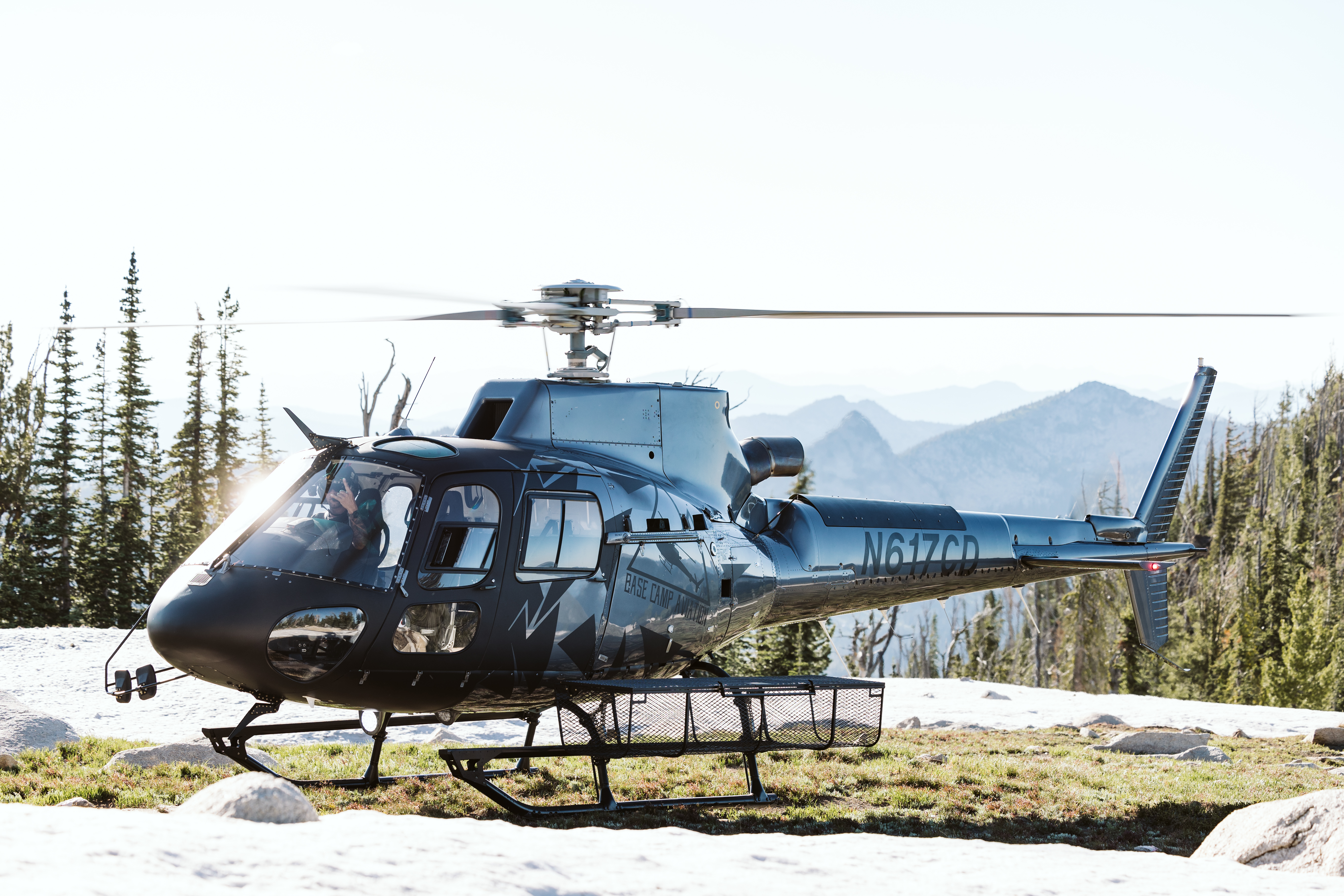
“All my downtime was spent writing manuals, flight training programs, and procedures, outlining the way I’d see my dream company operate. I also had to have an aircraft to put on these certificates, so I found a local helicopter owner and asked if I could use his. After years of back and forth – inspections, documents, and emails – my company, Base Camp Aviation, received its operating certificate in June of 2021.”
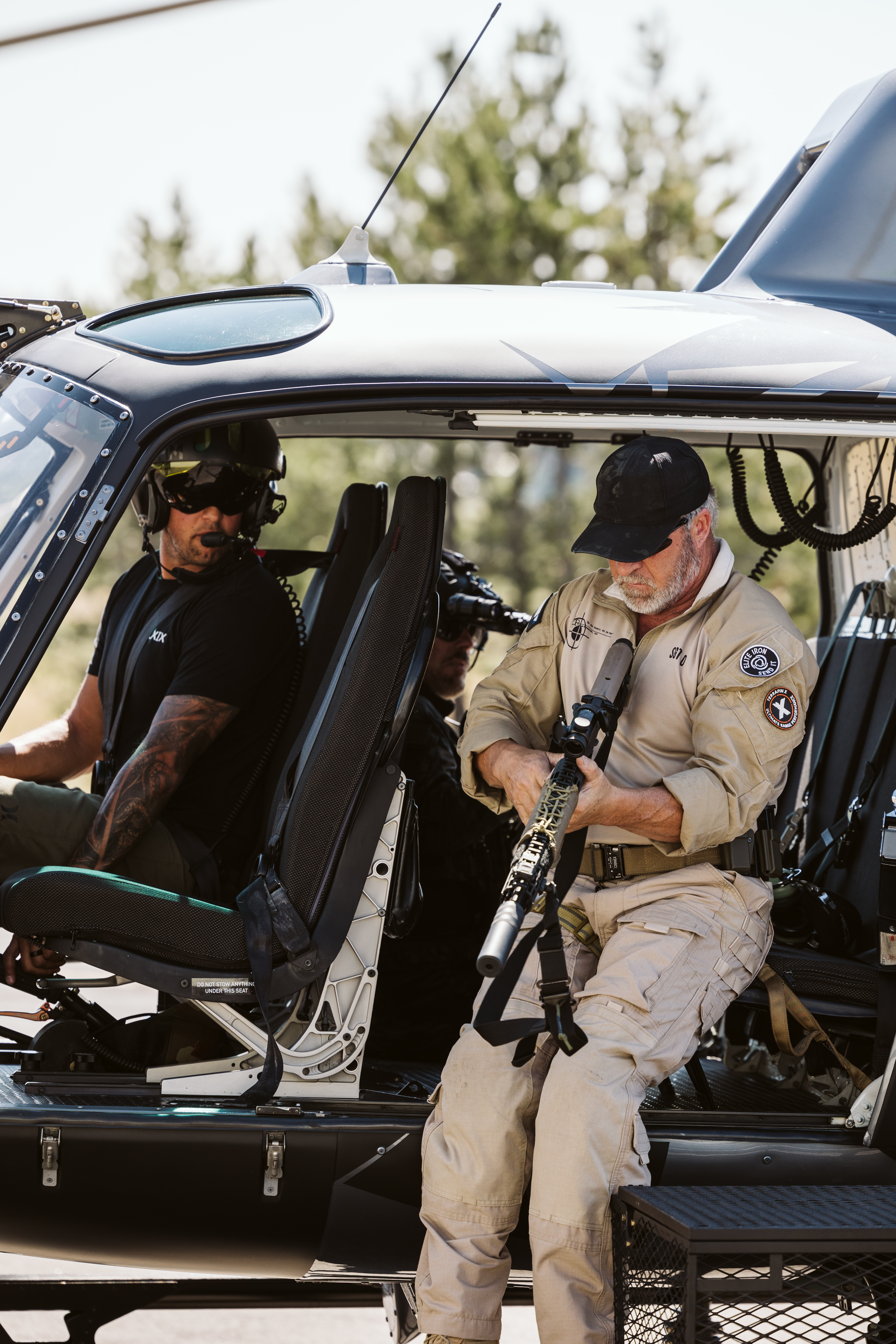
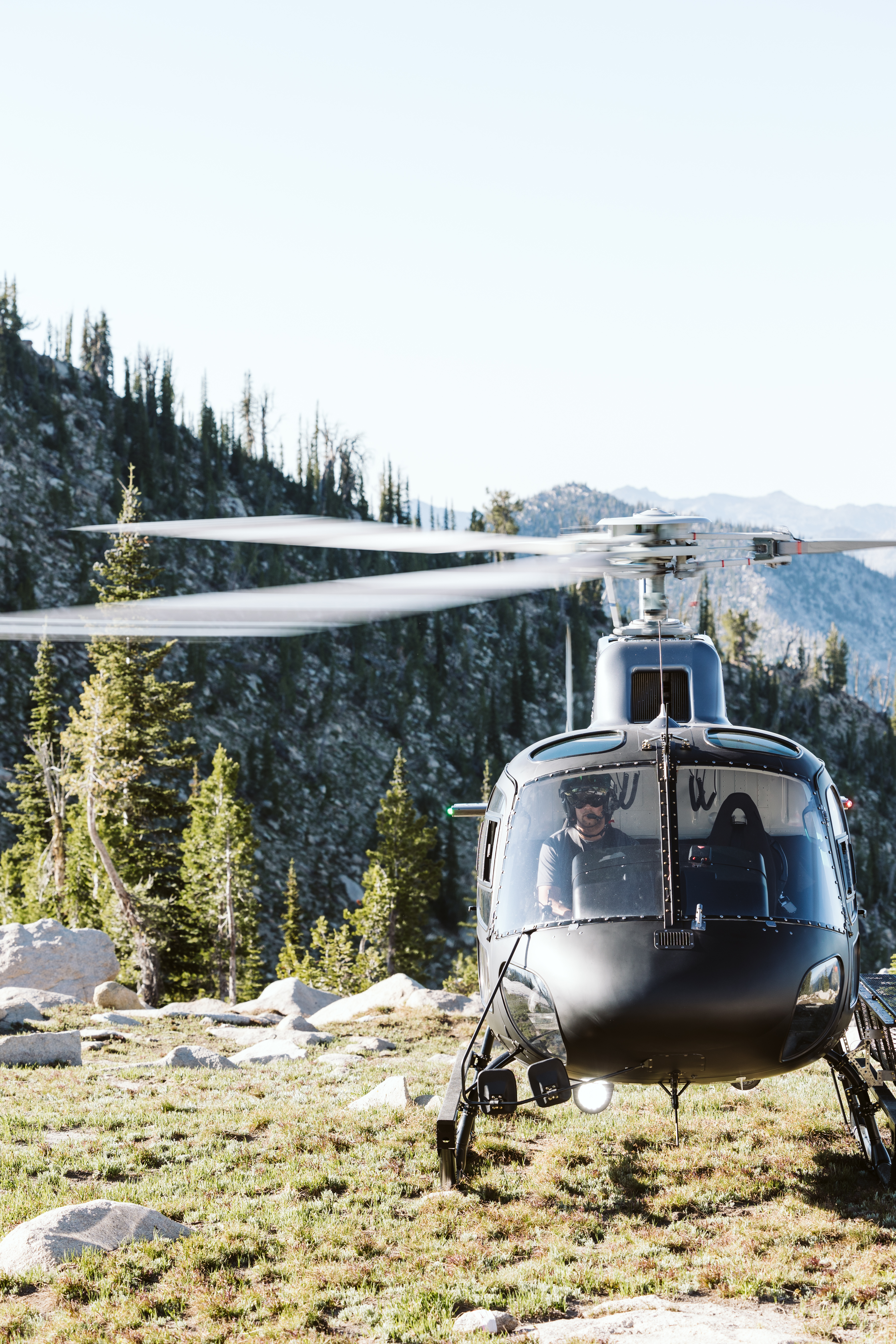
Base Camp is a full-service helicopter operator and maintenance facility in Idaho, US, specializing in precision long line, heavy lift, firefighting, and survey. The maintenance department specializes in routine and heavy maintenance, avionics, and overhauls, as well as completions and aircraft management.
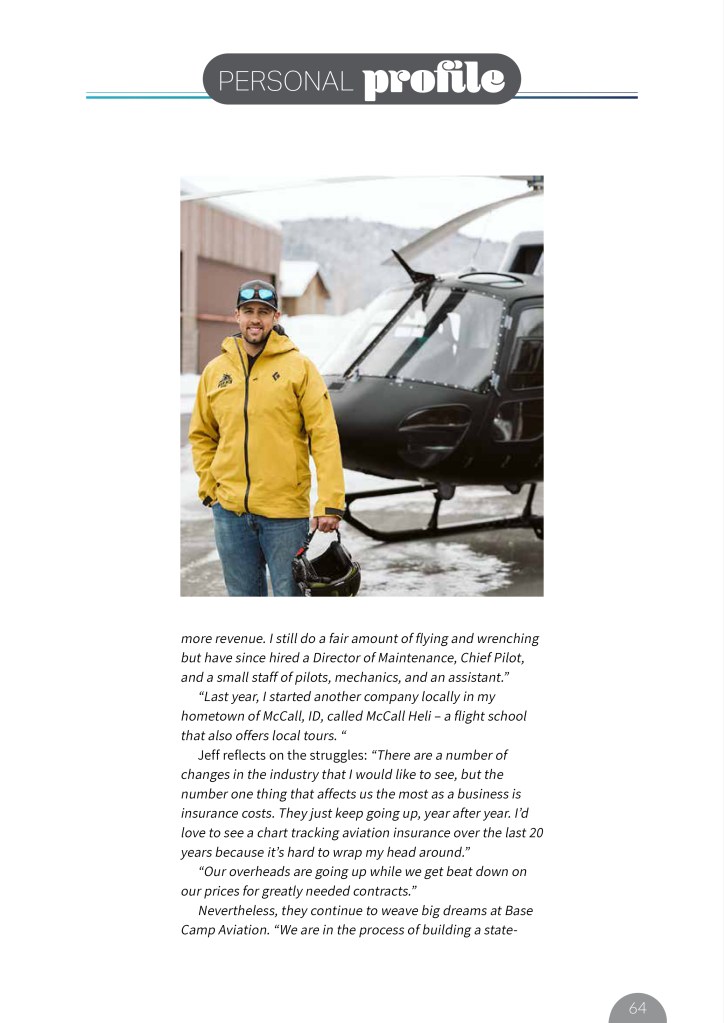
“In the early days, I was a single pilot 135 operator, and I did everything – from flying to maintenance to cleaning the bathrooms. Today, I’m at my desk a lot, trying to bring in more revenue. I still do a fair amount of flying and wrenching but have since hired a Director of Maintenance, Chief Pilot, and a small staff of pilots, mechanics, and an assistant.”
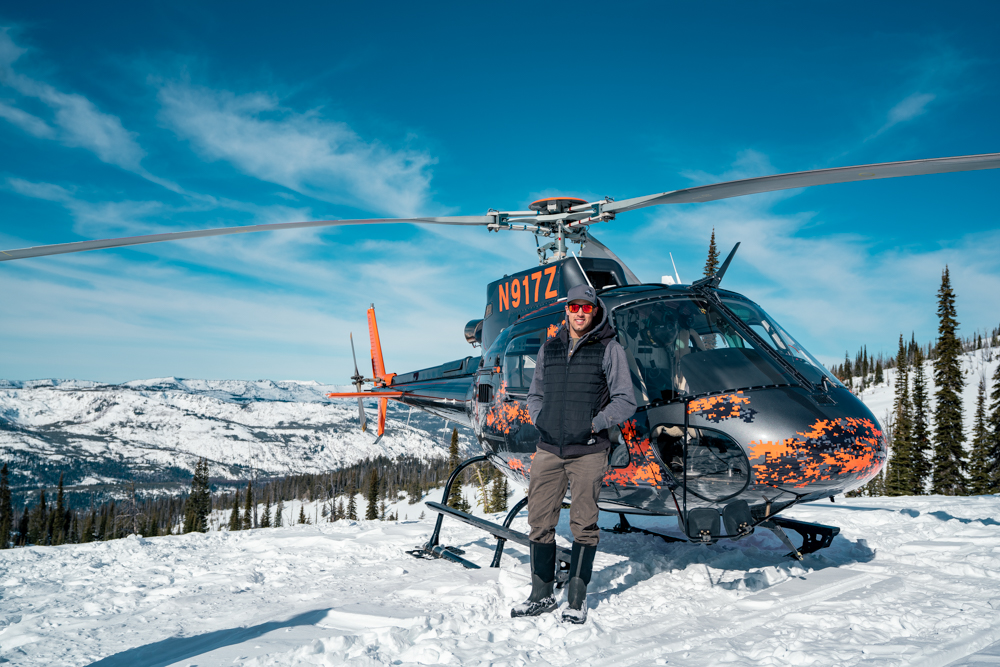
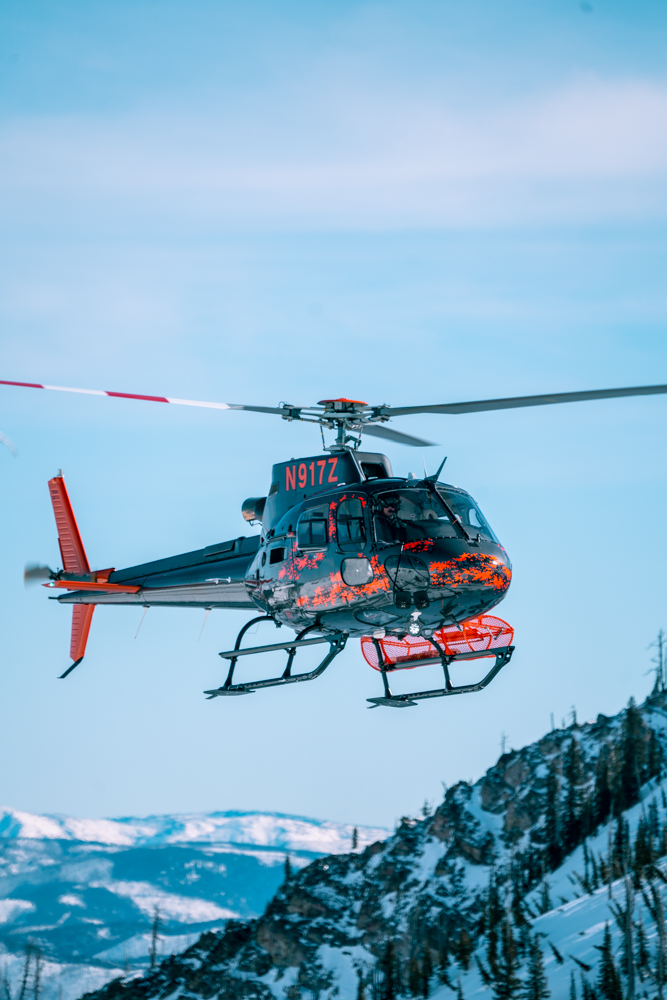
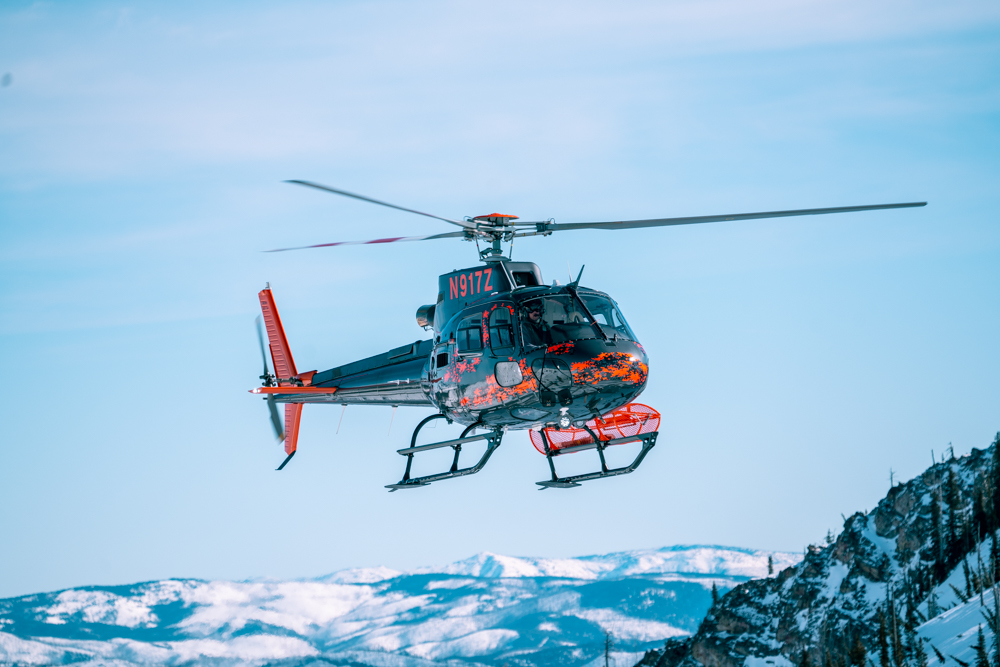
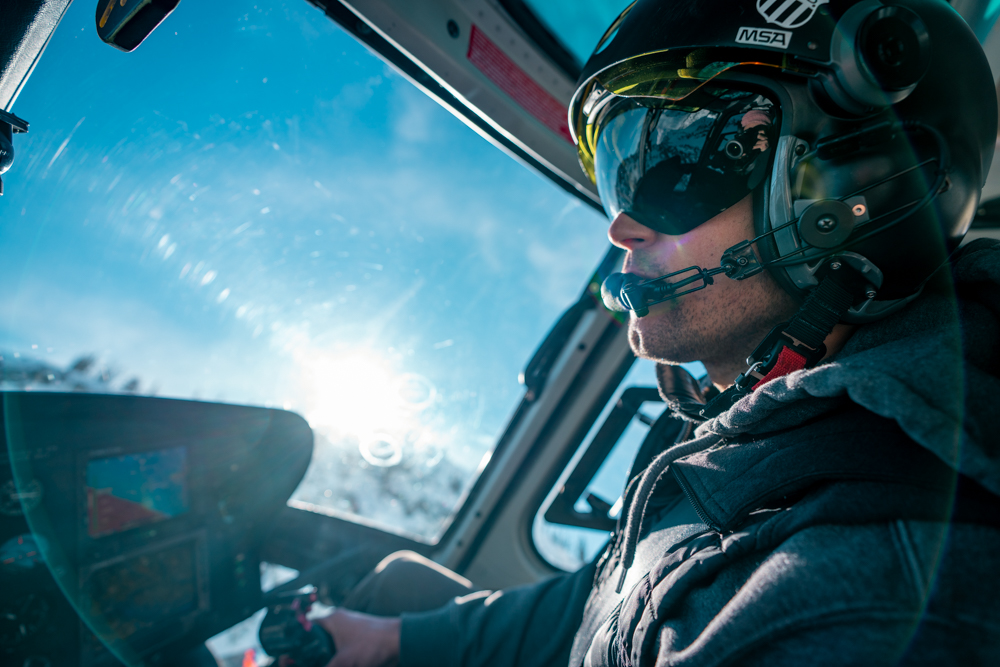
“Last year, I started another company locally in my hometown of McCall, ID, called McCall Heli – a flight school that also offers local tours. ”
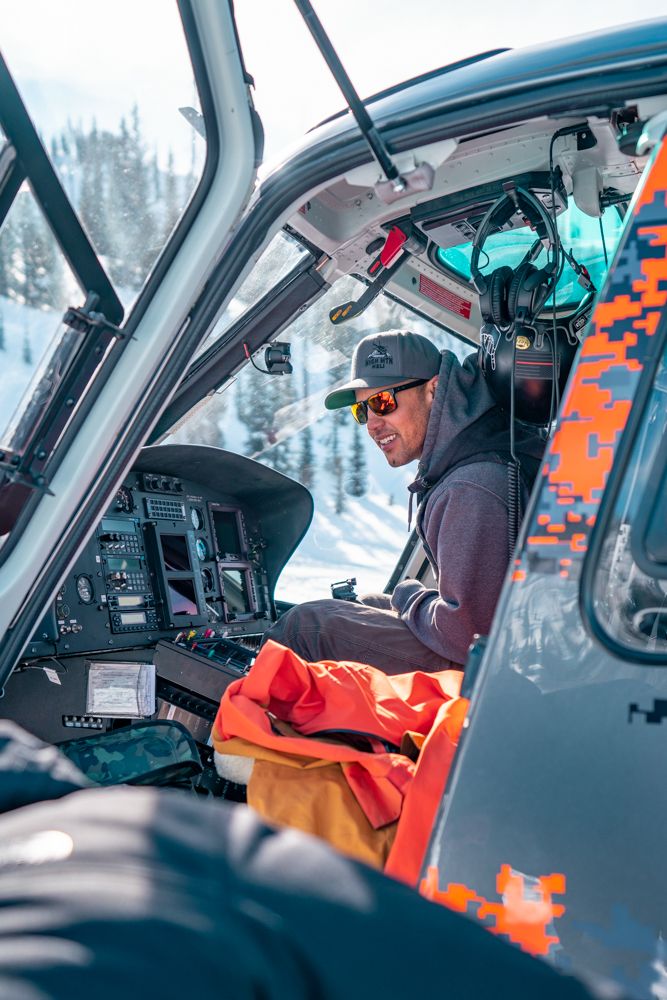
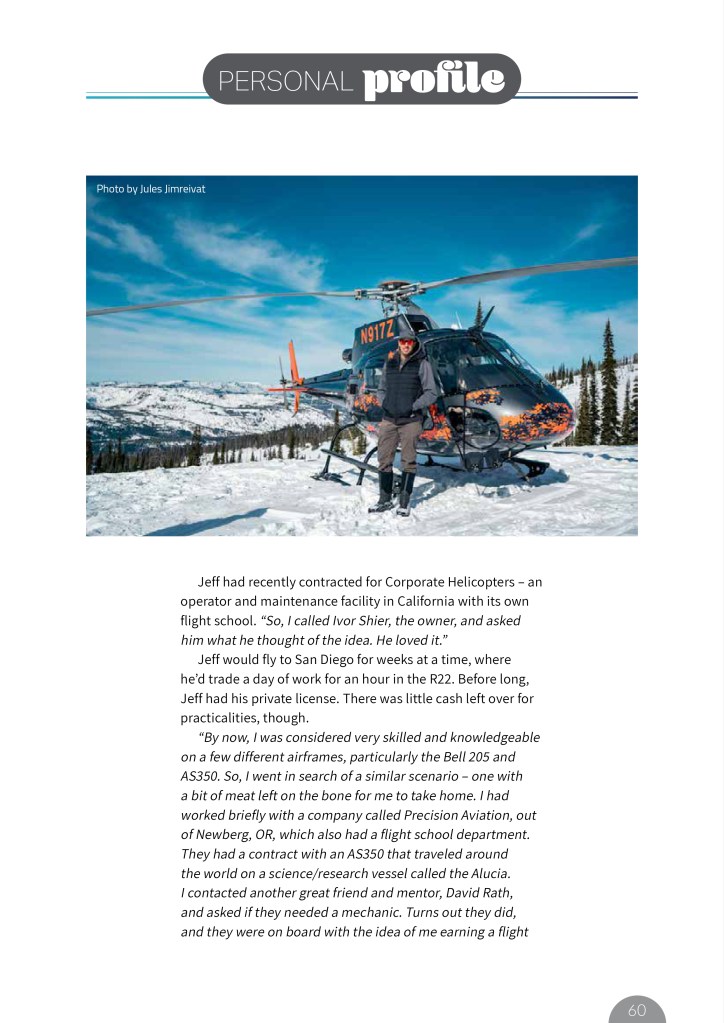
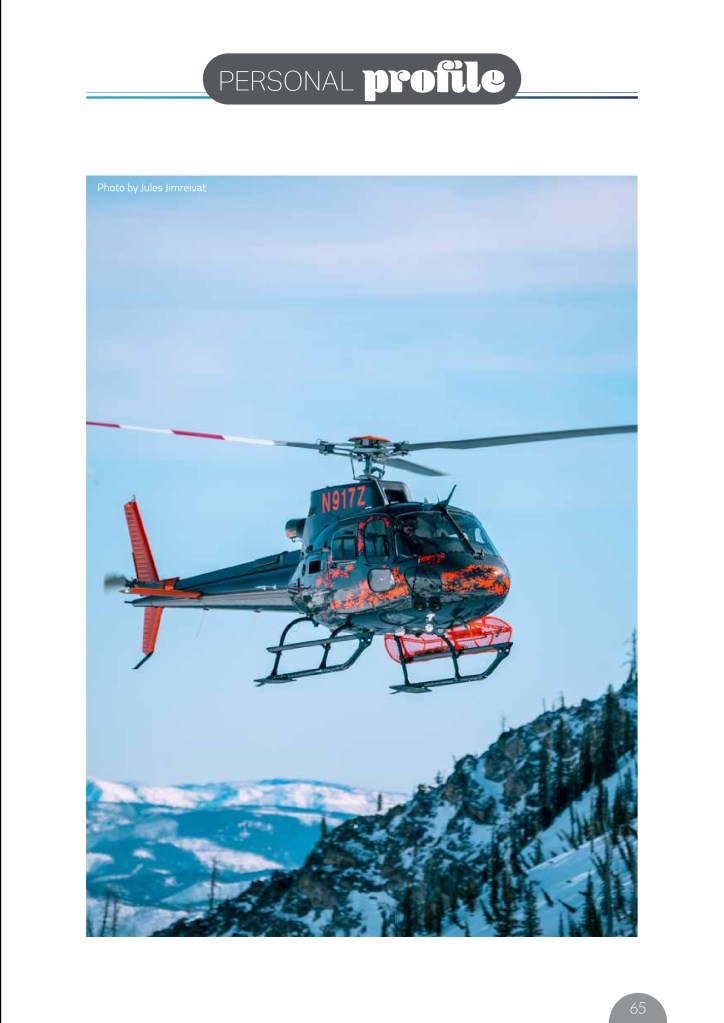
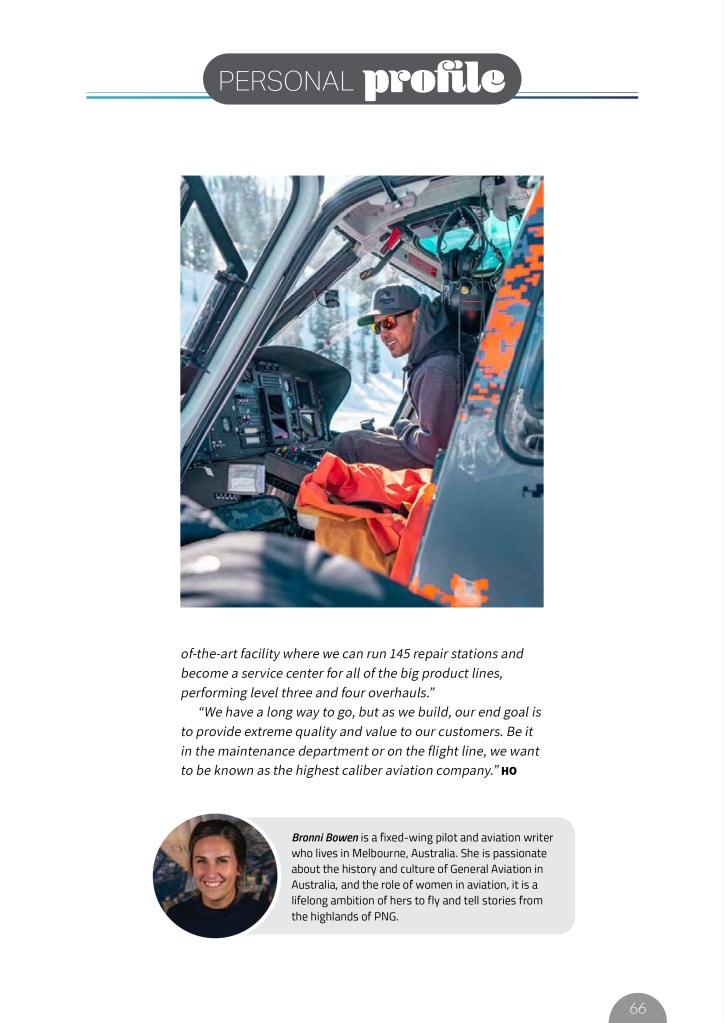
📸 by Jules Jimreivat
Jeff reflects on the struggles: “There are a number of changes in the industry that I would like to see, but the number one thing that affects us the most as a business is insurance costs. They just keep going up, year after year. I’d love to see a chart tracking aviation insurance over the last 20 years because it’s hard to wrap my head around.”
“Our overheads are going up while we get beat down on our prices for greatly needed contracts.”
Nevertheless, they continue to weave big dreams at Base Camp Aviation. “We are in the process of building a state-of-the-art facility where we can run 145 repair stations and become a service center for all of the big product lines, performing level three and four overhauls.”
“We have a long way to go, but as we build, our end goal is to provide extreme quality and value to our customers. Be it in the maintenance department or on the flight line, we want to be known as the highest caliber aviation company.”

Originally published in HeliOps Magazine Issue 149
 Bronni Bowen