
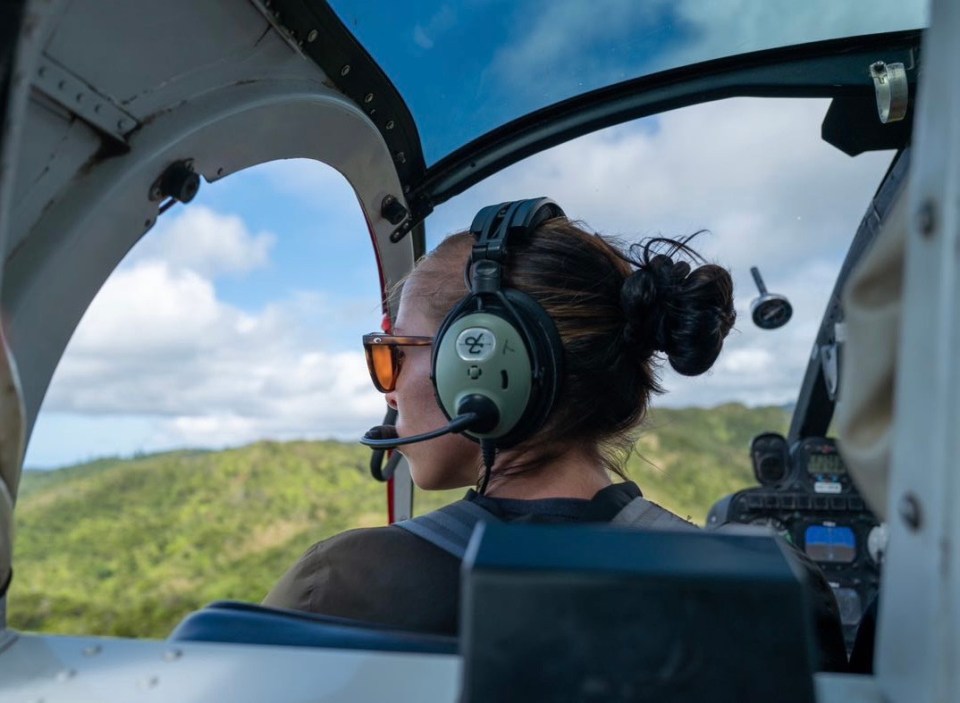
“I wanted to fly ever since I was young – about twelve years old. I grew up surrounded by cotton fields on my mother’s horse farm in Midland, Texas, and one year, a helicopter came through to crop dust. I remember thinking it looked like so much fun, and the seed was planted.”
When Tianna was eighteen, she and her dad traveled to Alaska. They stayed in a lodge that advertised a helicopter tour where you could land on a glacier. They took the flight. “I’m pretty sure I asked the pilot a hundred questions. He’d gone to a flight school in Utah and worked in Alaska in the summers, doing tours and landing on glaciers.” Tianna was hooked and knew then, for a fact, what she wanted to do.
Tianna finished college at Baylor University in Texas in 2013, did the research, and found a flight school in Hawaii. “In addition to wanting to fly helicopters, I had always wanted to live on an island,” she grins. “But it was going to cost money I didn’t have, so I worked for about three and a half years, saving every dime I could.”
Her dedication is inspiring – at that age, three years can feel like an eternity.
Nevertheless, in February 2017, Tianna shifted to Oahu in Hawaii and began training at Mauna Loa Helicopters; the start of an absolute dream come true. It was a big change! “I moved from the desert of west Texas to one of the most beautiful places I’d ever been: a tropical island in the middle of the Pacific Ocean.”
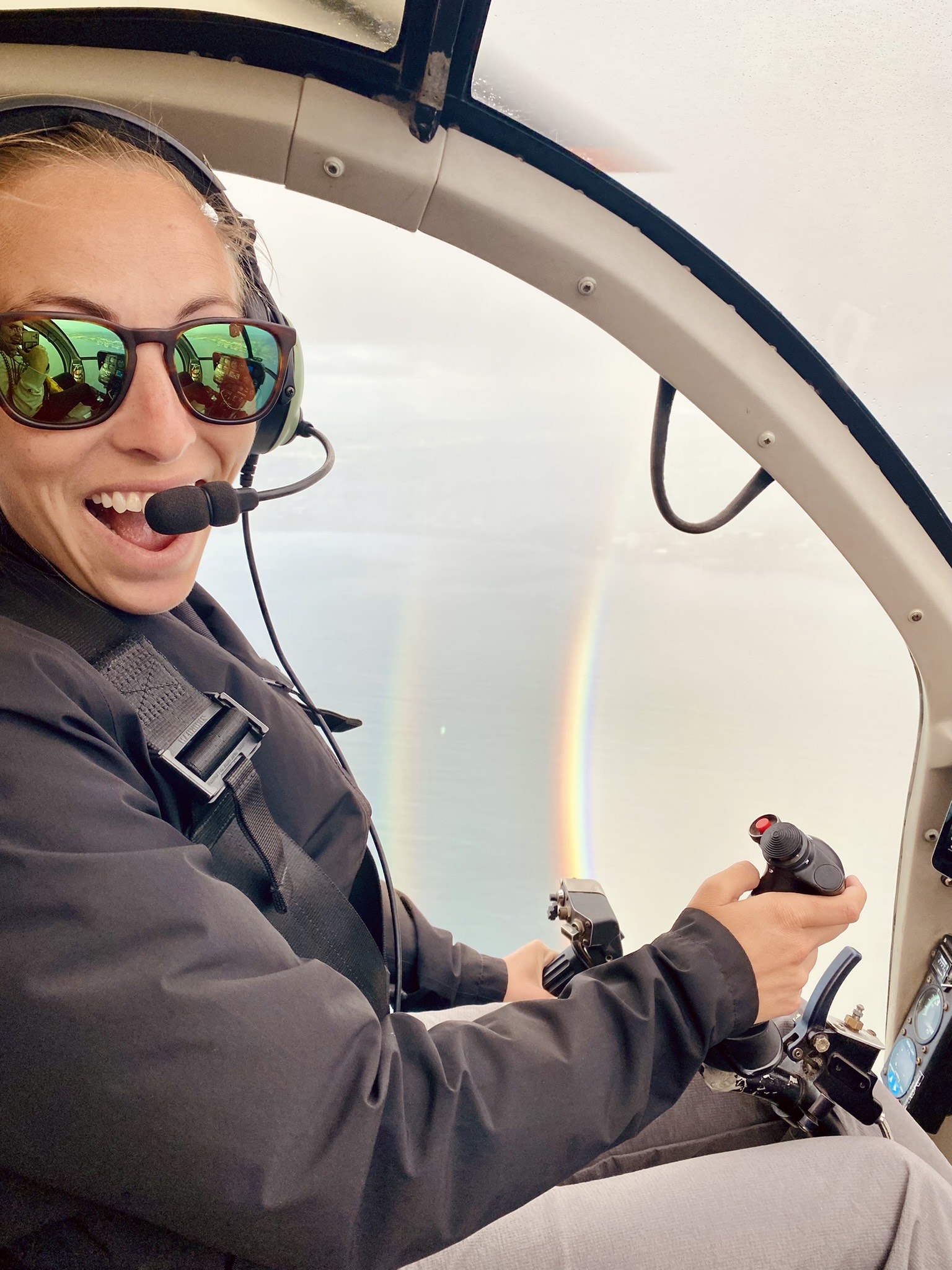
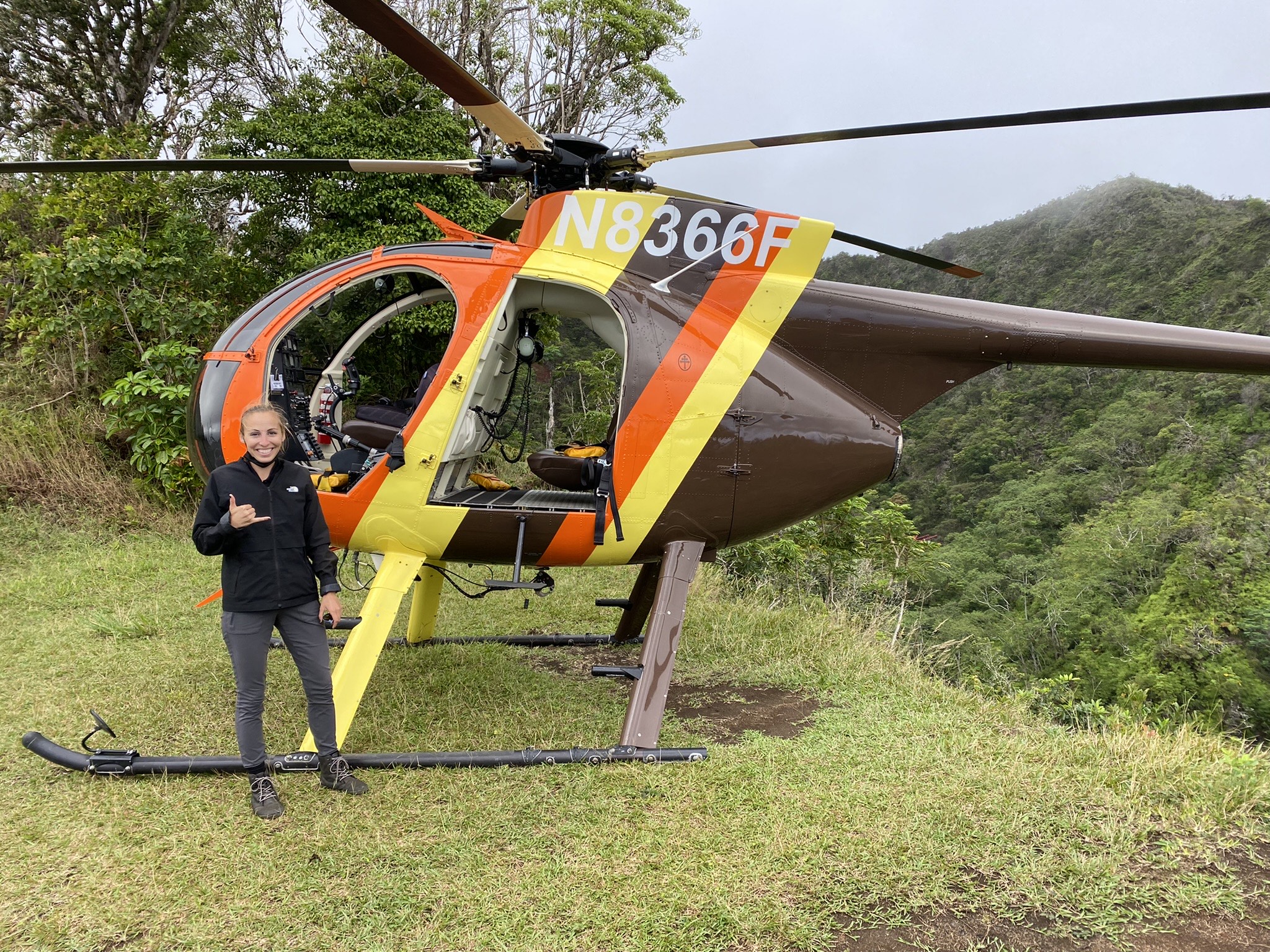
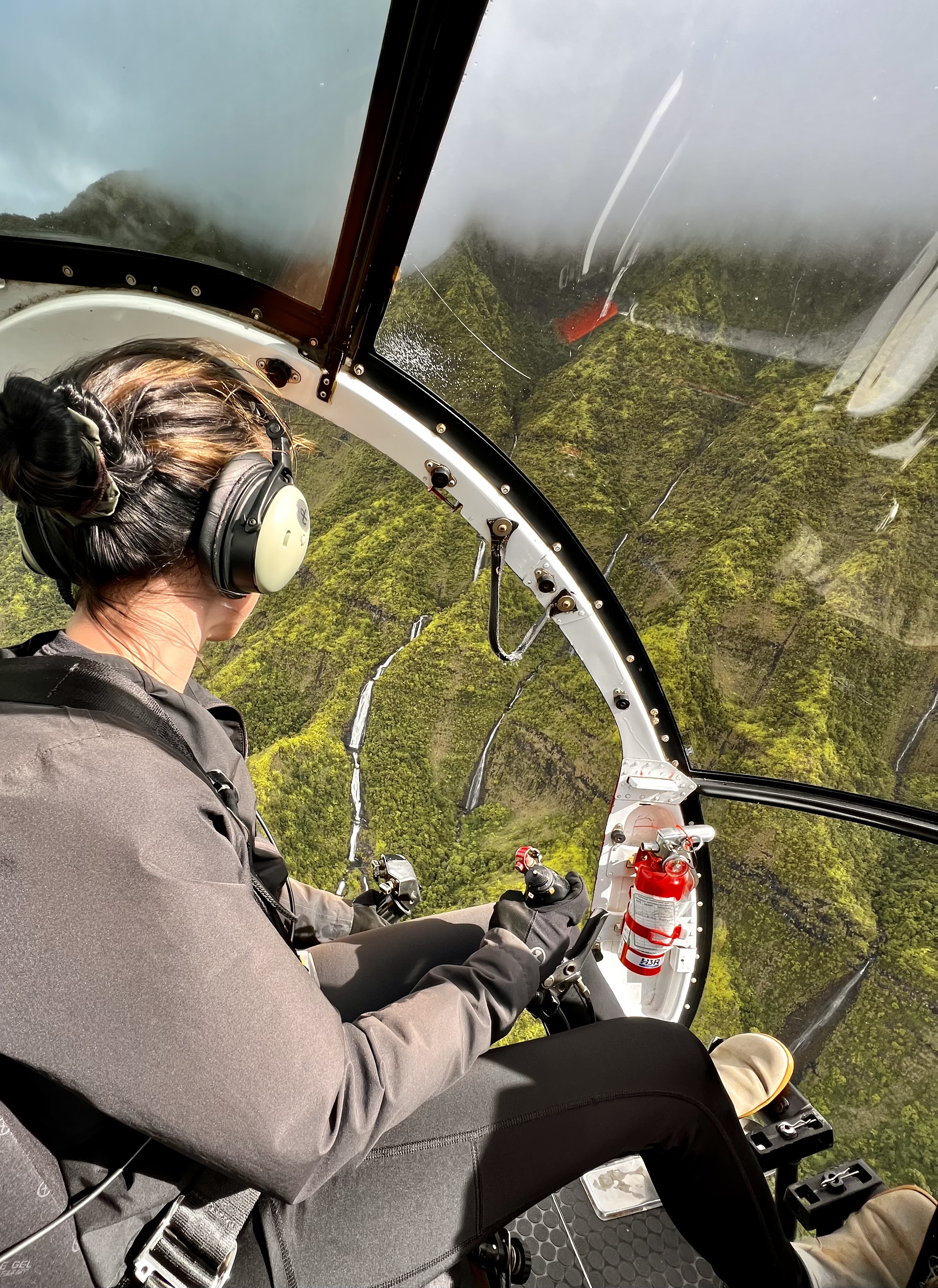
Mauna Loa Helicopters had a base in Kona on the Big Island and Honolulu on Oahu. Tianna chose Oahu for the opportunity to fly in Class B airspace and over lush green mountains. As the training hours mounted, the savings ran low, as they are apt to. Tianna sold her car and carried on.
“When you think about difficult times during flight school, usually what comes to mind is learning to hover, radio calls in Class B airspace, or mastering some other skill,” Tianna remembers. “The most difficult time that I experienced was losing my two best friends in a helicopter accident nine months into my training. It was a tragedy that I am sure some of your readers in this industry have also experienced.”
“I knew I just had to keep going, keep flying, and continue my training.”
“The instructors at the school became my close mentors. One in particular, Pamela Garrity, helped me through my commercial and CFI training. I was passionate about flying, and I wanted to know everything about everything when it came to those helicopters. She was, and still is, a great mentor to me. I think back to my time at Mauna Loa Helicopters on Oahu and know I had really great instructors. It inspired me to want to become a CFI and teach the way that they helped and taught me.”
Tianna’s first job was as a CFI at Mauna Loa Helicopters in Kona on the Big Island, flying the Robinson R22 and R44. “That began as a challenge because I hadn’t really flown around that island before – but I welcomed it. I wanted to be able to fly on all the Hawaiian Islands; Mauna Loa offered that with various positions and cross-country flights. And I had great colleagues there.”
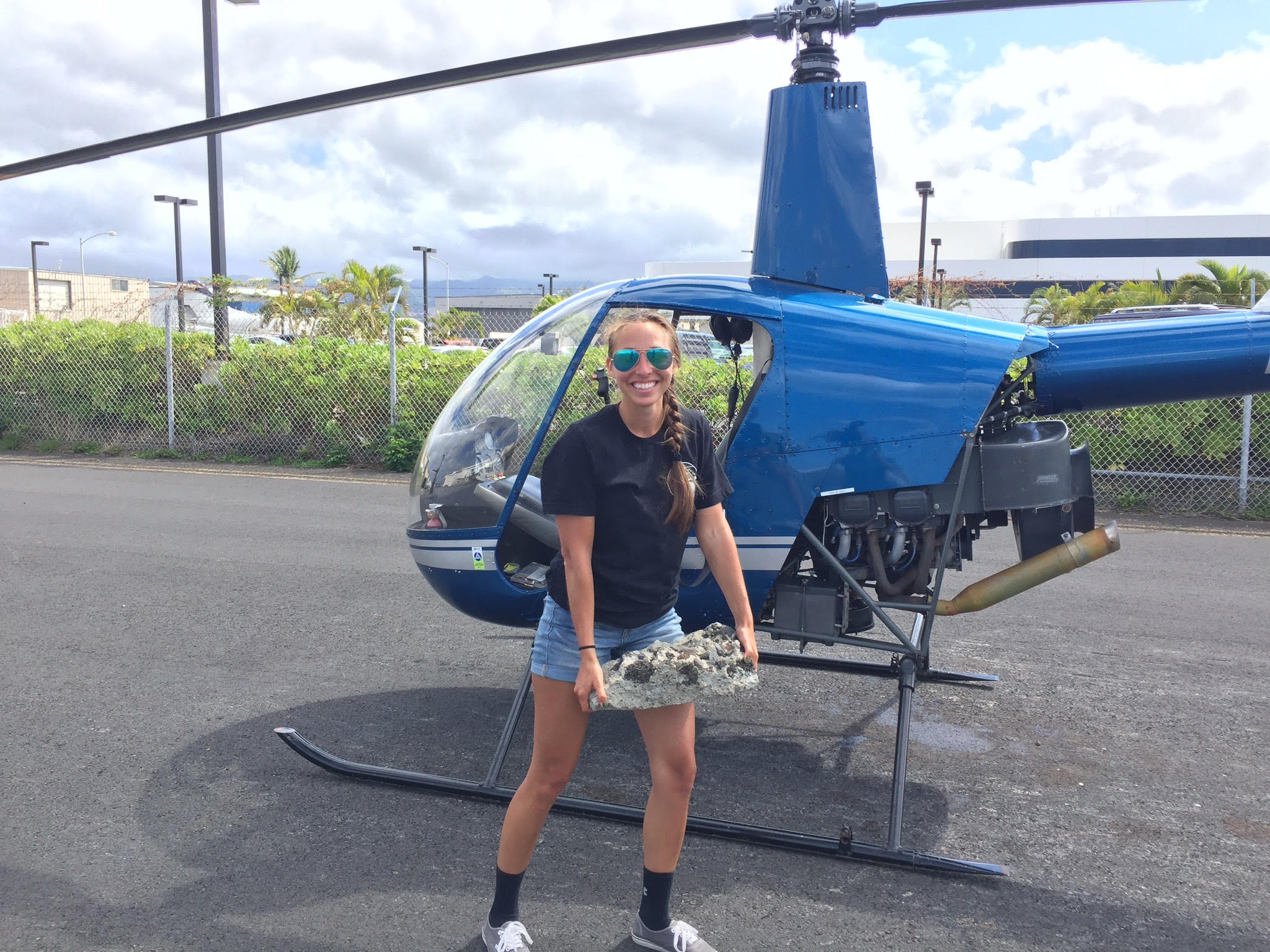

After five months in Kona, Tianna returned to Oahu and continued her job instructing. Soon after, she was offered the assistant chief pilot position and began flying tours. Tianna worked for Mauna Loa Helicopters for just over two years.
“Then, I sent my resume to Paradise Helicopters.”
“I sat for an interview with their chief pilot – also a Mauna Loa graduate. He hired me at 1100 hours with no turbine experience.” In this new position, she was flying out of Paradise Helicopters’ various bases, building time in the MD500 and Bell 407. “I flew over active volcanoes and across the Hawaiian islands for charters, landing on lush green ridgelines in the mountains… even at the base of a waterfall.”
With a career so far exclusive to the Hawaiian islands, Tianna has learned and observed the importance of reputation in the industry – from student to CFI – and the impact it will have on your ability to get jobs.
“Being a good pilot does not only mean that you can maneuver a helicopter well. You must also be enjoyable to work alongside, take constructive criticism, work hard, and make good judgment calls regarding challenging weather conditions.”
“The references on your resume go a long way out here.”
As of early 2023, Tianna is with Airborne Aviation on the island of Kauai. She flies tours in the MD500 over the canyons, the Na Pali Coast, and her personal favorite, Halele’a Forest Reserve, a remote area near the middle of Kauai Island with countless waterfalls and a beautiful native forest. “The MD500 had always been my dream helicopter to fly, and honestly, I’d be happy if I never flew anything else.”
“I would say some of my best days here on Kauai have been preflighting with a rainbow in the background, working alongside some of my best friends, and taking people who have never even been in a helicopter to see some of the most beautiful places I have ever seen.”
“If you ever get to fly with me, I’ll probably tell you all about the formation of the volcanic islands, the native plants, and birds in the forest and show you a few of my favorite waterfalls.”
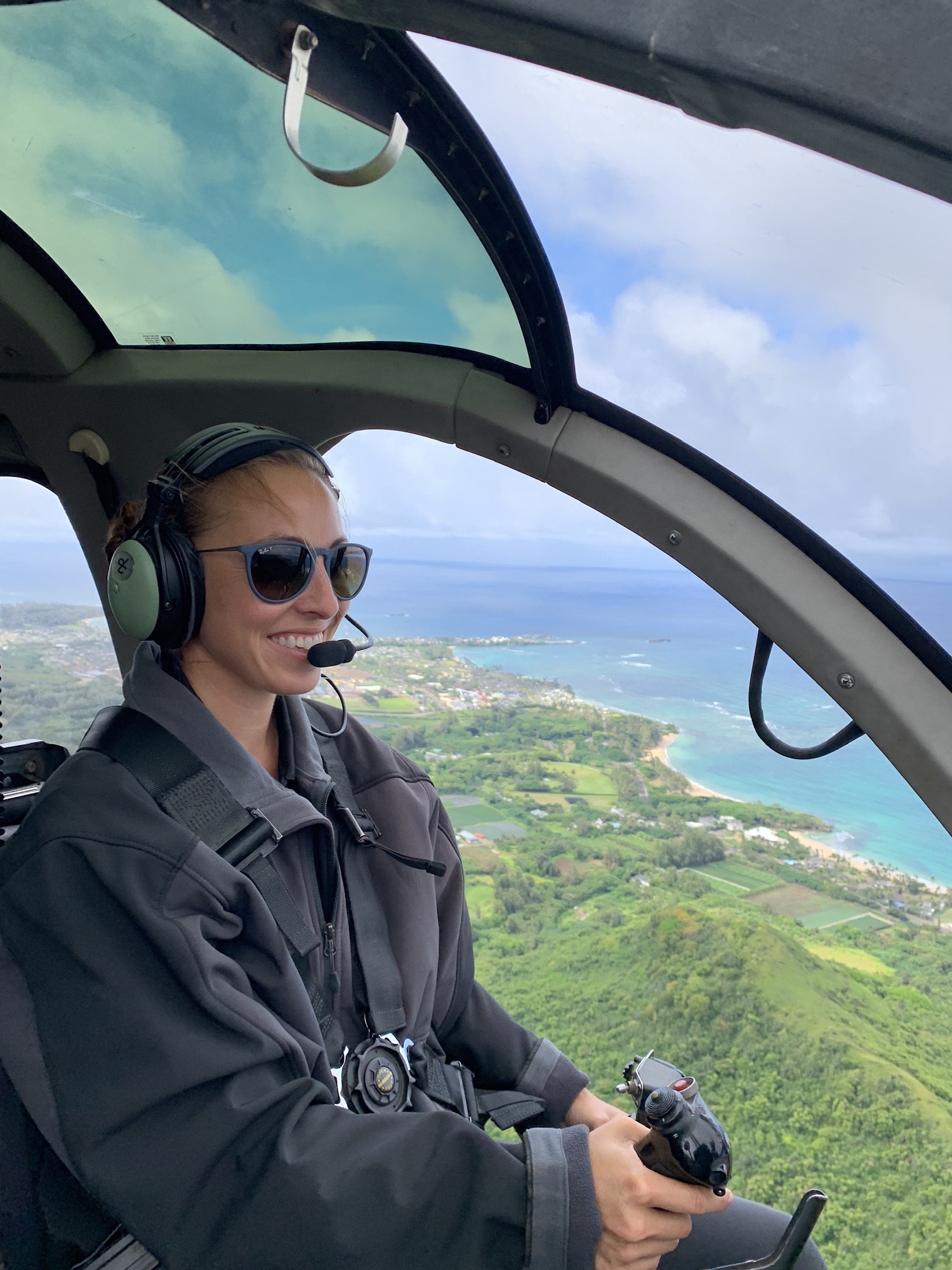
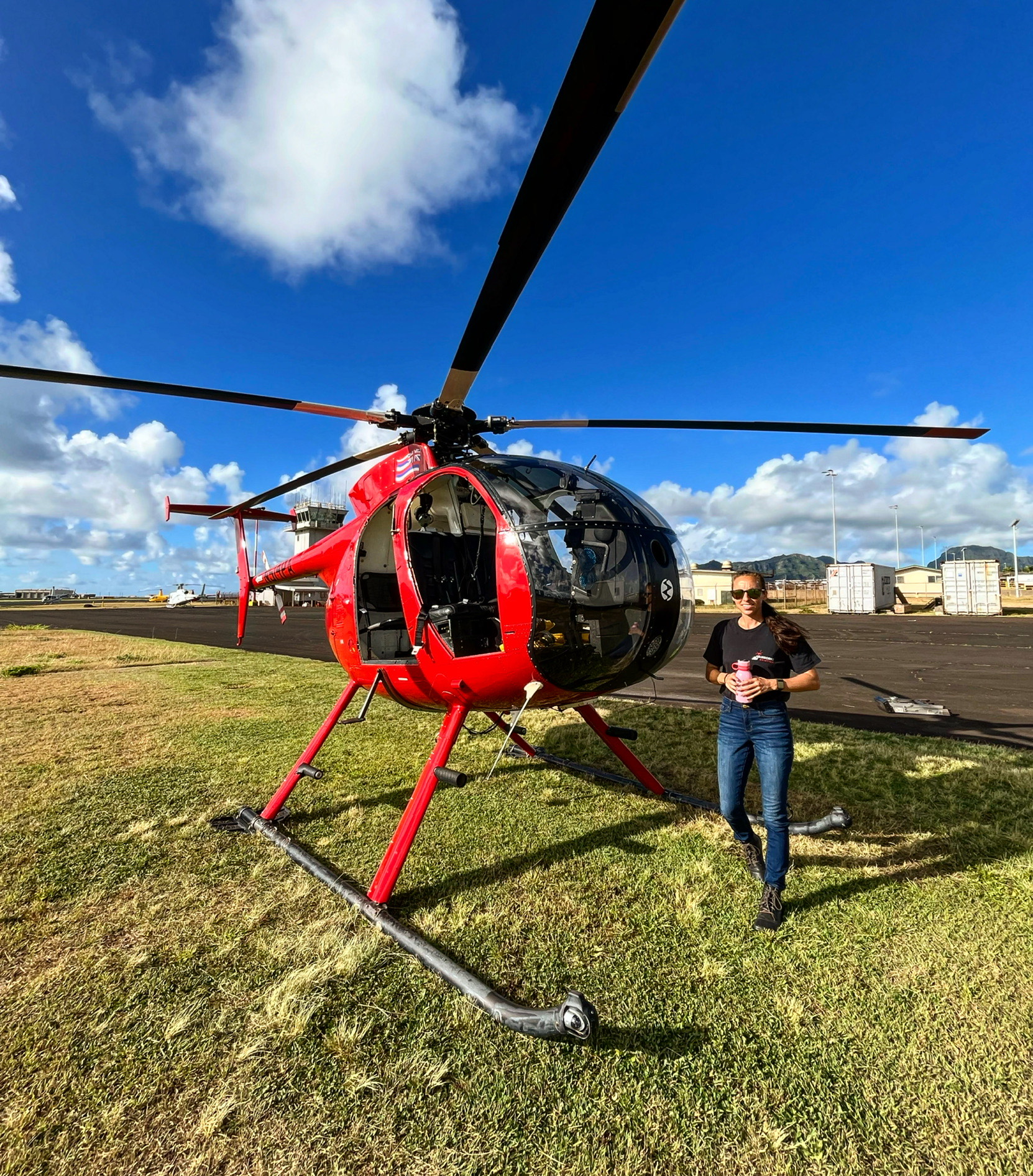
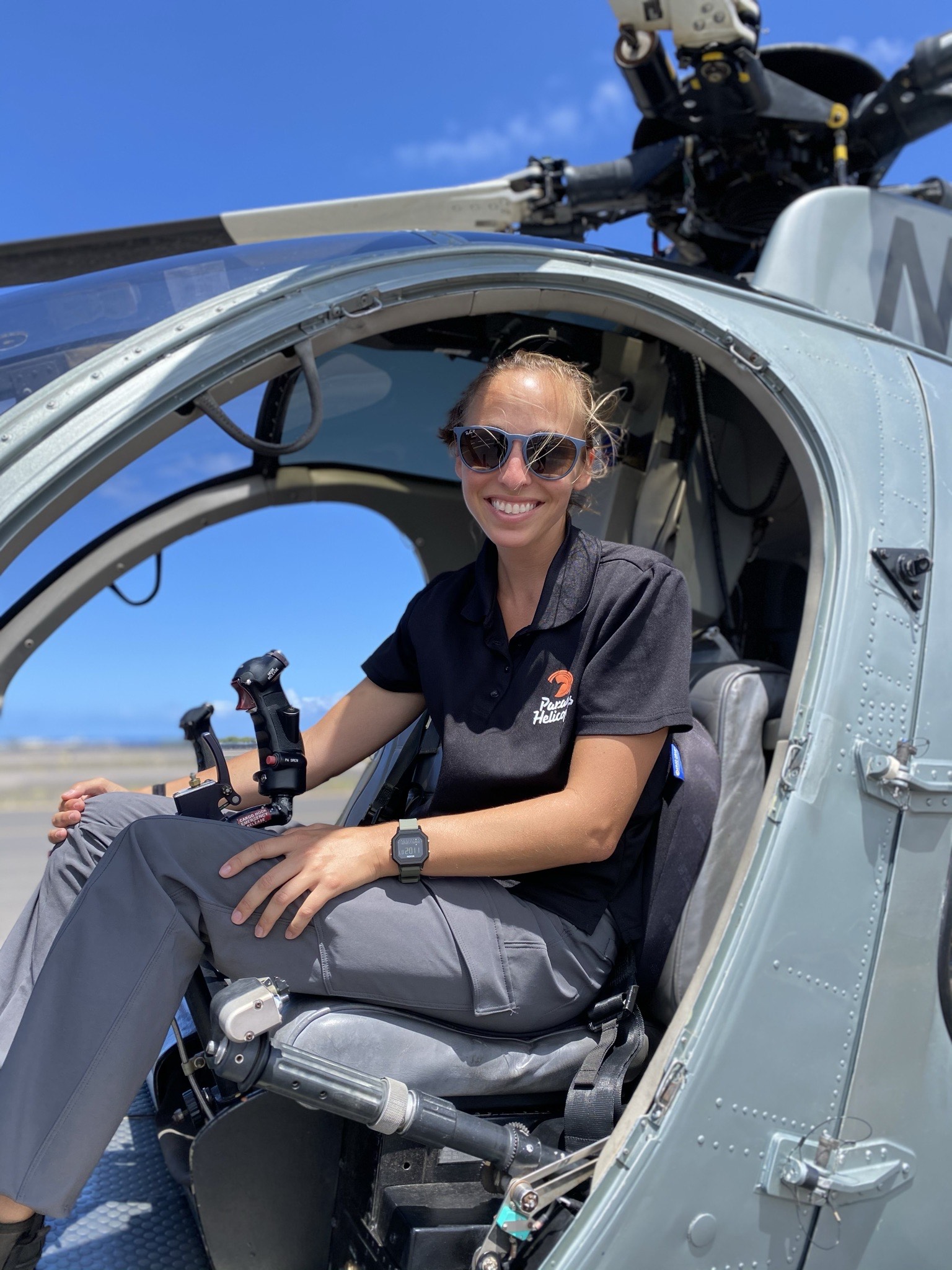
“The last flight of the day is my favorite. There are usually some rainbows, and the sun hits those lush green ridges beautifully, sun rays reaching through the clouds. Some people joke about doing laps around an island, but often, there is nowhere else I’d rather be than flying the MD500, with the doors off, around a beautiful island here in Hawaii.”
Tianna is lucky to share the Kauai Island skies with several female pilots and is often complimented by passengers excited to fly with her. “I’m flattered – sometimes they want to take a photo with me to show their young daughter or granddaughter. Hopefully, capturing those moments will help demonstrate to younger girls that they can also be pilots.”
“My goal next is to fly utility in the MD500 here in Hawaii. The work varies from flying conservationists to remote landing zones, long lining fencing or other materials into the mountains, as well as fire fighting and search and rescue. I am fortunate to work at a company that does all these things.”
“I get to work around very experienced pilots who have been willing to share their learnings and advice – and who set a prime example of how to achieve my own goals.”
Originally published in HeliOps Magazine Issue 148
 Bronni Bowen