
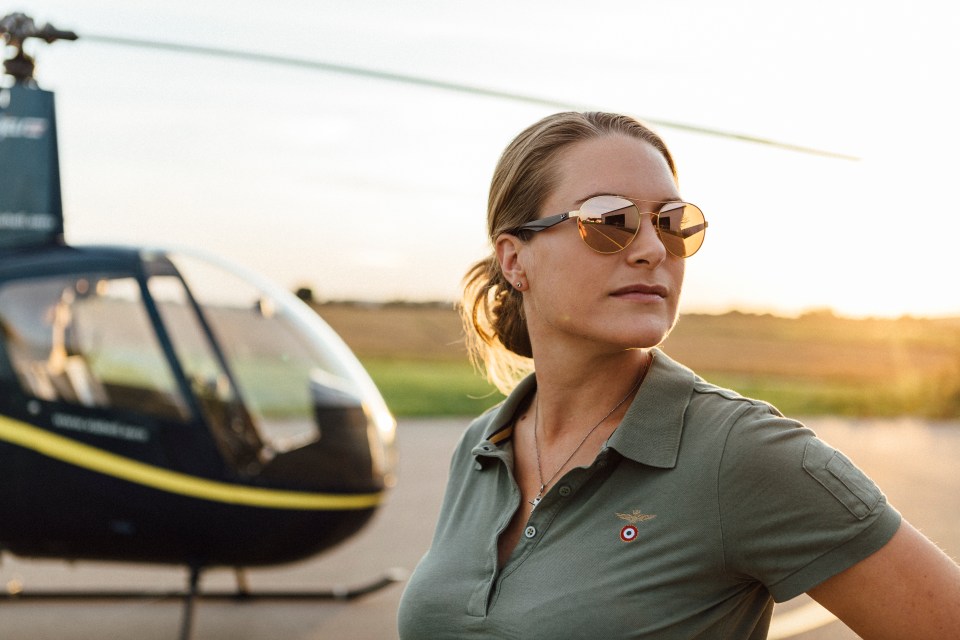
Thump, thump thump, thump, thump!
Fresh-cut, green grass clippings are picked up by the whirling rotors, flicking around the small crowd gathered on the hospital grounds. Little Lena’s eyes are wide as she witnesses the German army simulate a winch rescue from above, before lowering the great machine onto the lawns right in front of them. Fascinated by all the power and energy of the helicopter, Lena immediately became obsessed with the idea of learning to fly one.
“Later, we had the German series, Medicopter 117, which was the only television I was allowed to watch after 8 pm all through my childhood. There was a woman helicopter pilot (Sabine Petzl), who I idolized, and this encouraged me even more.”
“Now, when I watch those episodes, I see so many things and think, ‘Oh! That’s not possible,'” She laughs. “But when we were kids, we thought that was great. The story, the crew, and all the different emergencies… And it was all about the BK 117, which was my first big love – this huge, red and yellow Medicopter 117.”
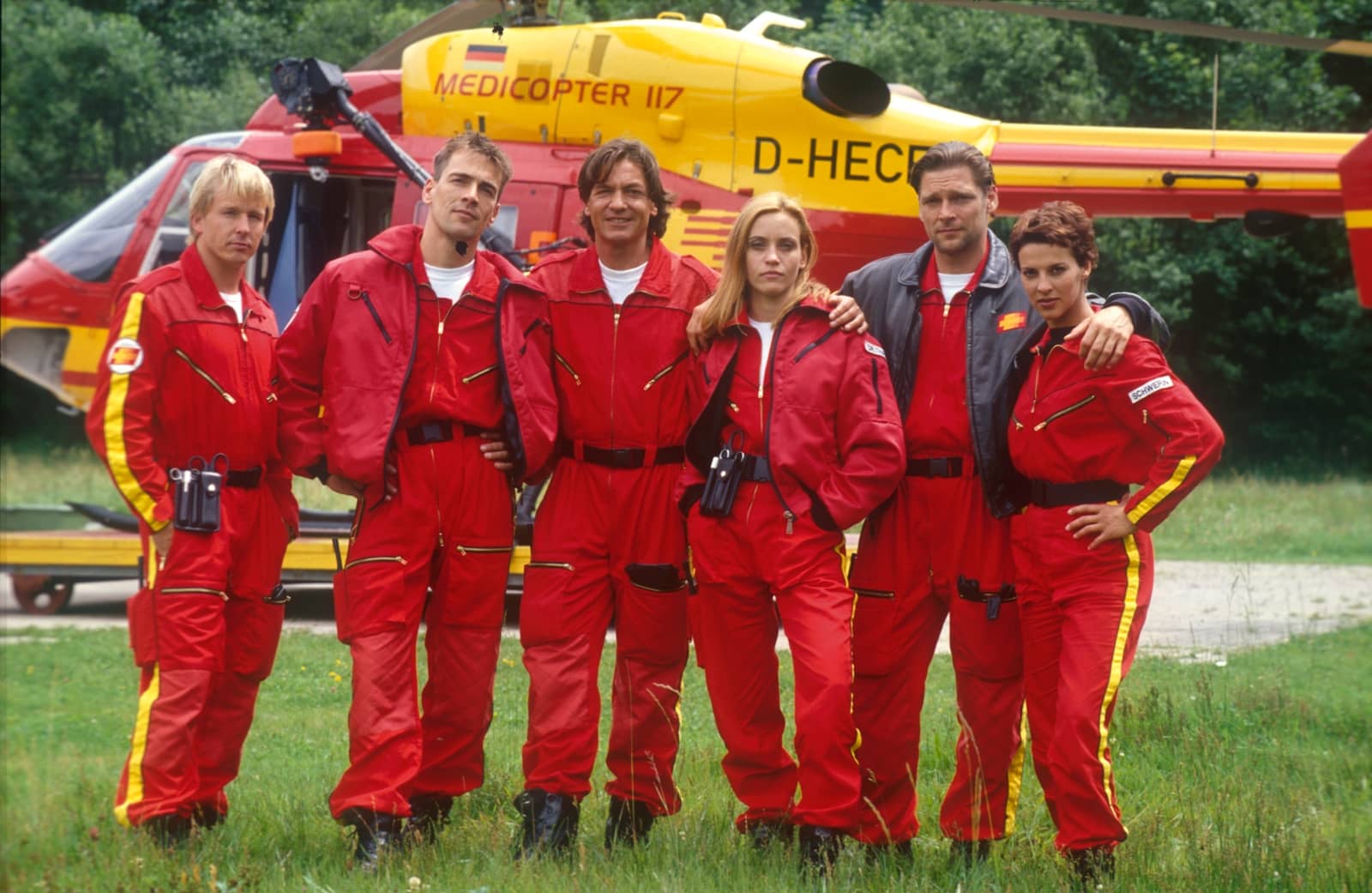

Since that time, Lena has never lost the drive to fly rescue – to her, the greatest and most satisfying reason to fly helicopters is the ability to help other people through air rescue service and HEMS operations.
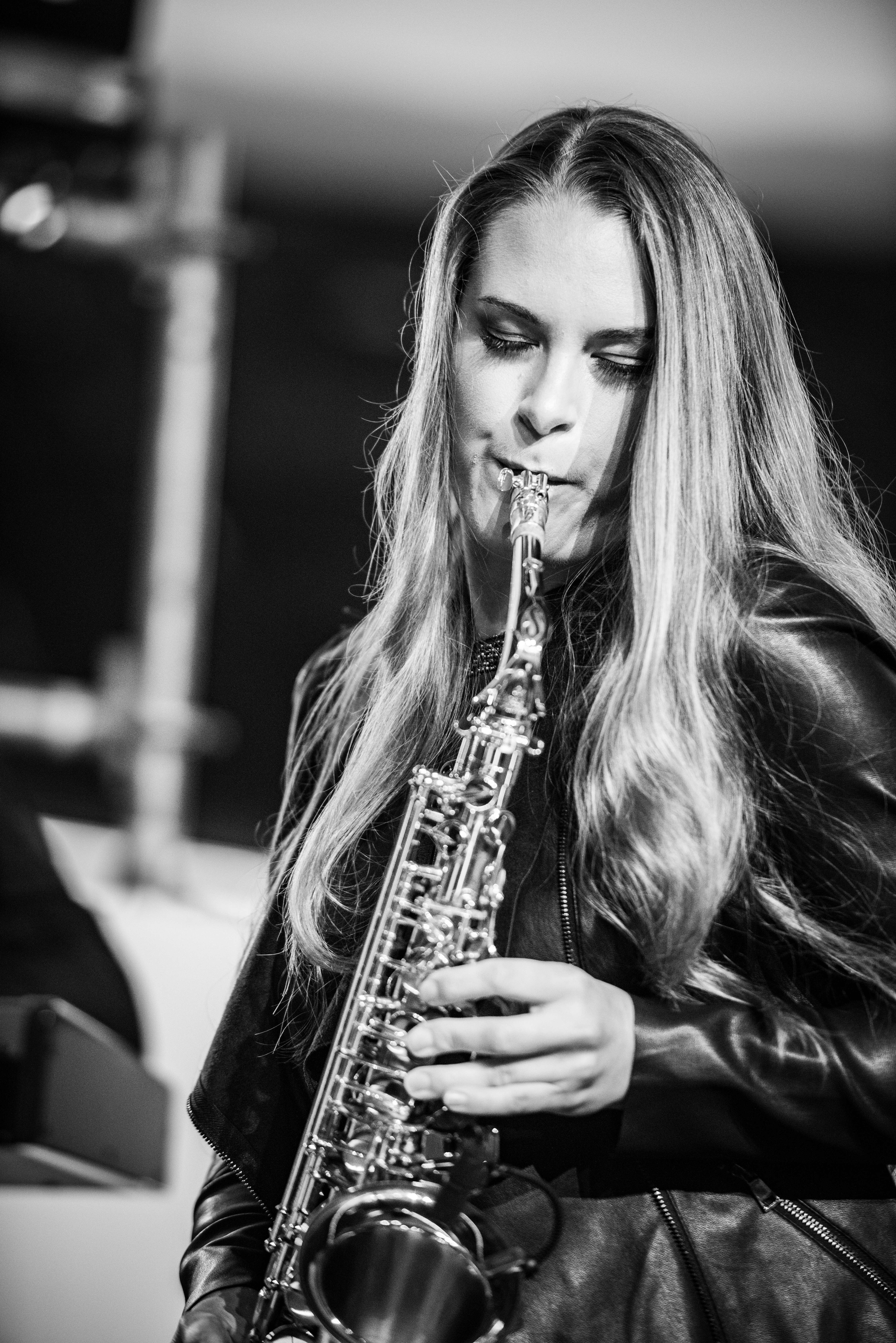
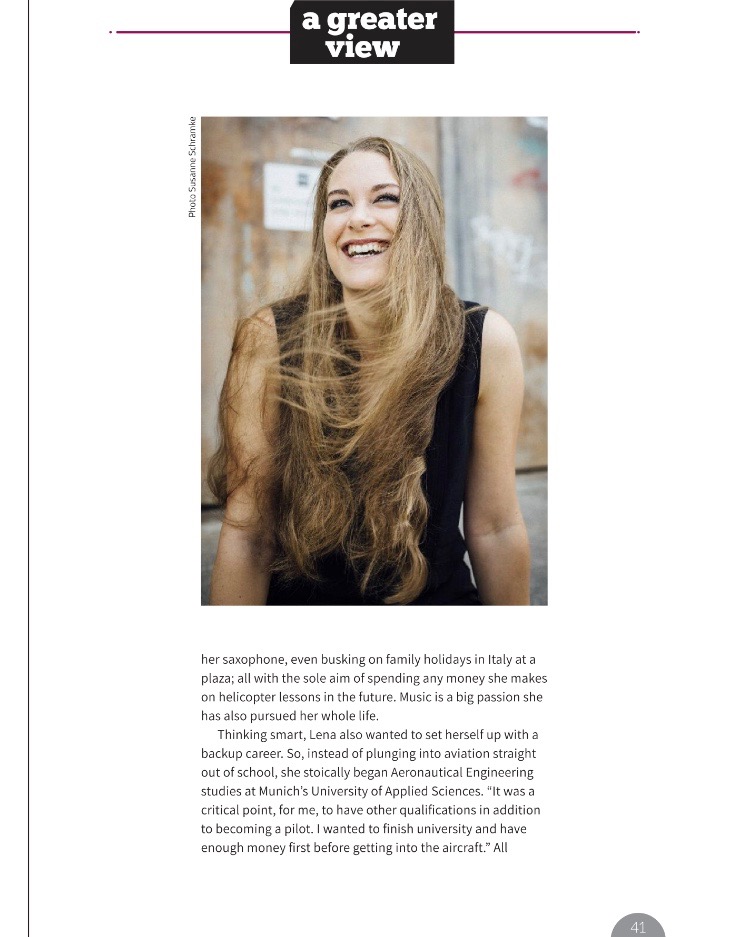
Fast forward a few years, and twelve-year-old Lena plays her saxophone – even busking on family holidays in Italy at a plaza – with the sole aim of spending any money she makes on helicopter lessons in the future. Music is a big passion she has also pursued her whole life.
Thinking smart, Lena also wanted to set herself up with a backup career. So, instead of plunging into aviation straight out of school, she stoically began Aeronautical Engineering studies at Munich’s University of Applied Sciences. “It was a critical point, for me, to have other qualifications in addition to becoming a pilot. I wanted to finish university and have enough money first before getting into the aircraft.” All this time, she worked with music right around Europe, performing at significant events and galas in places like Monaco, Portugal, Austria, and Switzerland.

“How life goes. I got to know my (eventual) PPL flight instructor and good friend while writing my diploma thesis at Airbus Helicopters Deutschland in the flight test analysis department.” One day, as he took a sip from his coffee cup, Lena noticed it had a helicopter and the words ‘… Helicopter Championships’ on the side. When she asked about it, he put her in touch with the German Helicopter Club, where she met Sabine Buehlmann (Issue 125 HeliOps, March 20). Never say advertising on mugs is a fruitless endeavour!
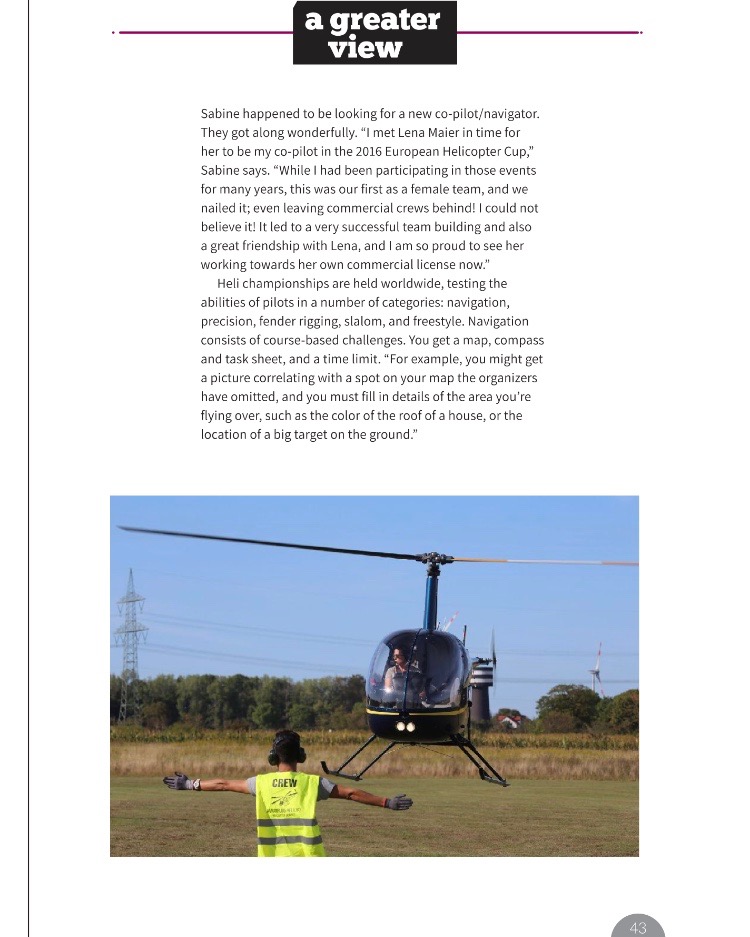
Lena swung by one of the training sessions – at which time Sabine happened to be looking for a new co-pilot/navigator. They got along wonderfully. “I met Lena Maier in time for her to be my co-pilot in the 2016 European Helicopter Cup,” Sabine says. “While I had been participating in those events for many years… this was our first as a female team, and we nailed it – even leaving commercial crews behind! I could not believe it! It led to a very successful team building and also a great friendship with Lena, and I am so proud to see her working towards her own commercial license now.”
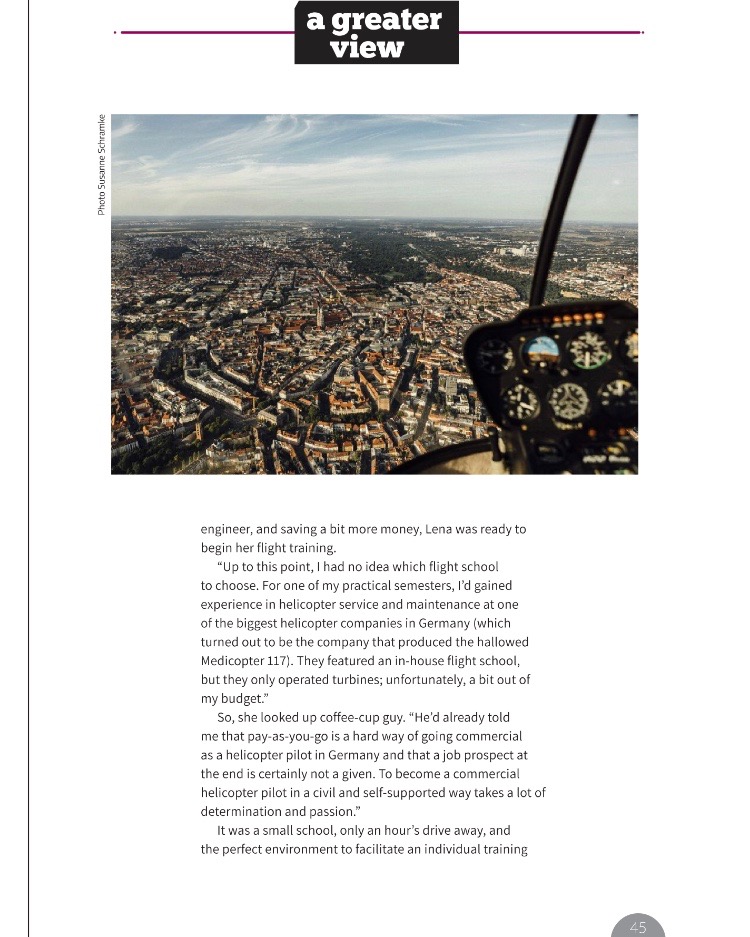
Heli championships are held worldwide, testing the abilities of pilots in a number of categories: navigation, precision, fender rigging, slalom, and freestyle. Navigation consists of course-based challenges – you’ll get a map, compass and task sheet, and a time limit. “For example, you might get a picture correlating with a spot on your map the organizers have omitted, and you must fill in details of the area you’re flying over – such as the colour of the roof of a house, or the location of a big target on the ground.”
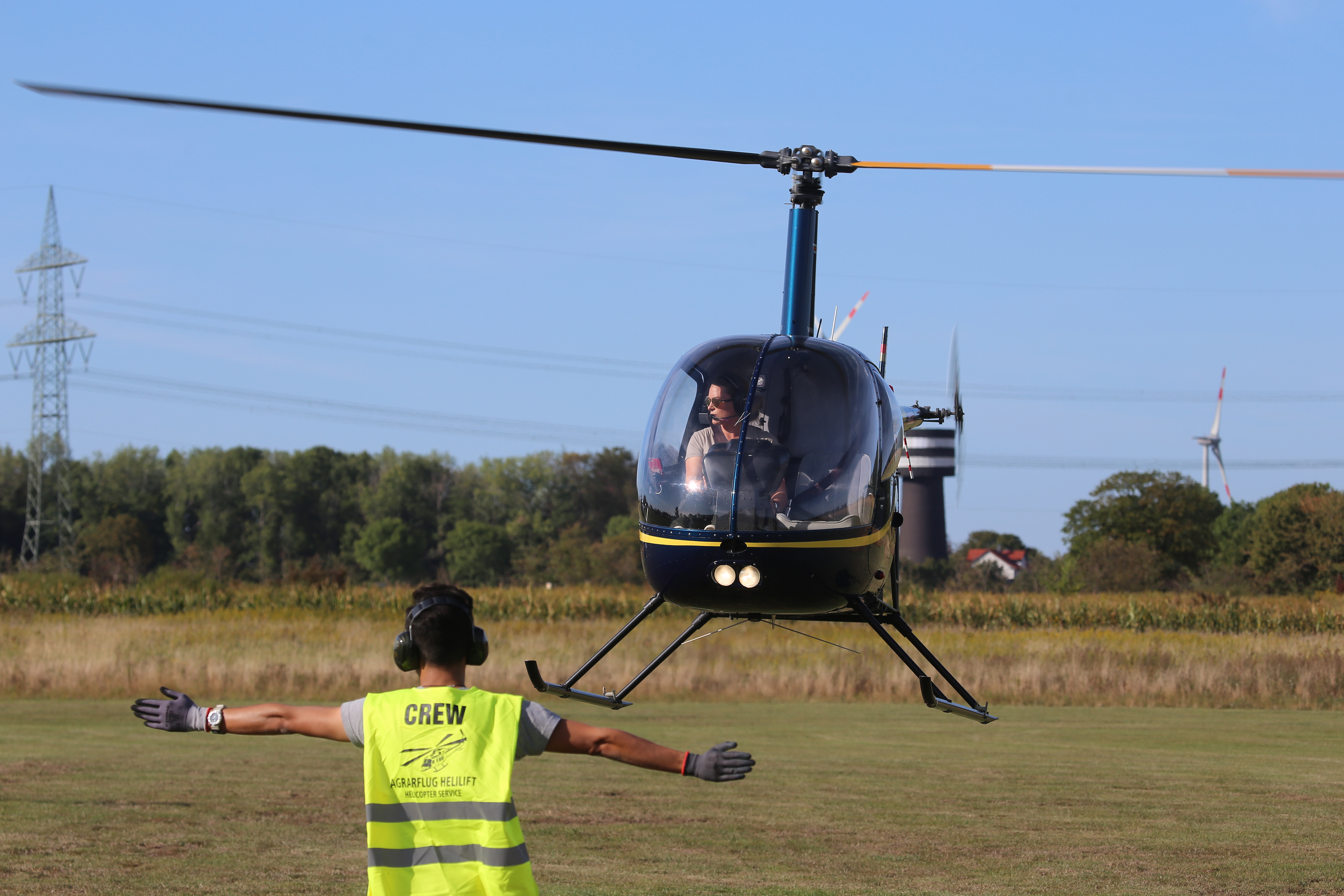
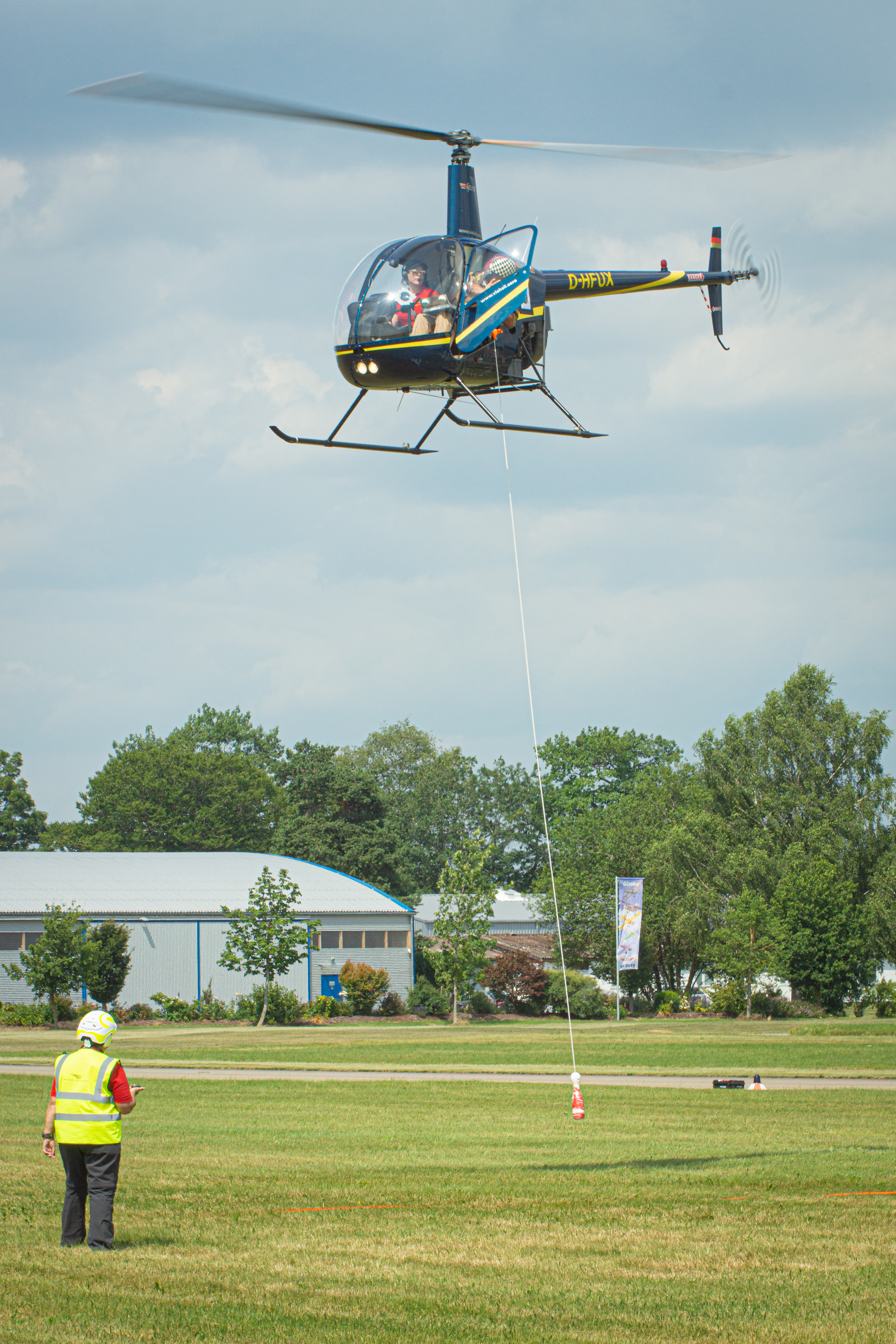
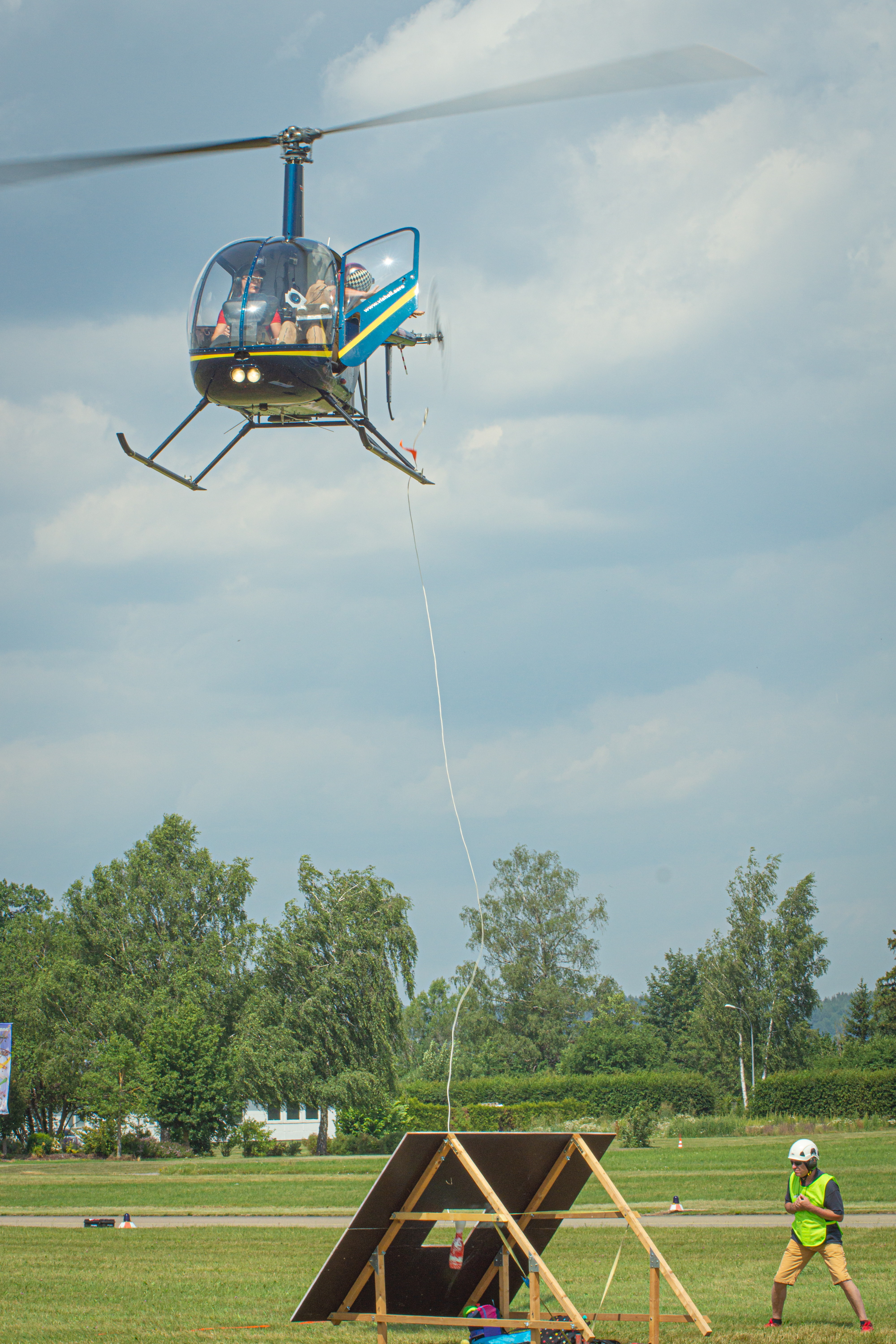
Precision is tested rigorously, often using a water bucket or fender hanging from meters of rope below the aircraft. “For a pilot, it’s such great training – when I did it for the first time, I was still low in hours and experience, and it was great for me to do this kind of flying; to hover outside ground effect and under conditions you wouldn’t normally, in day-to-day flying. The accuracy required means you must always watch your power available and fly very carefully. And usually under time pressure, too.”
“That year [2016] was my first time in the heli – let alone navigating – and we won Best Female team!” Lena’s eyes sparkle as she recalls the excitement of competition. Since the disciplines of the FAI world championship program particularly emphasize the rescue dimensions and capabilities of the helicopter, competing provided Lena with a satisfying aviation outlet.
Finally, after participating in a few comps as Sabine’s co-pilot, completing uni, getting her first job as an engineer, and saving a bit more money, Lena was ready to begin her flight training.
“Up to this point, I had no idea which flight school to choose. For one of my practical semesters, I’d gained experience in helicopter service and maintenance at one of the biggest helicopter companies in Germany (which turned out to be the company that produced the hallowed Medicopter 117). They featured an in-house flight school, but they only operated turbines – unfortunately, a bit out of my budget.”
So, she looked up coffee cup guy. “He’d already told me that pay-as-you-go is a hard way of going commercial as a helicopter pilot in Germany and that a job prospect at the end is certainly not a given. To become a commercial helicopter pilot in a civil and self-supported way takes a lot of determination and passion.”
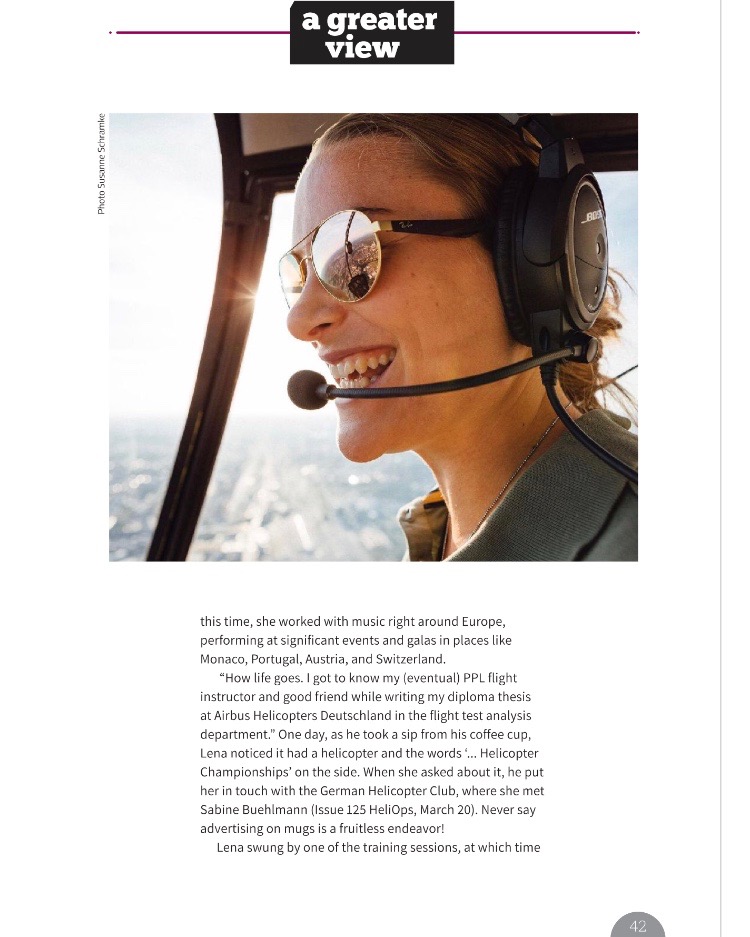
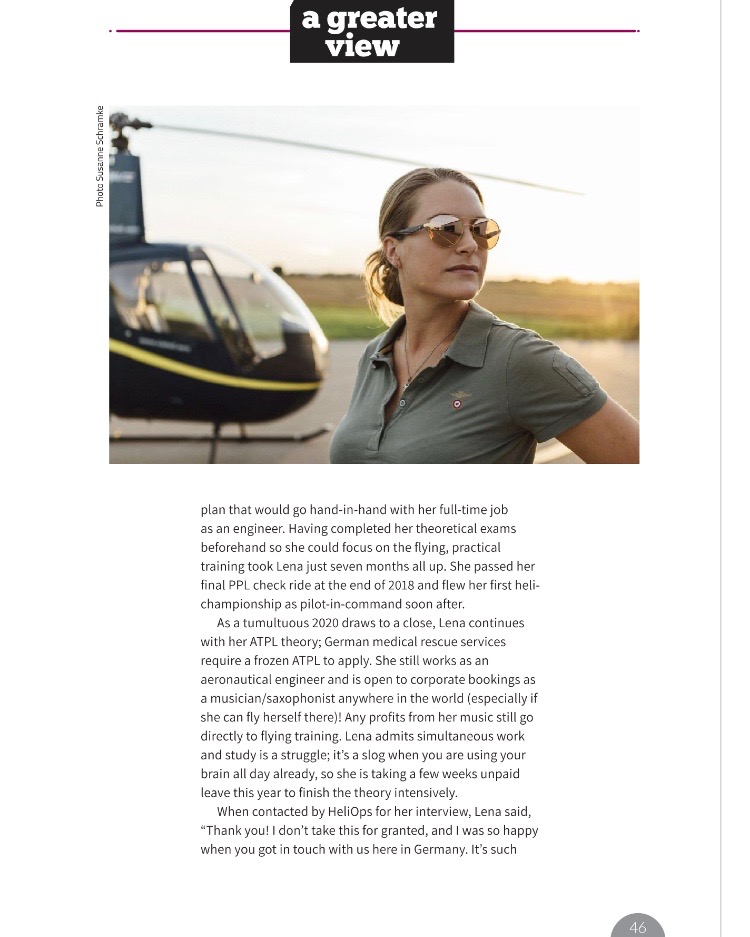
It was a small school, only an hour’s drive away, and the perfect environment to facilitate an individual training plan that would go hand-in-hand with her full-time job as an engineer. Having completed her theoretical exams beforehand so she could focus on the flying, practical training took Lena just seven months all up. She passed her final PPL check ride at the end of 2018 and flew her first heli championship as pilot-in-command soon after.


As a tumultuous 2020 draws to a close, Lena continues with her ATPL theory; German medical rescue services require a frozen ATPL to apply. She still works as an aeronautical engineer and is open to corporate bookings as a musician/saxophonist anywhere in the world (especially if she can fly herself there)! Any profits from her music still go directly to flying training. Lena admits simultaneous work and study is a struggle – it’s a slog when you are using your brain all day already – so she is taking a few weeks of unpaid leave this year to finish the theory intensively.
When contacted by HeliOps for her interview, Lena said, “Thank you! I don’t take this for granted, and I was so happy when you got in touch with us here in Germany. It’s such a great chance to share the stories. I am not even flying commercially yet, and there have been so many amazing women and girls from the heli industry profiled in this space. I hope to be there soon myself.”
You sure will, Lena. And to everyone else – good luck getting the Medicopter 117 theme song out of your head.
First published in HeliOps Magazine – Issue 128 (Kia Kaha Media) in ‘A Greater View’, a column profiling women in the heli industry




 Bronni Bowen